
Iran says millions are mourning Khamenei. That’s not the full picture
Iran’s Mourning for Khamenei: A More Complex Narrative
The Funeral Scene and Missing Figures
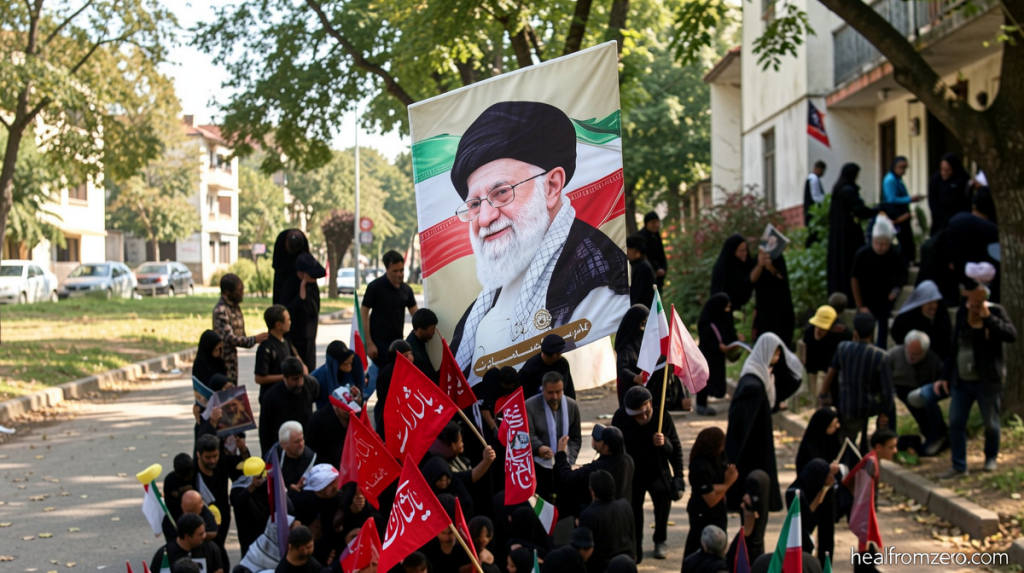
Iran says millions are mourning Khamenei – As religious ceremonies unfolded on Sunday surrounding the coffin of Iran’s recently deceased Supreme Leader Ali Khamenei, numerous high-ranking government officials gathered alongside three of the ayatollah’s children. Yet certain individuals stood out for their conspicuous absence. Several former heads of state who had clashed with the present administration did not attend, challenging Tehran’s persistent narrative of national solidarity that has permeated every aspect of the week-long commemoration period.
This carefully crafted message aimed to demonstrate to both Washington and Jerusalem that potential military strikes would neither topple the Islamic Republic nor spark widespread rebellion within its borders, according to international observers. The funeral activities, which concluded on Thursday with Khamenei’s interment in Mashhad, a major city in northeastern Iran, featured millions of participants who genuinely support the nation’s political system.
Two Irans: Those Who Grieve and Those Who Don’t
However, this picture remains incomplete. With approximately 90 million citizens, Iran represents two distinct populations: people who mourn deeply and those who feel little connection to the proceedings. Numerous Iranians harbor resentment toward the elaborate displays, linking Khamenei to an authoritarian government that has progressively suppressed opposition over decades. Meanwhile, others experience indifference, with certain individuals viewing the funeral period as a chance to escape overcrowded urban centers.
The missing former leaders also reveal the strict control exercised by event coordinators, as supporters of the current administration appear more energized than at any recent point. Meanwhile, Mojtaba Khamenei’s significant absence has generated considerable speculation regarding his location. The newly appointed supreme leader has not appeared publicly since receiving his position following his father’s passing.
Expert Analysis on Regime Unity
The organizing committee of the funeral had the opportunity to project regime unity by including figures such as pro-reform former presidents. Instead, it appears that the committee has decided to go for a tight ship, only core and top officials of the regime.
Arash Azizi, an American-based specialist on Iranian affairs and writer of “What Iranians Want,” provided this assessment. According to Trita Parsi, who serves as executive vice president of the Quincy Institute for Responsible Statecraft, the administration utilized Khamenei’s funeral to strengthen its foundation. She noted that backing within the leadership circle probably stands at record levels. Nevertheless, she cautioned that this does not necessarily represent a national majority.
The Absent Presidents and Their Significance
Mohammad Khatami and Hassan Rouhani, two reformist ex-presidents who skipped Sunday’s prayers, both previously experienced conflicts with Khamenei, according to Azizi. Both were essentially removed from power by the supreme leader. Similarly, former President Mahmoud Ahmadinejad faced difficulties with Khamenei after initially being considered a hardliner, resulting in his marginalization. Ahmadinejad did participate in Monday’s funeral activities, representing an uncommon public showing following years of separation. Iranian television captured footage of him moving through the substantial crowds participating in the procession.
Tehran wants to project that it can lose its supreme leader without losing its continuity of governance. Massive crowds and carefully choreographed ceremonies reinforce that message, but the conspicuous absence of key figures also reminds the world that the leadership still feels profoundly vulnerable and is not seeking to cast a broad umbrella.
Ali Vaez, directing the Iran project at the International Crisis Group, offered this perspective to CNN.
Broader Implications and Recent Developments
When hostilities began earlier this year, American and Israeli officials placed significant emphasis on potential regime transformation in Iran, though specialists considered this outcome improbable given Tehran’s established succession mechanisms. Each elimination has typically been followed by a new appointment, frequently involving someone more conservative than their predecessor. Analysts observe that Iran now contains diverse emotional responses within a nation where authorities historically employed pressure and suppression to quiet opposition.
Since the conflict with Western powers commenced, Iran has executed numerous detentions under the justification of wartime circumstances, according to Amnesty International’s May publication. The human rights organization documented that Iranian authorities have detained over 6,000 individuals without proper cause, encompassing demonstrators, reporters, legal professionals, rights advocates, political opponents, and representatives of ethnic and religious communities. Additionally, Asghar Jahangir, speaking for the judiciary, announced that more than 3,000 citizens faced arrest last month for allegedly working with hostile forces, based on information broadcast through the semi-official Student News Network. Iranian officials anticipated that as many as 15 million citizens would attend the main funeral ceremony.