
Former Olympic canoeist indicted for allegedly damaging Reflecting Pool
Former Olympic Canoeist Faces Felony Charges for Alleged Damage to Reflecting Pool
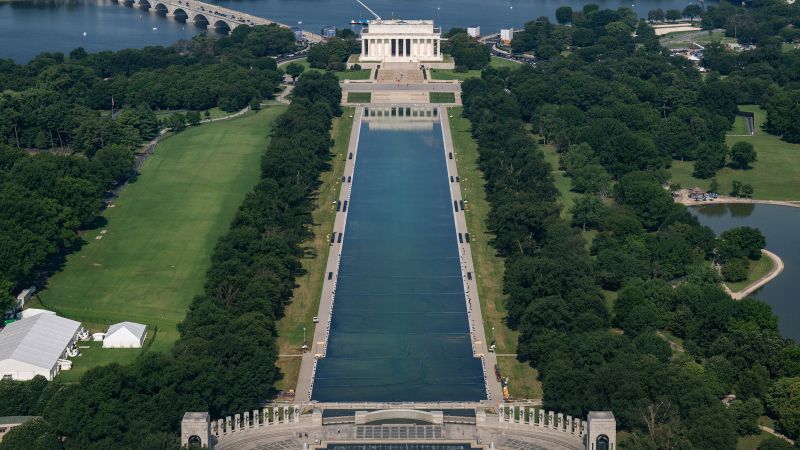
Former Olympic canoeist indicted for allegedly – David Hearn, a former Olympic canoeist, has been charged with a felony by a grand jury in Washington, D.C.’s Superior Court, for allegedly damaging the Lincoln Memorial Reflecting Pool. The indictment, filed on Thursday, accuses Hearn of maliciously injuring, breaking, and destroying the pool’s lining material, according to the formal charges. If convicted, he could face up to 10 years in prison, a penalty reserved for acts of vandalism deemed severe enough to warrant felony status.
Alleged Act of Vandalism
The US Attorney’s office for the District of Columbia, led by Jeanine Pirro, announced the indictment, which marks a pivotal moment in the Trump administration’s approach to the recent controversy surrounding the pool. Hearn is alleged to have violently removed approximately two square feet of the pool’s material, an act that the prosecutors claim was intentional and damaging. Pirro emphasized during a press briefing that the evidence in the case was “compelling,” stating the decision to charge Hearn with a felony was not influenced by political pressure but by the strength of the case itself.
“This is a case with tremendous evidence and the evidence dictates where we land,” Pirro stated, underscoring the legal foundation of the charges. She noted that witnesses on-site, described as impartial and without personal agendas, observed the damage to the national monument and confirmed Hearn’s actions.
The incident occurred shortly after the pool was reopened last month following a multimillion-dollar renovation led by President Donald Trump. The pool, a iconic feature of Washington, D.C., had been plagued by issues such as algae growth and peeling sealant, which Trump had previously attributed to vandalism. Hearn’s arrest followed his contact with a flap of blue material that had partially detached from the pool’s bottom, an event that initially sparked questions about the cause of the damage.
Legal and Political Implications
Hearn’s defense attorney, Norm Eisen, has criticized the indictment as an overreach of government power. In a statement, Eisen accused the administration of using the charges to shift blame for its own shortcomings. “David Hearn is innocent,” he said, “and these charges are not just alarming but a clear example of the misuse of authority against an ordinary citizen.” He argued that the narrative surrounding the incident was “concocted” and aimed at deflecting attention from the administration’s handling of the renovation.
“On the eve of our nation’s Independence Day, Americans should be deeply concerned by the government’s efforts to criminalize an act that was merely an act of curiosity,” Eisen added, highlighting the symbolic timing of the charges.
The case has drawn attention to the broader context of the pool’s condition. After its reopening last month, the pool was already showing signs of wear, including peeling paint and algae accumulation. Trump had warned that those responsible for the damage could face lengthy prison sentences, a stance that aligns with the felony charge brought against Hearn. However, federal authorities have not yet provided conclusive proof of the claims, leaving room for debate over the extent of the damage and its cause.
Federal Investigation and Ongoing Cases
The indictment has been linked to a larger federal investigation, with the FBI assigning 260 staff members to probe the Georgia 2020 election. While the focus of this probe is different, the timing and scope of the actions suggest a coordinated effort to scrutinize incidents of public property damage. Pirro mentioned that the US Attorney’s office is examining “about a half dozen” other cases, some of which could be classified as misdemeanors or lesser violations.
“We have about a half a dozen other cases,” Pirro said. “Some of them will be misdemeanors, and some of them could be less, like a violation.” This indicates that the administration’s approach to the pool incident may be part of a broader strategy to address perceived threats to public infrastructure.
Timeline of the Incident
According to Hearn’s account, the incident began when he approached the pool on the day of its reopening. He claimed that a National Park Service worker had warned him not to touch the detached flap of blue material, which had come loose from the pool’s lining. Despite the warning, Hearn reportedly reached into the water, prompting Park Police to cuff him. He has since denied any intention to vandalize the pool, insisting he was simply curious about its condition.
“I didn’t mean to damage the pool,” Hearn stated in a prior interview with CNN. “I was just checking out the material, and I didn’t realize it was considered vandalism.”
The pool’s condition had been a point of contention since its renovation, which was intended to be completed ahead of the Independence Day celebrations. However, shortly after its reopening, reports of algae growth and peeling sealant emerged, raising questions about the effectiveness of the repairs. Trump had previously accused others of vandalizing the pool, though the federal government has yet to confirm those allegations.
“The president said someone carved a lengthy gash into the pool with a sharp instrument,” Pirro mentioned, adding that the claims about the damage were part of the evidence used to support the indictment. However, the specifics of the damage remain unclear, with Trump’s estimates of its severity fluctuating over time. The lack of definitive proof has fueled skepticism about the charges, with some viewing them as politically motivated.
Public Reaction and Concerns
The indictment has sparked a range of reactions from the public. Critics argue that the charge against Hearn is an example of the administration leveraging the legal system to target individuals for minor infractions. Meanwhile, supporters of the charges see it as a necessary step to hold those accountable for damaging a significant national landmark.
Hearn’s case also highlights the intersection of politics and public perception. The timing of the indictment, just days before Independence Day, has amplified its symbolic weight. Some argue that the administration is using the incident to reinforce its narrative of opposition to “vandals” who undermine American institutions. Others, however, believe the charges are a strategic move to maintain public focus on the pool’s condition while diverting attention from other issues.
As the legal proceedings unfold, the case may serve as a focal point for discussions about the role of government in enforcing public order and the line between curiosity and criminal intent. Hearn’s defense will likely emphasize the lack of concrete evidence, while prosecutors will stress the importance of holding individuals responsible for actions that harm national monuments.
With the US Attorney’s office continuing its investigations, the case could set a precedent for how public property damage is addressed in the future. Whether Hearn’s actions constitute vandalism or an act of curiosity will depend on the evidence presented in court, as well as the broader political context that surrounds the incident.