
Punishing heat wave peaks as East Coast readies for sweltering July 4 weekend
Punishing Heat Wave Peaks as East Coast Readies for Sweltering July 4 Weekend
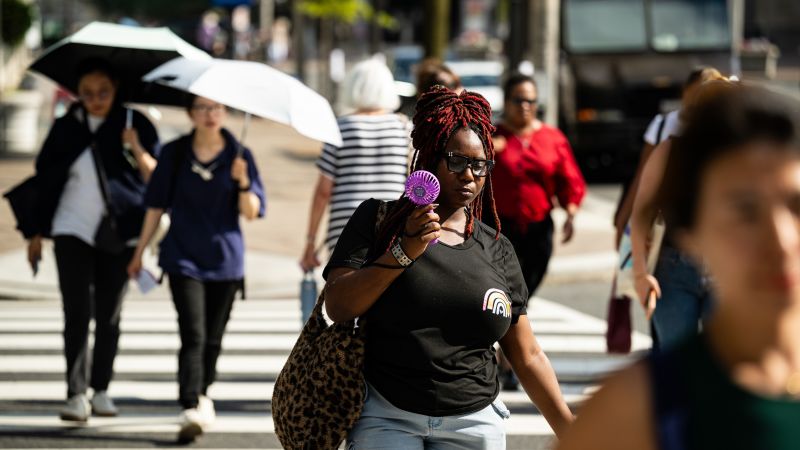
Punishing heat wave peaks as East – The East Coast is bracing for a relentless heat wave that is intensifying, with the most extreme conditions coinciding with the July 4th holiday, a time traditionally marked by outdoor festivities. As millions gear up for summer celebrations, the weather is set to reach dangerously high levels, prompting cities to take proactive measures to mitigate the risks. The National Weather Service reports that over 160 million people are under a “major” or “extreme” heat risk, with the most severe conditions predicted to unfold along the Interstate 95 corridor from Thursday through Friday.
Heat Intensifies Along I-95 Corridor
Temperatures are forecasted to rise sharply, exceeding the upper 90s and dipping into the low 100s across Washington, DC, to Boston. Humidity levels will further amplify the perceived heat, pushing “feels like” temperatures to 110 degrees or more. This combination of high heat and moisture is expected to strain infrastructure and public health systems, particularly as the peak of the heat wave aligns with one of the busiest travel periods of the year.
The Department of Energy has issued emergency directives to bolster electricity generation within the PJM Interconnection grid, which serves much of the Mid-Atlantic. This initiative aims to prevent power outages as demand surges. Meanwhile, cities like Philadelphia have declared a Heat Health Emergency, adjusting parade routes to reduce exposure to the elements. In Washington, DC, an Extreme Heat Alert has been activated, with officials expanding cooling centers, hydration stations, and emergency medical resources to accommodate the influx of visitors.
Breaking Heat Records
The National Mall events in Washington, DC, are incorporating water stations, cooling tents, and air-conditioned buses to ensure attendee safety. New York City is set to open hundreds of cooling centers and deploy mobile medical vans equipped with water, sunscreen, and wellness checks. Over 2,200 LinkNYC kiosks will serve as guides to these facilities. The heat wave’s intensity is projected to shatter dozens of long-standing temperature records, with the National Weather Service noting that the upcoming three-day stretch could be the hottest since 1930 in the nation’s capital.
Washington, DC, is forecast to hit 104 degrees on Thursday and 105 on Friday, edging closer to its all-time record of 106 degrees set in 1979. July 4th itself is expected to be the hottest day on record in the city, with temperatures reaching 102 degrees—surpassing the previous high of 100 degrees from 1919. In Philadelphia, the heat index may surpass 105 degrees on Thursday, while Boston is anticipated to exceed 100 degrees and climb to 104 on Friday. The regional impact is also notable: eastern Virginia could face its most significant heat wave since 2012, when a deadly stretch of temperatures claimed over a dozen lives in the state.
Experts attribute the extreme conditions to intense heat domes—areas of high atmospheric pressure that trap warm air in place. These domes are exacerbated by global warming, which has increased the frequency and severity of such events. “The combination of heat domes and climate change is creating a perfect storm of conditions,” a meteorologist noted in a
blockquote>. “We’re seeing temperatures and humidity levels that are far beyond historical norms, especially during prolonged periods without nighttime relief.”
Health Risks Amplified by Humidity
Without significant cooling at night, the body struggles to recover from the heat, heightening the risk of heat-related illnesses. Warm, humid nights in many areas are only expected to drop into the 70s, while urban zones may remain above 80 degrees. High humidity prevents sweat from evaporating efficiently, making it harder for the body to regulate temperature. This prolonged exposure could lead to heat exhaustion, dehydration, and even heatstroke, particularly among vulnerable populations like the elderly and those with chronic conditions.
Cities are responding by expanding public resources. Philadelphia, for instance, has shortened its July 4 parade route to minimize time spent in the heat, while the city’s World Cup Fan Festival has reduced operating hours. In Boston, organizers are focusing on hydration and shade, with cooling centers and outdoor hydration stations becoming critical infrastructure. New York City is also prioritizing accessibility, ensuring that cooling centers are spread out and clearly marked for easy navigation.
Historical Context and Future Implications
The current heat wave underscores the growing influence of global warming on extreme weather patterns. “This isn’t an anomaly—it’s a trend,” said Dr. Emily Carter, a climatologist, in a
blockquote>. “The heat domes we’re seeing are more persistent, and the temperatures are consistently higher than they were just a decade ago.” The National Weather Service highlights that the 3-day period from Thursday to Saturday may mark the hottest consecutive stretch in Washington, DC, since the 1930s, with each day surpassing 100 degrees.
As the heat wave peaks, its impact is expected to ripple beyond immediate discomfort. The National Weather Service warns that prolonged exposure without overnight cooling significantly raises the risk of heat-related illnesses. With the Fourth of July serving as a catalyst for increased outdoor activity, the strain on healthcare systems and emergency services is anticipated to grow. Cities are not only expanding cooling centers but also coordinating with local agencies to ensure timely responses to heat emergencies.
Historical comparisons reveal the scale of this event. In 2012, eastern Virginia experienced a similar heat wave that resulted in over a dozen fatalities, highlighting the potential dangers of such conditions. The current wave is expected to rival that in severity, with temperatures potentially exceeding past records. For example, New York City could face one of its most oppressive days in decades, with a heat index of 110 degrees on Thursday—a rare occurrence since records began in 1943.
Preparation and Community Response
While the heat is unrelenting, community efforts are underway to support those affected. Cooling centers are being staffed with volunteers, and public awareness campaigns are encouraging residents to stay hydrated and avoid prolonged exposure. Local governments are also collaborating with utilities to monitor power usage and prevent outages. “We’re working closely with the Department of Energy to ensure that electricity supply meets demand,” said a spokesperson for the Mid-Atlantic region. “This is a coordinated effort to protect public health.”
Despite the challenges, some relief is expected by the end of the week. The National Weather Service forecasts a gradual easing of temperatures, though the peak remains a critical period for health and safety. As the East Coast prepares for the July 4th weekend, the focus is on resilience and adaptation, with officials emphasizing the importance of preparedness in the face of increasingly frequent extreme weather events. The heat wave serves as a stark reminder of the need for long-term climate strategies to safeguard communities and infrastructure.