
‘I need to be the lion’: Inside a boot camp teaching men how to talk to women
‘I need to be the lion’: Inside a boot camp teaching men how to talk to women
Transforming into a confident man
I need to be the lion – Steve Crook, a 55-year-old man recently divorced, steps into a bustling Nashville street, eyes darting as he studies the crowd. His goal is clear: to master the art of approaching women with newfound confidence. “I’m very picky,” he says, his focus sharpened by the intensity of the task. Among the passing pedestrians—bachelorettes, dog walkers, and shoppers with groceries—only one seems to meet his criteria. “They have to be physically attractive,” Crook explains, his standards reflecting a preference for the idealized image of a woman with long legs, a toned figure, and a certain allure. Yet, as he locks onto his target, the moment turns precarious. The woman, laughing with friends, seems unaware of the pressure he’s under. With a burst of energy, Crook sprints toward her, weaving through traffic to catch her attention. “I just thought, f**k it,” he later admits to CNN, offering a candid breakdown of his actions. “Let’s get out of the head and just do it.”
But his bold move ends in a stumble. As he approaches, his heart pounding, he manages to compliment her with a phrase that feels rehearsed: “You’re breathtaking.” The reaction is immediate. She hesitates, then begins to retreat. The conversation falters, and Crook, visibly shaken, retreats to his coach, Matt Artisan. Artisan, who has been monitoring the interaction via a hidden microphone, offers a sharp critique. “You were kind of behind them,” he says, pointing out the missed opportunity. “You’ve got to get in front of all of them.” The feedback is relentless, covering everything from vocal tone to body language. “I heard the voice go up a few times,” Artisan adds, noting Crook’s tendency to lose composure. Over the next three days, the participant will face repeated trials, from shouting into the ears of women in crowded nightclubs to staring silently in quiet moments, all while enduring Artisan’s guidance.
“We are suffering from an epidemic of loneliness,” says Brandon Viall, a participant in Artisan’s program. “We’re connected by all these screens, but is that real connection?”
The rise of pickup culture
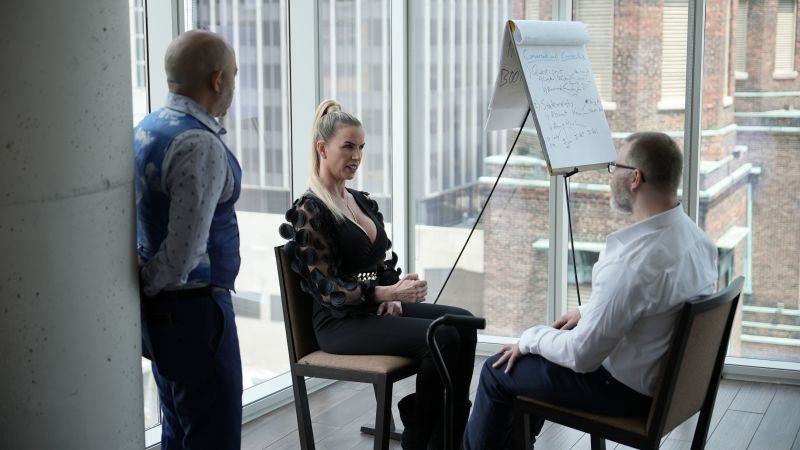
Artisan’s Nashville boot camp is part of a growing trend across the U.S. and beyond. By the end of 2026, his company, The Attractive Man, will host sessions in nine major American cities, including New York, Los Angeles, and Boston, as well as in Europe, Asia, and Central America. These intensive programs, often referred to as “man camps,” are designed to equip men with techniques to navigate social interactions, particularly with women. Participants like Crook see them as a chance to shed their “nice guy tendencies” and embrace a more assertive identity. “I need to be the lion,” Crook says, his motivation rooted in a desire to reclaim a sense of self-worth. Yet, the challenges are steep. The camps blend old-school masculinity with modern methods, creating a space where men train like athletes, mastering the nuances of seduction and conversation.
The participants’ experiences highlight the emotional stakes involved. Crook, for instance, berates himself repeatedly, calling himself a “p*ssy” after each failed attempt. Others, like Viall, articulate the deeper psychological drivers behind their enrollment. “We’re isolated,” he says, reflecting on the pandemic’s impact. “Even when we’re surrounded by people, we feel disconnected.” This sentiment is echoed by many, who cite the rise of dating apps, political polarization, and a post-#MeToo era as contributors to their loneliness. One participant describes the climate as “scared the s**t out of a lot of guys,” suggesting a cultural shift that has left men hesitant in their pursuit of relationships.
A modern quest for human connection
While the boot camps may seem like a throwback to the 2000s, their appeal lies in their ability to address contemporary anxieties. The format is both nostalgic and innovative: men gather in small groups, adopting the bro-y jargon of past decades, yet applying it to the demands of today’s dating landscape. Despite their focus on physical attraction, the camps also emphasize emotional intelligence, teaching participants how to balance confidence with respect. “We’re not just about winning,” Artisan explains, though the outcomes often feel like a game of chance. The goal is to crack the code of social interaction, a task that many believe has become increasingly complex in the digital age.
For some, the program represents a lifeline. Crook’s journey, from self-doubt to determination, mirrors the experiences of others who have entered the camps seeking to redefine their approach to relationships. The training is grueling, requiring men to confront their insecurities in public settings. One session involves shouting into the ears of strangers in a nightclub, while another demands silence and stillness, testing their ability to connect through eye contact. Artisan, observing the progress of four participants, describes the process as both challenging and transformative. “It’s about rebuilding confidence,” he says, noting that the lessons extend beyond pickup lines to everyday interactions.
The phenomenon of these camps reflects a broader societal shift. With over one in six Americans reporting feelings of loneliness or isolation most or all of the time, according to Pew Research Center data from 2024, the demand for structured social training has surged. Men, in particular, are less likely to seek support from friends, family, or mental health professionals, leaving them to navigate emotional challenges on their own. This vacuum has given rise to programs like Artisan’s, where participants pay for the chance to refine their social skills. The camps offer a mix of mentorship, practice, and psychological reassurance, promising to restore a sense of purpose to men who feel lost in the shuffle of modern life.
As the three-day training concludes, the participants emerge with a renewed sense of direction. Crook, though still struggling, has made progress. He has learned to project his voice, adjust his stance, and take calculated risks. Artisan, meanwhile, continues to refine his approach, adapting to the evolving needs of his students. The Nashville camp serves as a microcosm of a movement that is reshaping how men engage with the world. Whether they succeed in “winning” the game of attraction remains uncertain, but the effort itself is a testament to the enduring human desire for connection. In a world where screens often replace face-to-face exchanges, these boot camps offer a rare chance to reclaim the art of conversation—and perhaps, the confidence to wield it effectively.