
Israel to withdraw from two areas in Lebanon under newly signed agreement
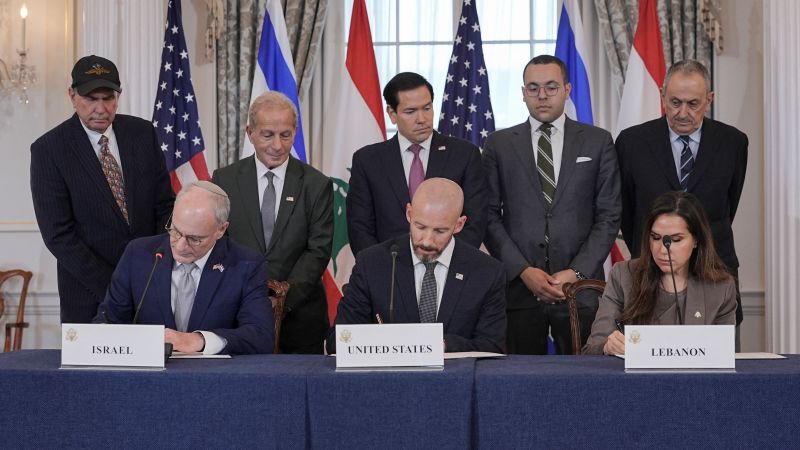
Israel and Lebanon Ink New Agreement to Begin Withdrawal from Southern Territories
Israel to withdraw from two areas – In a significant development, Israel has committed to withdrawing from two specific regions in southern Lebanon, ceding control of the areas to the Lebanese military, as announced by Prime Minister Benjamin Netanyahu. The agreement, signed after four days of discussions in Washington, marks a pivotal moment in efforts to ease tensions between the two nations. This trilateral deal, involving Israel, Lebanon, and the United States, is seen as a stepping stone toward a broader peace accord, according to a senior Israeli official. The move aims to address longstanding disputes over the occupied territories while maintaining Israeli strategic interests.
Areas of Focus: North and South of the Litani River
Netanyahu outlined the terms of the withdrawal, specifying that one of the areas to be vacated lies north of the Litani River, while the second is located to the south. This distinction is critical, as the southern region has been under Israeli control for decades. The agreement allows Israel to retain a portion of its holdings in the area, contingent upon Hezbollah’s disarmament. The Israeli Defense Forces (IDF) will gradually reduce their presence in these zones, leaving behind sites deemed unnecessary for military operations. This step is described as a strategic adjustment rather than a complete withdrawal.
Lebanon’s Ambassador to the US, Nada Hamadeh Moawad, emphasized the symbolic importance of the agreement. “This marks the first step on the road to restoring Lebanese sovereignty and territorial integrity,” she stated. The ambassador’s remarks highlight the Lebanese government’s desire to reclaim full control over its southern borders, a long-standing goal amid years of Israeli military presence. The deal also underscores the role of the United States in facilitating dialogue, with the State Department hosting its fifth round of negotiations between the two nations.
Context of the Ceasefire and Pilot Program
The agreement is part of a broader ceasefire framework that has been under discussion for some time. The Lebanese Armed Forces are set to take over the specified areas as part of a pilot program, which is designed to test the feasibility of a more comprehensive peace deal. This initiative follows a pattern of temporary force reductions by the IDF, which, according to a statement shared with CNN, did not explicitly mention withdrawing from territory. However, the new arrangement signals a more permanent shift in the region’s military dynamics.
CNN previously reported that Israel is considering symbolic withdrawals from southern Lebanon as a gesture to the Lebanese government. These moves are intended to demonstrate goodwill and pave the way for deeper diplomatic engagement. Despite this, the Israeli defense minister has stated that the military will not fully withdraw unless Hezbollah is disarmed. This stance reflects the delicate balance Israel seeks to maintain between securing its national interests and making concessions to its neighbors.
US Secretary of State Hails Agreement as “Beginning of the Beginning”
At the signing ceremony, US Secretary of State Marco Rubio described the agreement as a momentous achievement. “This is the beginning of the beginning,” he said, acknowledging the challenges ahead but expressing confidence in the progress made. The US has played a central role in mediating the talks, with the Trump administration actively pursuing a peace agreement between Israel and Lebanon. The fifth round of negotiations in Washington highlights the administration’s dedication to resolving the long-standing conflict.
“Whoever shakes hands with the enemy is a criminal like them.”
These negotiations have been complicated by the political landscape in both countries. Lebanon’s President Joseph Aoun praised the Trump administration for hosting the talks, calling the agreement a “victory for Lebanese sovereignty.” He emphasized that the deal would allow the people of Lebanon to “return to their fully liberated land, under the sovereignty of a Lebanese state that has no partner in its sovereignty over its land and its people.” This statement is interpreted as a direct critique of Iran’s influence through Hezbollah, which has been a key player in the region’s conflict.
Meanwhile, Hezbollah, a group backed by Iran, has rejected the agreement. Hassan Fadallah, a member of Lebanon’s parliament and a Hezbollah representative, criticized the deal as a betrayal of Lebanon’s interests. “This agreement is a major blow to Iran,” Netanyahu remarked, adding that the country’s influence has been a driving force behind the conflict. The Israeli leader’s comments reflect the broader geopolitical stakes, with Iran seen as an external actor pressuring Lebanon into concessions.
Fadallah, speaking to the pro-Hezbollah Al-Mayadeen news channel, accused the agreement of aligning Lebanon with its adversaries. “Whoever shakes hands with the enemy is a criminal like them,” he declared. This sentiment underscores the deep divisions within Lebanon’s political spectrum, where Hezbollah’s allies view the deal as a threat to national identity. The group has called on the government to “retract these negotiations and all the decisions they have made against their people,” emphasizing their opposition to any agreement perceived as undermining Lebanon’s sovereignty.
Implications for Regional Stability
The agreement has been framed as a positive step toward peace, but its long-term success will depend on the willingness of all parties to uphold their commitments. Netanyahu described the deal as a “major win for Israel,” noting that the country can remain in much of the territory it occupies as long as Hezbollah is not disarmed. This condition is crucial, as Hezbollah’s presence in southern Lebanon has been a key factor in the region’s instability.
The withdrawal from the two areas is expected to reduce direct military confrontation between Israel and Lebanon. However, the arrangement may also lead to new challenges, particularly if Hezbollah continues its operations in the region. The pilot program’s implementation will be closely watched, as it could serve as a model for future cooperation. Analysts suggest that the agreement may also strengthen the US’s position as a mediator in the Middle East, particularly in light of its efforts to broker peace between Israel and Lebanon.
For Lebanon, the deal offers a chance to reclaim control over its southern territories while addressing the security concerns that have plagued the country for years. The Lebanese government has long sought to reduce Israeli military influence, and this agreement represents a tangible effort toward that goal. However, the country’s political fragmentation may pose obstacles, as factions with differing views on the deal could lead to internal debates. The focus on territorial integrity aligns with Lebanon’s broader aspirations for regional autonomy.
Looking Ahead: A Developing Story
As the agreement moves forward, its implementation will require careful coordination between Israel and Lebanon. The Israeli-occupied territory in southern Lebanon, particularly the area south of the Litani River, remains a focal point of the negotiations. The transfer of control is expected to take place in phases, with the Lebanese Armed Forces gradually assuming responsibility for these regions. This process will likely involve monitoring by international observers to ensure compliance.
The agreement also raises questions about the future of the Israel-Hezbollah conflict. While Israel’s withdrawal may reduce immediate hostilities, the group’s continued presence in the region could lead to new tensions. Netanyahu’s assertion that the deal is a response to Iran’s pressure highlights the complex web of alliances and rivalries in the Middle East. The United States, through its diplomatic efforts, aims to position itself as a key player in maintaining stability in the region.
As this developing story unfolds, the international community will be closely watching for signs of lasting peace. The agreement’s success will depend on the ability of all parties to balance their interests and address the underlying causes of the conflict. For now, the withdrawal from two areas in southern Lebanon marks a hopeful step toward a more secure future for both nations.
Conclusion: A Fragile but Promising Peace
The newly signed agreement between Israel and Lebanon, supported by the US, represents a critical milestone in the ongoing peace process. While the withdrawal from two specific areas is a symbolic but meaningful gesture, it also sets the stage for more extensive negotiations. The deal’s implementation will be a test of political will and strategic patience, with both nations and their allies closely scrutinizing its impact. As the Lebanese Armed Forces prepare to take over these zones, the hope is that the agreement will pave the way for a more stable and secure region, even as challenges remain on the horizon.