
US strikes Iranian targets in response to attack on cargo ship
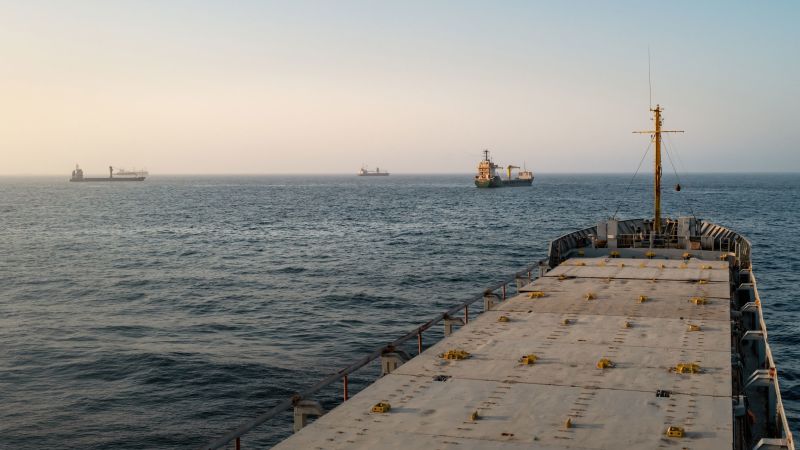
US Strikes Iranian Targets in Response to Attack on Cargo Ship
US strikes Iranian targets in response – On Friday, the U.S. military launched strikes against Iranian military installations near the Strait of Hormuz, retaliating for Tehran’s attack on a commercial vessel the previous day, reported the U.S. Central Command. The operation targeted missile depots and drone storage facilities, as well as coastal radar stations, according to CENTCOM. The strikes followed Iran’s assault on a cargo ship, which the administration described as a violation of the ceasefire agreement aimed at easing tensions between the two nations.
Trump’s Remarks Highlight Continued Tensions
President Donald Trump, speaking at an Oval Office event, addressed the incident with mixed signals. While condemning the attack, he emphasized that the strike had not marked a return to full-scale warfare, at least temporarily. A senior U.S. official confirmed that the action was a measured response, not an escalation of hostilities. However, Trump’s public comments suggested lingering frustration over Iran’s perceived aggression.
“The Islamic Republic of Iran shot at least four One Way Attack Drones at Ships transversing the Strait of Hormuz. One of the Drones solidly hit the upper deck of a large and very expensive Cargo Carrying Ship,” Trump wrote on Truth Social shortly after the attack. “Damage was done, but the Ship was able to proceed on its way. We knocked down three other Drones. Obviously, this is a foolish violation of our Ceasefire Agreement.”
Trump’s initial reaction, delivered hours after the strike, underscored his view of the incident as a clear breach of the agreement. He criticized Iran’s actions, calling them “foolish,” but stopped short of confirming broader military retaliation. Later, during a press event, he reiterated his stance, stating that Iran still retained some military capability despite the ongoing ceasefire. “They have some capability, not much. They’re not winning or anything, but they have some capability; they can still shoot,” he told a gathering of conservative Christians in Washington, D.C.
Strategic Waterway and Negotiation Dynamics
The Strait of Hormuz, a vital chokepoint for global oil trade, has been at the center of U.S.-Iran tensions. Under the terms of the recent agreement, both sides committed to restoring prewar levels of maritime traffic through the waterway. However, the attack on the cargo ship raised questions about the effectiveness of this arrangement. Iran had warned that ships would only be allowed passage through routes it approved, challenging the U.S. claim that the strait was now fully open.
After signing the memorandum of understanding, the U.S. lifted its blockade of Iranian ports, signaling a shift toward cooperation. Yet the strike on the commercial vessel appeared to test the limits of that agreement. The incident highlighted the delicate balance between de-escalation and the potential for renewed conflict. Iran views control of the strait as a critical bargaining chip in negotiations over its nuclear program, while the U.S. aims to ensure unfettered access for international trade.
“You’ll find out” was Trump’s response when asked about potential consequences for Iran. The president’s uncertainty reflected a broader strategy of cautious diplomacy, even as he expressed disappointment over the attack. “I don’t like the fact that they took a shot yesterday,” he said, stressing that the strike had targeted a non-allied vessel. “It hit a ship and did some damage. Can’t do that stuff.”
Details of the Attack and Its Impact
The Iranian Revolutionary Guard Corps was implicated in the strike, which occurred on Thursday. According to the United Kingdom Maritime Trade Operations, the attack damaged the ship’s bridge but did not result in casualties or environmental harm. The strike took place on the starboard side of the vessel, with the projectile’s origin remaining unclear. This incident marked the first such event since the U.S. and Iran reached the agreement to resume talks on the nuclear program.
Despite the attack, the U.S. has not yet indicated a full-scale resumption of hostilities. However, the response from the military signaled a willingness to act decisively when necessary. The CENTCOM statement described the strikes as a targeted operation, focusing on Iran’s military infrastructure rather than civilian assets. This approach aligns with the administration’s goal of maintaining the ceasefire while deterring further aggression.
Conflicting Interpretations of the Agreement
Disagreements over the agreement’s terms have persisted. The U.S. has insisted that the strait will remain toll-free, allowing ships to pass without additional fees. In contrast, Iran has maintained its right to charge vessels using the waterway, a point of contention in the negotiations. The attack on the cargo ship has reignited debates about whether the agreement truly guarantees unrestricted access or if Iran retains leverage through strategic military actions.
Analysts note that the incident underscores the challenges in achieving mutual trust between the two nations. While the agreement aimed to normalize maritime traffic, it left room for differing interpretations. Iran’s Revolutionary Guards had warned earlier that safe passage would be contingent on routes approved by Tehran, a stance that conflicted with the U.S. vision of an open strait. The strike, therefore, served as a reminder of the unresolved tensions and the need for clearer definitions of the agreement’s obligations.
Broader Implications for U.S.-Iran Relations
Trump’s comments on the attack revealed his mixed priorities. He acknowledged that the war with Iran could have led to “economic catastrophe” if it had continued, but he also expressed dissatisfaction with the Iranian move. The president’s statements reflected a balancing act between maintaining the ceasefire and asserting U.S. dominance in the region. “Nobody saw it coming,” he remarked, highlighting the suddenness of the strike and its disruptive effect on maritime operations.
The attack has also raised concerns about the stability of the agreement. While the U.S. has not withdrawn from the deal, the incident has tested its credibility. Iran’s ability to conduct strikes despite the ceasefire suggests that the agreement may not fully address its strategic objectives. For the U.S., the response was a demonstration of resolve, but it also left the door open for future confrontations. As the situation unfolds, the key issue remains whether the strait can be restored to its previous level of activity without further incidents.
Press coverage of the event has emphasized the contrast between Trump’s public statements and the military’s measured action. While the president used strong language to describe the attack as a “foolish violation,” the U.S. military’s strikes were limited in scope, targeting specific Iranian assets rather than launching a wide-scale campaign. This strategy allows the administration to show strength without escalating the conflict, a delicate maneuver in a region already prone to volatility.
As the dust settles, the focus shifts to the future of the agreement and the path forward for U.S.-Iran relations. The incident serves as a case study in the challenges of diplomatic engagement, where words and actions must align to avoid misinterpretation. For now, the U.S. and Iran remain in a state of cautious coexistence, with the strait of Hormuz at the crossroads of peace and potential conflict.
This headline and story have been updated with additional developments. Haley Britzky contributed to the reporting.