
What we know about Venezuela’s biggest earthquake in more than a century
What We Know About Venezuela’s Biggest Earthquake in More Than a Century
What we know about Venezuela s biggest – Venezuela’s northern coastline endured a seismic event of historic proportions on Wednesday, as two major earthquakes struck within a minute of each other. The tremors, which registered magnitudes of 7.2 and 7.5, were felt across multiple regions and even in neighboring Colombia, hundreds of kilometers from the epicenter. This disaster has intensified the nation’s ongoing challenges, with at least 164 fatalities and 971 injuries reported, though the actual toll is likely to climb as assessments continue.
Seismic Impact and Initial Assessments
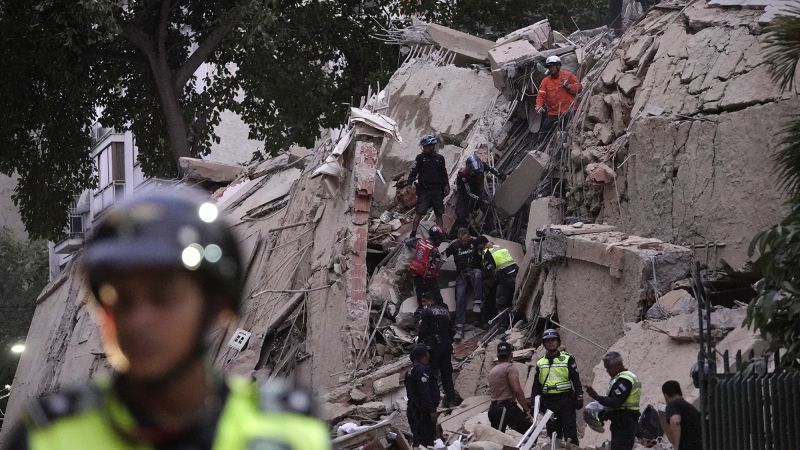
The first tremor, a 7.2 magnitude foreshock, occurred near San Felipe, the capital of Yaracuy state, shortly after 6:04 p.m. ET. Moments later, a stronger 7.5 magnitude quake followed, hitting approximately 23 kilometers southeast of Yumare, another town in the same state. The quakes have caused widespread destruction, with entire neighborhoods left in disarray and infrastructure severely compromised. Emergency teams have been mobilized across the country, and international support has been pledged to aid in the recovery efforts.
The timing of the disaster coincided with a public holiday, raising concerns about the number of people caught in the open or at gatherings. Inhabitants of cities like Caracas, La Guaira, and Catia La Mar reported feeling the tremors strongly, with some describing the chaos as akin to a horror movie. The magnitude of the quake has led to significant structural damage, particularly in coastal areas, where buildings have collapsed and high-rises have been reduced to rubble.
Political and Economic Context
Venezuela, already grappling with a deepening political and financial crisis, faces another crisis triggered by the earthquakes. The country is currently under the leadership of an interim government following the capture of President Nicolás Maduro earlier this year. Economic instability, exacerbated by years of hyperinflation, has left many residents in precarious conditions. The quakes have further strained the nation’s resources, compounding the challenges faced by its citizens and institutions.
Acting President Delcy Rodriguez addressed the situation in a video message, confirming the death toll and injury count while emphasizing the urgent need for rescue operations. She noted that La Guaira, a coastal state, has been designated a disaster zone due to the extensive damage reported there. The region’s vulnerability to such events is highlighted by the fact that most structures were not built to withstand strong seismic activity, increasing the risk of collapse and injury.
“The scene was like a horror movie,” shared a Caracas resident who narrowly escaped from a damaged building. The person described the chaos as overwhelming, with families and pets fleeing to safety before gathering on the streets. “We couldn’t get out; there was hammering from one side and kicking from the other,” recounted Martha Añez, who was trapped in her apartment. “I don’t know who actually rescued us, because they were shouting, ‘Get away from there, we’re coming and we are about six!’ until they finally burst through the door.”
Añez also mentioned that three floors of her building were “totally and absolutely wrecked,” leaving residents in a state of uncertainty. The earthquakes have disrupted daily life, with internet connectivity plunging sharply across the nation due to damage to power and telecoms infrastructure. While services have partially recovered in the hours after the event, these disruptions may slow down rescue operations and communication from affected areas.
Global Response and Immediate Actions
The U.S. Geological Survey (USGS) issued two separate red alerts via its PAGER system, warning of potential “high casualties and extensive damage” from the back-to-back quakes. The alerts underscore the severity of the situation and the likelihood of ongoing challenges in the aftermath. In response, Venezuela declared a state of emergency, establishing a high-level task force to coordinate search and rescue efforts and allocate emergency resources. An initial $200 million fund has been announced to support rebuilding efforts, though the full extent of the damage remains to be assessed.
Security forces have been deployed nationwide to manage the crisis, with authorities taking precautionary measures such as cutting off direct gas supplies to certain buildings. These steps aim to prevent further accidents and ensure the safety of both residents and rescue workers. The task force is also focusing on stabilizing infrastructure and providing immediate relief to those displaced by the quakes. Meanwhile, the nation’s primary airport, Simon Bolivar Airport near Caracas, has temporarily closed following structural damage, affecting transportation and logistics.
As the nation deals with the immediate aftermath, the government has announced a week-long suspension of school classes and temporary cancellations of rail services and non-essential activities. Nationwide prayers for all religions are set to be held at 7 p.m. local time, reflecting a collective hope for recovery and resilience. The scale of the disaster has drawn attention from international organizations, with countries offering assistance and resources to help Venezuela navigate this critical phase.
The quakes have not only shaken the physical landscape but also the morale of Venezuelans, who are already burdened by years of economic hardship and political uncertainty. As rescue workers work through the night, the challenge of locating survivors and assessing the damage continues. The situation remains fluid, with the potential for more casualties and extensive long-term consequences for the country’s infrastructure and social stability.
With the global community closely monitoring the crisis, the focus remains on mitigating the impact of the quakes and supporting the affected population. The disaster serves as a stark reminder of the vulnerabilities in Venezuela’s infrastructure and the need for long-term investment in disaster preparedness. As the country begins to recover, the lessons learned from this event may shape future policies and strategies to address both natural and human-made challenges.