
High school senior gets over 5 years in prison for setting homeless man on fire on NYC subway
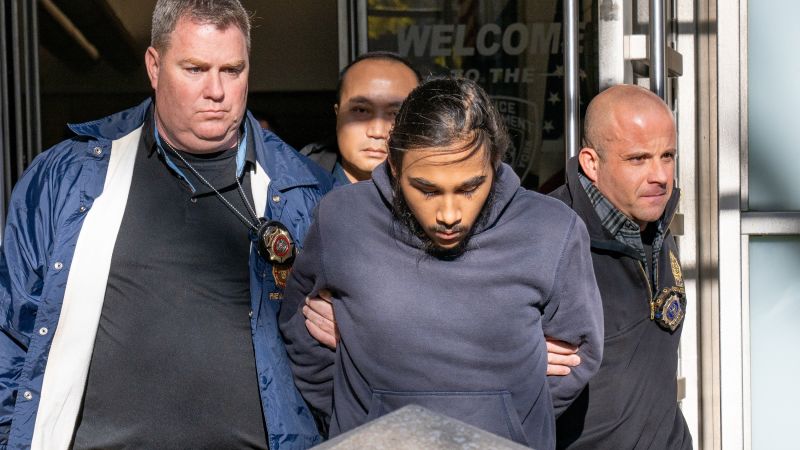
High School Senior Gets Over 5 Years in Prison for Setting Homeless Man on Fire on NYC Subway
High school senior gets over 5 years – On Tuesday, a 19-year-old high school senior was handed a prison sentence exceeding five years for an act of arson that left a homeless man severely burned on a New York City subway. Hiram Carrero, the defendant, pleaded guilty in March to the charge, which led to the federal court in Manhattan imposing a sentence longer than the mandatory minimum for the offense. The incident, which occurred on December 1, 2025, during an early morning commute, was part of a wave of similar attacks targeting individuals on public transit across the United States.
Incident and Legal Proceedings
The fire broke out in a crowded subway car as Carrero, reportedly under the influence of alcohol and marijuana, ignited a piece of paper that caused the man’s severe burns. Prosecutors argued that the act was not just an accident but a calculated attempt to harm. In a presentence report, they emphasized that Carrero’s “heinous actions” resulted in critical injuries, leaving the victim with permanent scarring and disfigurement. The man was asleep at the time of the attack, and his survival was attributed to emergency responders who arrived quickly after a “mercifully short trip” from Penn Station at 34th Street to Times Square.
“Carrero’s actions were not just reckless—they were deliberate,” prosecutors stated. “By setting the homeless man ablaze on a moving subway car, he endangered lives and caused lasting physical and emotional trauma.”
Prosecution’s Arguments and Sentence Justification
The prosecution highlighted the severity of the crime, noting that the victim’s condition could have been far worse had the fire not been extinguished in time. They requested a sentence of up to eight years, urging the court to reflect the full extent of Carrero’s culpability. “The man was left critically injured and with extensive scarring, which will affect his life permanently,” one of the prosecutors wrote in court documents. “This was a targeted attack that could have ended in murder.”
According to the legal filings, Carrero had attempted to kill the homeless man by burning him alive and trapping him in the subway car. The prosecution argued that his explanation of being intoxicated that day did not justify the brutality of the act. They stressed that the victim’s injuries were severe enough to classify the crime as an act of violence rather than a minor offense.
“The life of the homeless man was saved by sheer luck and the rapid response of emergency personnel,” the prosecutors added. “This incident underscores the danger of arson on public transportation, especially when executed with intent.”
Defense Lawyer’s Plea for Leniency
In defense, Jennifer Brown, Carrero’s attorney, painted a picture of a troubled youth shaped by early hardships. She noted that Carrero had been born prematurely with drugs in his system, leading to a difficult start in life. His biological parents abandoned him at the hospital shortly after his birth, leaving him to navigate a challenging childhood. Brown described Carrero as intellectually challenged, explaining that his struggles intensified when the pandemic hit in 2020. “The pandemic stripped away his ability to attend school regularly, compounding the challenges he already faced,” she wrote in court documents.
Brown emphasized Carrero’s remorse, stating that the defendant felt “profound shame” for his actions. She argued that his youth and the influence of substances at the time of the incident should be considered in sentencing. “While his choices were reckless, they were also influenced by a combination of factors, including his environment and mental state,” the lawyer said. “This tragedy could have been prevented if his circumstances were taken into account.”
“Words are inadequate to express the remorse Hiram feels,” Brown said during the hearing. “He regrets the harm he caused and is committed to making amends.”
Broader Context and Community Reaction
The case has sparked debate about the intersection of homelessness, youth violence, and public safety. Carrero’s crime was part of a growing pattern of arson attacks on public transit, with similar incidents reported in cities like Chicago, Los Angeles, and Atlanta. These events have raised concerns about the vulnerability of passengers and the need for stricter measures to prevent such acts. Community leaders and advocates for the homeless have called for a balanced approach, highlighting both the need for justice and the importance of addressing the root causes of the defendant’s behavior.
Legal experts have noted that Carrero’s sentence reflects the gravity of the situation. While the minimum for arson is typically lower, the court’s decision to impose a longer term underscores the perceived threat of his actions. The victim, who has since been recovering in a hospital, has become a symbol of the plight of the homeless population. His case has drawn attention to the risks faced by individuals without stable shelter, especially in bustling urban environments where such incidents can escalate quickly.
Impact of the Crime and Future Implications
Victims of the attack have described the experience as traumatic, with the homeless man’s injuries requiring prolonged medical care. The subway, a place of daily routine for many, transformed into a scene of chaos and fear. Carrero’s actions have also left a lasting mark on the community, with some calling for increased security measures on transit systems. Others argue that the case highlights the need for rehabilitation programs, particularly for young people with histories of neglect and trauma.
As the legal process continues, Carrero’s case serves as a reminder of the complexities involved in sentencing. While the prosecution focused on the intentional nature of the crime, the defense stressed the role of environmental and psychological factors. The outcome of this case may influence future rulings, setting a precedent for how such incidents are addressed in the justice system. For now, the homeless man remains a focal point of public discussion, with his story serving as both a cautionary tale and a call for empathy.
Following the sentencing, Carrero’s family expressed support, acknowledging the challenges he has faced. His mother, who has been a single parent since his early years, said she hoped the sentence would provide him with the opportunity to reflect and grow. Meanwhile, the victim’s family has been vocal about their gratitude to the emergency responders who saved his life, as well as their desire for justice. The case has also ignited conversations about the role of substance use in youth crime, with some experts suggesting that targeted interventions could help prevent similar incidents in the future.
As the defendant prepares for his time in prison, the incident remains a stark example of how personal struggles can lead to acts of violence. The story of Hiram Carrero and the homeless man who survived the flames will likely be remembered as a pivotal moment in the ongoing dialogue about public safety, mental health, and the conditions that shape criminal behavior in America’s urban centers.