
Why these adults are suddenly obsessed with a kids toy from the late 90s
Why these adults are suddenly obsessed with a kids toy from the late 90s
The Unexpected Revival of Beyblade in Hong Kong
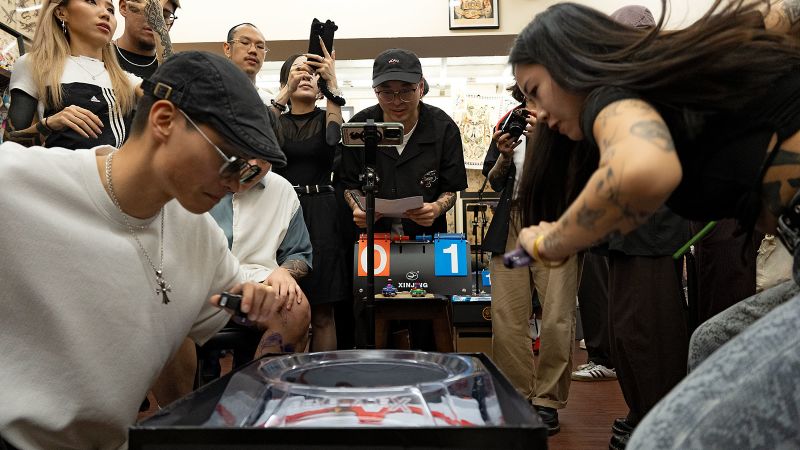
Why these adults are suddenly obsessed – In the heart of Hong Kong’s vibrant nightlife, a quiet transformation is taking place. The usual hum of tattoo machines and the occasional shout of pain from a client have given way to the rhythmic clatter of steel and plastic in collision. This once-typical tattoo parlor, nestled in the backstreets of Wan Chai, now hosts something far removed from its original purpose: a battlefield for adults engaged in fierce Beyblade duels. The space, once reserved for ink and needle, has become a coliseum where participants wield spinning tops with the same intensity as they once wielded pencils during school exams.
The phenomenon is not limited to this single location. Across Asia, from Japan to Thailand, and from Taiwan to Hong Kong, Beyblade is experiencing a surge in popularity that defies its 25-year-old origin. What began as a children’s toy is now a cult favorite among adults, drawing them into a world of strategy, competition, and nostalgia. Tiff Tam, a 28-year-old employee at The 59 Tattoo, embodies this trend. She admitted to splurging nearly $400 on a collection of “Beys,” as enthusiasts call them, and proudly declares herself prepared for the next round of battles.
Tam’s enthusiasm is part of a broader movement. The tattoo parlor, which typically closes at a standard hour, has started rescheduling its operations to accommodate Beyblade tournaments. On select nights, the tables are pushed aside to make room for the makeshift arena, where tattooists from other studios and local residents gather to test their skills. “At first, I just didn’t see the appeal,” Tam confessed. “But once I started playing, I felt that rush of tension, excitement, and rivalry that I hadn’t experienced in years.”
A Toy Rooted in Tradition
The Beyblade’s journey began in Japan, where its design is inspired by the ancient spinning top beigoma. The original concept, developed by toymaker Takara in the late 1990s and early 2000s, quickly captured the imagination of children and adults alike. Players assemble colorful, customizable toys named after fictional weapons and characters such as “Saber Samurai” and “Arrow Wizard.” These “Beys” are launched onto a circular plastic platform, known as a “stadium,” with the goal of staying in play and maintaining momentum.
The rules are straightforward: the spinning top must remain within the designated area and continue spinning to secure victory. However, the simplicity of the game belies its complexity. Fans experiment with different designs and strategies, turning the stadium into a dynamic stage for competition. When official arenas are unavailable, ingenuity takes over. Social media videos reveal fans repurposing Chinese woks as makeshift battle zones, demonstrating the versatility and adaptability of the toy.
From Childhood to Adult Rivalry
Marcus Yuen, the founder of The 59 Tattoo, has seen the revival firsthand. For him, the tournaments are more than just a new activity—they’re a way to reconnect with his past. “When I was a kid, my primary school classmates used to gather in the park to play,” he recalled. “But as we grew older, those toys were left behind.” Yuen, now 36 and a father, was reintroduced to the game by a younger colleague last year. The experience rekindled his childhood passion, prompting him to transform his parlor into a hub for adult competitors.
For many participants, Beyblade is more than a game—it’s a social activity that bridges generational gaps. Tria John Bernard Benito, a 30-year-old, noted that the revival caught his attention through social media. A friend in Japan had shared the craze, and the idea of playing with the toy he once couldn’t afford as a child now feels accessible. “I didn’t get to play when I was a kid because they were too expensive,” he said. “Now I can use my own money to buy them and have fun.”
Meanwhile, in Tseung Kwan O, a suburban neighborhood in Hong Kong, a different scene unfolds. Dozens of players have gathered at a park, transforming it into a temporary arena for Beyblade showdowns. The area, once a place for casual strolls, now buzzes with competition as makeshift battle stations are set up. Fans of all ages line up to challenge the host, creating a unique blend of intergenerational rivalry. “It’s like a pickup game of street basketball,” one competitor remarked, highlighting the spontaneous nature of the gatherings.
The Economic and Cultural Impact
The popularity of Beyblade has had a tangible impact on the market. In Taiwan and Hong Kong, fans often wait in long lines outside toy stores, and some travel to Japan to acquire the rarest models. These collectibles, originally priced at a fraction of their current value, are now being resold online for up to $80—a price tag that’s ten times higher than their initial cost. The demand reflects a deeper cultural shift, as adults seek tangible experiences in an era dominated by virtual interactions.
For the organizers, the revival is a welcome change. Hui, a co-organizer of one of the park events, described how the toy has rekindled old friendships. “We play together now, even though we weren’t close back then,” he said. “It’s strange, but it feels like we’re all part of something bigger.” The sense of community and shared purpose is a stark contrast to the modern tendency for isolated, screen-based entertainment. Beyblade tournaments have become a rare space where people come together in real-time, driven by the thrill of competition and the joy of reliving childhood memories.
The resurgence is not just a passing fad, according to Leo Tsoi, CEO of Toys “R” Us. He called the phenomenon “quite unprecedented,” noting the role of social media in amplifying its reach. Viral videos and online communities have turned Beyblade into a global conversation, with enthusiasts in Asia leading the charge. As the toy makes a comeback, it’s not just about nostalgia—it’s about creating connections in a world that increasingly prioritizes convenience over tradition.
Resurrecting a Childhood Obsession
What began as a simple toy for children has now become a symbol of cultural identity for adults. The battles, once confined to playgrounds, now take place in unexpected locations such as tattoo parlors and suburban parks. The physicality of the game, the noise of the spinning tops, and the strategic elements have all contributed to its enduring appeal. For many, it’s a way to reclaim a part of their childhood that was lost to time, while for others, it’s a new passion that fosters camaraderie and competition.
As the trend continues to grow, it’s clear that Beyblade has found a new audience. Its revival is a testament to the power of nostalgia and the desire for hands-on, social experiences. Whether it’s through organized tournaments or informal gatherings, the toy has become a unifying force in a fragmented digital age. For those who play, the spinning tops are more than just plastic and metal—they’re a bridge to the past and a celebration of the present.
The story of Beyblade’s resurgence is one of reinvention and rediscovery. In a society where smartphones often replace face-to-face interactions, the toy’s ability to bring people together is remarkable. Its simplicity, combined with its customizable elements, allows for both casual play and intense competition. As adults embrace the game, they’re not just reliving memories—they’re shaping a new cultural phenomenon that could redefine how people connect in the future.