
Germany battles aggressive outbreak of poisonous caterpillars
Germany’s Battle Against Toxic Caterpillar Surge
The Threat of Poisonous Moth Caterpillars
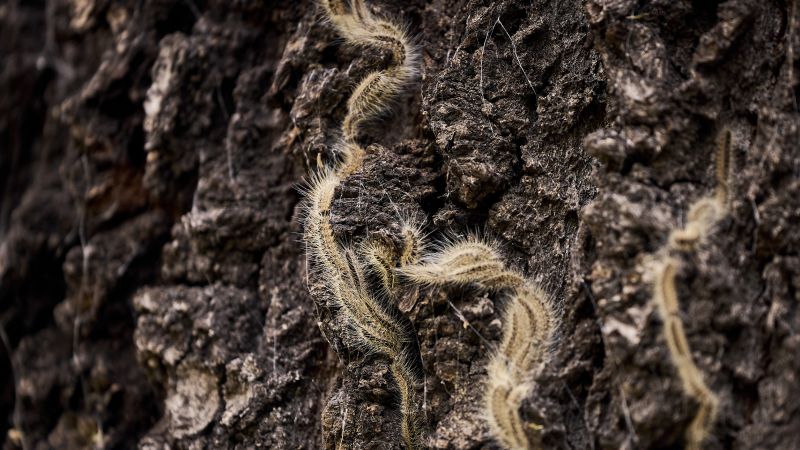
Germany battles aggressive outbreak of poisonous – Germany is grappling with a significant rise in toxic caterpillar infestations, which pose serious risks to public health. These caterpillars, specifically the oak processionary moth, are known for their microscopic, barbed hairs that release a potent toxin. Contact with these hairs can lead to a range of symptoms, from mild skin irritation to severe allergic reactions. In particular, the rash caused by the hairs has forced authorities to close parks and outdoor areas, disrupting city life in places like Berlin.
Health officials have identified the caterpillars as a growing concern, especially in urban environments. The toxic hairs, which detach easily, can be carried by the wind over long distances. This means even people not in direct contact with the insects may be at risk. In heavily infested regions, such as the districts of Charlottenburg-Wilmersdorf, Spandau, and Friedrichshain-Kreuzberg, the situation has become critical. Parks and green spaces in these areas are now treated like caution zones, with warning signs marking off infected zones.
Control Efforts in Berlin’s Affected Zones
Authorities in Berlin are deploying specialized equipment to manage the crisis. In Spandau, for example, a 39-acre park named Wilhelm-von-Siemens-Park has been designated as a restricted area. Workers are using vacuum machines typically reserved for asbestos removal to extract nests from tree branches. These machines, operated by teams in full protective gear, are essential for preventing the release of the 700,000 or more toxic micro-hairs found on each caterpillar.
City officials emphasize that complete eradication is not feasible. Instead, their goal is to minimize damage by focusing on trees near high-traffic paths. At one site, a crew spent an entire day removing nests from a single tree, highlighting the labor-intensive nature of the task. The effort has been ongoing, with teams aiming to clear approximately 20 trees per day. However, the extent of the infestation varies, making the work unpredictable and demanding.
Residents are advised to take precautions, such as washing clothes thoroughly after visiting parks and keeping windows and doors closed. These measures aim to reduce the risk of bringing toxic hairs into homes. The situation in Berlin has become so severe that popular green spaces, including Jungfernheide—the second-largest park in the city—now resemble hazardous zones. The area has been heavily affected, prompting the use of cherry pickers and protective gear to address the issue.
Tracking the Spread: A Citizen-Driven Initiative
The scale of the problem has drawn attention from both officials and the public. Britta Wunderwald, a former marketing professional, launched EPS-Radar, a digital platform designed to monitor the outbreak. Her initiative was inspired by a friend’s son who developed symptoms linked to caterpillar exposure. “I was wondering if I could go outside and find a safe spot for a picnic, but there was no map for this year,” she explained in a phone interview. “I hope next year the council takes this more seriously and acts earlier.”
EPS-Radar has become a crucial tool for tracking the spread of the infestation. It provides real-time updates on affected areas, helping authorities prioritize their response. The site also notes that the caterpillars are increasingly common in regions like Hamburg and North Rhine-Westphalia, a western German state. This expansion underscores the need for broader awareness and coordinated action across the country.
Environmental Factors Fueling the Crisis
Experts suggest that climate change and habitat loss are contributing to the surge in caterpillar populations. Derk Ehlert, an urban nature specialist, warned on the Berlin city website that the number of sightings has exceeded previous years. He noted that the species, which originated in southern Europe, has been gradually moving northward. “The conditions are ideal for their survival,” he stated. “Hot and dry weather accelerates their development and spreads their nests more rapidly.”
According to the EPS-Radar site, the caterpillars thrive in warmer climates, which has become more frequent in Germany. This shift has created an environment where their numbers are growing, complicating efforts to contain the outbreak. Biodiversity loss may also be playing a role, as reduced competition for resources allows the species to proliferate. The combination of these factors has turned what was once a seasonal nuisance into a year-round public health challenge.
Health Risks and Preventive Measures
While the primary danger comes from the caterpillars’ hairs, the effects can be severe. Contact with the toxin can cause itching, hives, and even anaphylactic shock in extreme cases. The hairs are so fine they can embed in skin, eyes, or respiratory systems, making them a persistent threat. Children and pets are particularly vulnerable, as they often come into closer contact with the nests.
Public health campaigns are now urging citizens to avoid touching the caterpillars or their nests. Warning signs are posted in parks and residential areas, and educational materials are being distributed to inform the population. Despite these efforts, the challenge remains significant. The caterpillars’ ability to disperse over long distances means that even areas far from the main hotspots are at risk. Authorities are working to balance the need for immediate action with long-term strategies to curb the spread.
Looking Ahead: A Call for Proactive Solutions
As the situation evolves, there is growing recognition of the need for proactive measures. Britta Wunderwald’s initiative has sparked conversations about how cities can better prepare for such outbreaks. She hopes that future planning will include more resources for early intervention. “We can’t just react when the problem becomes overwhelming,” she said. “Prevention is key.”
Experts like Derk Ehlert are advocating for a multi-faceted approach. This includes monitoring weather patterns, enhancing public awareness, and improving urban green space management. The oak processionary moth’s presence in Germany is a clear indicator of changing environmental conditions. By addressing the root causes—such as climate change and habitat disruption—cities may reduce the impact of future infestations. Until then, the battle against these toxic pests will continue, with citizens playing a vital role in staying safe and mitigating the spread. The situation in Berlin serves as a cautionary tale, reminding communities that nature’s challenges are becoming increasingly complex in the face of global environmental shifts.
The outbreak of oak processionary moth caterpillars has highlighted the interconnectedness of ecological health and human well-being. As the country adapts to this new reality, the focus remains on protecting public spaces and ensuring that the risks posed by these tiny, dangerous creatures are managed effectively. With ongoing efforts and community cooperation, the hope is to create a safer environment for all who enjoy Germany’s natural landscapes.