
Why is baseball having a gay meltdown?
Why is baseball having a gay meltdown?
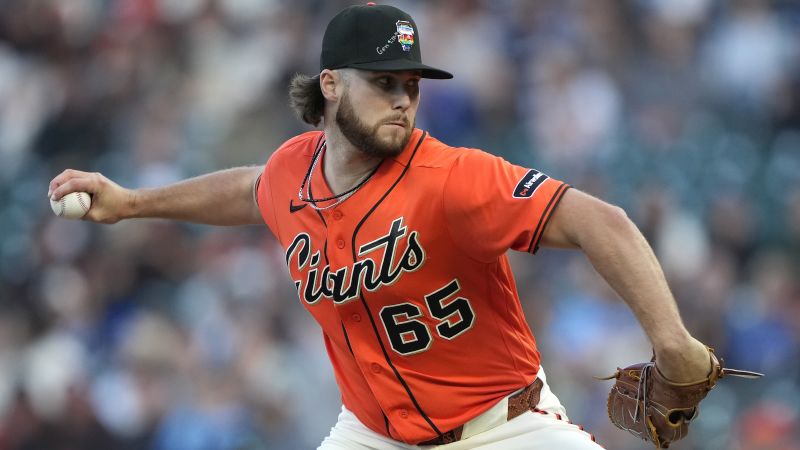
Why is baseball having a gay meltdown – Last Friday, the San Francisco Giants sparked controversy by hosting a Pride Night celebration at their ballpark. During the event, three pitchers, including the night’s starting pitcher, Landen Roupp, chose to express their beliefs through a unique twist on the traditional rainbow-themed caps. While most Major League Baseball (MLB) teams maintain Pride Nights as symbolic gestures to welcome LGBTQ+ fans, the Giants stood out by incorporating the rainbow design into their players’ uniforms. This decision, however, led to an unexpected protest from some of their own players.
The Pride Night Tradition
Twenty-nine of the thirty MLB teams have embraced Pride Nights as part of their seasonal promotions, aiming to foster inclusivity and attract diverse audiences. These events typically feature rainbow-colored caps and uniforms, serving as a visible celebration of LGBTQ+ pride. For many teams, the focus remains on the symbolic representation rather than the on-field actions. The Giants, however, took a different approach by adding a rainbow logo to their caps, a move that resonated with their commitment to diversity. Yet, this choice became a point of contention when three pitchers chose to challenge the message.
Players’ Religious Protests
The Giants’ Pride caps were not the only form of expression that night. Three players, including Roupp, opted to write biblical verses on their caps, a clear departure from the usual secular messages. Roupp’s choice referenced Genesis 9:12-16, a passage associated with the rainbow as a symbol of God’s covenant with humanity after the Great Flood. “That’s just kind of something I believe in, and I stand firm in that,” Roupp explained to reporters. “I’m thankful we live in a country where we have the freedom to believe what we want … and express what we want.” The other pitchers followed a similar pattern, using their caps to convey religious messages instead of Pride-related slogans.
MLB’s Uniform Policy and the Players’ Right to Free Expression
Major League Baseball (MLB) clarified that the players’ actions did not constitute a violation of their uniform rules. While the league has a policy prohibiting players from displaying nicknames or messages on their gear, it emphasized that this was a
“routine verbal warning”
rather than a disciplinary measure. The warning was issued to remind players of the policy, not to penalize them for their beliefs. “We have given the same warning numerous times in the past to players for messages such as ‘Dad,’ ‘Happy Mother’s Day, I Love Mom,’ and names of family members,” the league stated in a follow-up.
Roupp’s protest highlighted a tension between corporate symbolism and individual expression. He argued that his actions were a legitimate exercise of religion, a point supported by the league’s own stance. “This routine verbal warning not to wear the hat in future games is not disciplinary and had absolutely nothing to do with the content of the message,” MLB reiterated. The league respected the players’ right to free speech, even as it reminded them of the policy. This balance between tradition and personal belief became the center of a broader debate.
Political Reactions and the Accusation of Discrimination
The players’ actions did not go unnoticed by political figures. Trump administration officials and Missouri Senator Josh Hawley accused MLB of
“discriminating against Christian players”
by enforcing uniform rules that penalize religious expressions while allowing secular messages. They argued that the league’s selective enforcement of its policies targets faith-based symbols, contrasting them with the widespread use of non-religious slogans during Pride events. However, MLB maintained that its approach was consistent, using the same rules to address all instances of unauthorized messages on uniforms.
This controversy also drew attention from legal experts. Assistant Attorney General Harmeet K. Dhillon wrote to MLB Commissioner Robert Manfred, citing federal law that requires employers to accommodate employees’ religious practices. “Federal law is clear: employers must modify their uniform requirements to reasonably accommodate their employees’ exercise of religion,” she emphasized. The letter hinted at a potential investigation by the Equal Employment Opportunity Commission (EEOC), which could determine whether MLB’s policies unfairly restricted religious expression. CNN has since sought updates on the status of this inquiry.
The Tampa Bay Rays and a Shift in Strategy
Similar tensions have played out in the past, offering context for the current dispute. In 2022, the Tampa Bay Rays attempted to join the Giants and Los Angeles Dodgers in commemorating Pride Night with rainbow caps and patches. Five players opted out, choosing to wear their standard uniforms instead. Their decision, while permitted by the league, led to public scrutiny and criticism. The following year, MLB encouraged teams to avoid making uniforms a central feature of their Pride events, aiming to prevent future conflicts. This shift suggests the league is aware of the potential for ideological clashes and seeks to balance inclusivity with player autonomy.
Despite the recent focus on religious freedom, the Giants’ stance on Pride uniforms remained unchanged. Players who participated in the event could choose to wear their everyday caps, ensuring that those who objected had the flexibility to do so. The protest, therefore, was not about eliminating Pride Night but about reclaiming the symbolism for a different interpretation. Roupp’s use of Genesis 9:12-16 positioned the rainbow as a divine promise rather than a secular celebration, challenging the league’s framing of the event.
A Broader Implication for Sports and Society
The incident raises questions about how sports leagues navigate the intersection of identity, faith, and commercial branding. While Pride Nights are intended to celebrate LGBTQ+ communities, they also serve as a platform for broader ideological statements. In this case, the players’ actions turned the event into a battleground for religious expression. The league’s response—issuing a verbal warning without taking further action—underscored its commitment to allowing individual creativity within established boundaries.
Vice President JD Vance’s tweet, “Trump won we don’t have to do this anymore,” reflected the growing political polarization around the issue. It suggested that the players’ protest was seen as a symbolic victory for conservative values, linking the event to the broader cultural shifts under the Trump administration. Meanwhile, critics argued that the league’s approach was a form of subtle coercion, pressuring players to conform to a specific message of inclusivity. The debate highlights the evolving role of sports in societal discourse, where stadiums have become stages for both celebration and contention.
As the conversation continues, the Giants’ case may serve as a precedent for future disputes. Whether the players’ actions are viewed as a legitimate expression of faith or a challenge to the league’s inclusive branding depends on perspective. However, the fact that MLB issued only a verbal warning—and not a formal penalty—demonstrates its willingness to accommodate diverse viewpoints. The league’s emphasis on free expression, even as it enforces uniform rules, reflects a nuanced approach to balancing tradition with modern values. For now, the Giants’ protest remains a small but significant moment in the ongoing dialogue about identity, religion, and the role of sports in shaping cultural narratives.