Police shooting of a 1-year-old Mississippi boy ignites tension between police and Black residents

Police Shooting of a 1-Year-Old Mississippi Boy Sparks Community Outcry
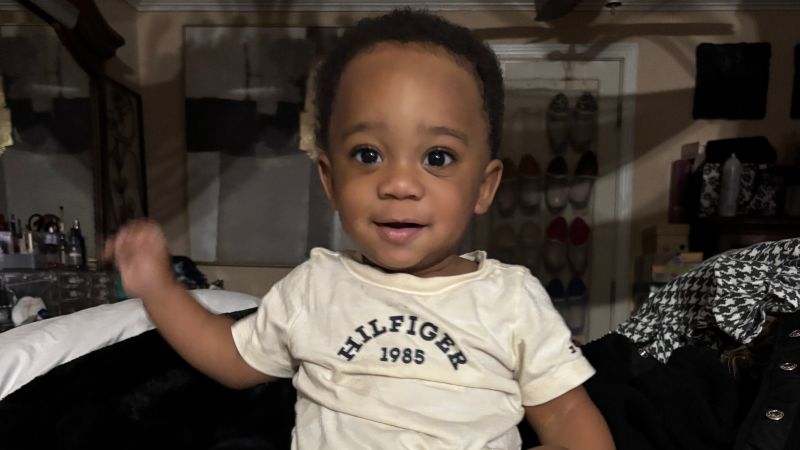
Police shooting of a 1 year – On Sunday, a tragic incident unfolded in Senatobia, Mississippi, when a 1-year-old boy, Kohen Wiley, was fatally shot by police responding to a shoplifting call. This event has reignited long-standing tensions between law enforcement and Black residents in the small town of 8,000, highlighting concerns about racial bias and police accountability. The boy’s death has become a focal point for activists, who argue it underscores the broader pattern of Black lives being lost in confrontations that seem minor in nature.
Incident Details and Initial Response
Senatobia officers arrived at a Walmart to address a report of shoplifting. They found two women and a child exiting the store, getting into a car, and driving away. According to the Mississippi Bureau of Investigation, the officers attempted to stop the vehicle but were met with a sudden maneuver as the driver veered toward them. “The officer fired their weapon, and the vehicle then sped off,” the agency stated in a released summary. Kohen’s mother, Vellesiya Wiley, claims the child and her friend were struck by gunfire. In a social media video shared by civil rights attorney Ben Crump, Wiley recounted the incident, asserting that the driver was not heading toward the officers but instead moving away from them. “She was driving toward the left, while all of them were on the right side,” Wiley explained, challenging the narrative that the shoplifting claim justified the shooting.
The circumstances surrounding the incident have sparked immediate scrutiny. Some community members question whether the alleged theft of diapers was enough to warrant lethal force. “We’re prioritizing items on a shelf over a child’s life,” said Bernice King, the daughter of civil rights legend Martin Luther King, Jr., in an Instagram statement. Her words reflect a growing frustration with how police actions are perceived in cases involving Black individuals. “This isn’t just poor policing—it’s a moral failure,” she added, emphasizing the need for systemic change.
Community Reactions and Calls for Accountability
The shooting has intensified demands for accountability within Senatobia. Activists and advocates argue that the incident mirrors a series of similar tragedies where Black lives are disproportionately affected. Policing expert Ian Adams, a professor at the University of South Carolina, echoed this sentiment. “Shooting into a moving vehicle is a risky decision that should be avoided unless absolutely necessary,” Adams said. He pointed to the presence of other occupants in the car, which raises questions about the decision to use deadly force. “The officer’s actions could have had multiple consequences, including the injury or death of others,” he noted.
For many, Kohen Wiley’s death evokes parallels with the 2023 case of Ta’Kiya Young, a Black mother in Ohio who was shot by police while fleeing a shoplifting accusation. Young, who was pregnant and had two young sons, was killed as her vehicle sped away from officers. Both she and her unborn daughter were fatally wounded. Despite the severity of the incident, the officer involved was later acquitted by a review board, citing justification for the use of force. Such outcomes fuel criticism that racial disparities persist in how police conduct and accountability are assessed.
Historical Context and Broader Implications
Kohen’s case adds to a troubling list of incidents where Black individuals have died during interactions with law enforcement following minor offenses. The 2020 killing of George Floyd, for instance, was triggered by a police response to a counterfeit $20 bill, while another case involved a 10-year-old Black boy arrested for urinating in a parking lot. Two years ago, a Senatobia officer was dismissed after participating in that arrest, signaling a step toward accountability but also underscoring the ongoing challenges.
Marquell Bridges, founder of the Building Bridges Coalition, described Kohen’s death as “the breaking point” for the community. He highlighted a recent incident at the same Walmart where an officer threatened Breshari Faulkner with a Taser, pulled her from her car, and arrested her for a disputed handicapped parking violation. “These moments are cumulative,” Bridges said. “They build a sense of distrust that takes root over time.”
As the investigation continues, unanswered questions linger about the sequence of events and the decisions made in the heat of the moment. Some residents wonder if the officer’s actions were a justified response or a tragic misjudgment. Meanwhile, the Wiley family and their allies are pushing for comprehensive reforms, including updated training and stricter oversight policies. “Until we ensure every life is valued from the outset, we’ll keep fighting,” said Bridges, who has been actively supporting the Wiley family in their advocacy efforts.
Systemic Concerns and the Path Forward
Racial justice advocates stress that such incidents are not isolated but part of a larger pattern of systemic racism in policing. “In the name of ‘law and order,’ a child’s life was extinguished over items that could be easily replaced,” Bernice King wrote in her Instagram post. The phrase has resonated deeply with those who see the shooting as a symbol of institutional neglect. “We must demand changes in how police are trained and how they are held accountable,” she added.
The incident has also reignited conversations about the value placed on Black lives in moments of crisis. While the shoplifting accusation may seem trivial, it has become a catalyst for deeper reflection on police conduct. “This isn’t just about a single act of violence—it’s about how our community is treated in everyday interactions with law enforcement,” one local activist said in a community meeting. The discussion extends beyond Senatobia, with national organizations calling for broader reforms to address disparities in policing across the country.
As the investigation unfolds, the focus remains on ensuring transparency and fairness. The Mississippi Bureau of Investigation’s report will be scrutinized alongside the accounts of those directly involved. For now, the community of Senatobia stands united in mourning Kohen Wiley and demanding justice. “We’re not asking for more than what’s fair,” said Bridges. “We just want to know why a child was shot for something that could have been resolved without bullets.”
These events serve as a stark reminder of the ongoing struggle for equity in policing. While the specifics of Kohen’s case may not be fully clear, its impact is undeniable. For families and advocates in Senatobia, the shooting is a call to action, urging a reevaluation of how police interactions are managed and how justice is served. “Every life lost is a step toward change,” King said in a recent statement. “We’re not giving up until we see that change happen.”