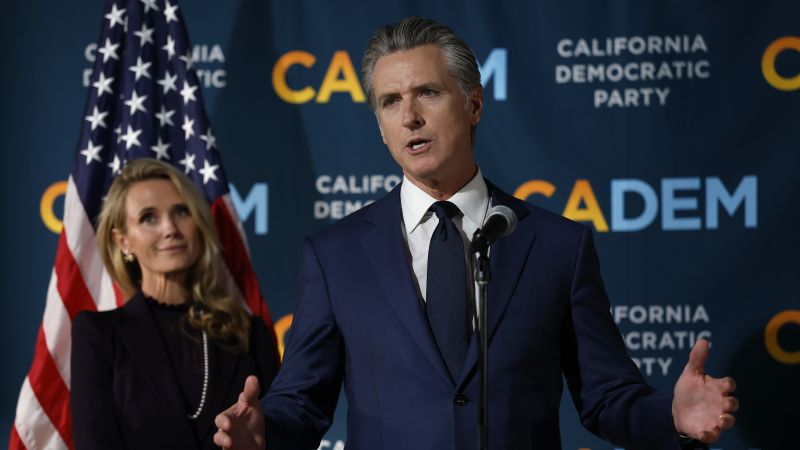
Gavin Newsom Fast Facts

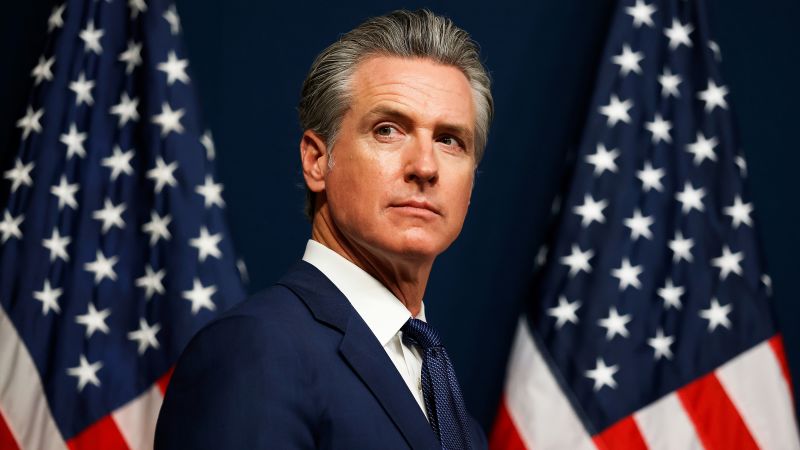
Governor of California: The Life and Career of Gavin Newsom
Gavin Newsom Fast Facts – Gavin Newsom, the 40th governor of California, has carved a distinctive path in public service, marked by both policy innovation and personal milestones. His journey from a San Francisco native to a state leader reflects a blend of civic dedication and personal resilience, with key events shaping his public and private life.
Early Life and Family Background
Gavin Christopher Newsom was born on October 10, 1967, in San Francisco, California. He grew up in a household where his father, William Alfred Newsom III, served as a lawyer and judge on the California state appeals court. His mother, Tessa Thomas Menzies, worked as a waitress, secretary, and paralegal while managing the family’s business ventures. Newsom’s early years were influenced by his mother’s determination to support him and his sister after the couple’s divorce, a challenge that shaped his perspective on leadership and responsibility.
Personal Life and Education
Newsom’s personal life has been as dynamic as his career. He married Jennifer Siebel in 2008, and the pair has four children together: Montana, Hunter, Brooklynn, and Dutch. Prior to this, he was married to Kimberly Guilfoyle from 2001 to 2006, a union that ended in divorce. His educational foundation includes a bachelor’s degree in political science from Santa Clara University, earned in 1989. Newsom has also spoken openly about his lifelong struggle with dyslexia, a learning disability that he attributes to his early challenges with reading and writing.
Early Career and Business Ventures
Before entering politics, Newsom pursued a career in business. In 1992, he co-founded a wine shop in San Francisco with the support of family friend Gordon Getty. This venture later expanded into a network of restaurants and wineries known as the Plumpjack Group, which became a successful enterprise in the region. His entrepreneurial spirit was evident early on, as he demonstrated an ability to balance commercial acumen with a passion for community impact.
Political Beginnings in San Francisco
Newsom’s political career took root in San Francisco, where he began as a volunteer for Willie Brown’s mayoral campaign in 1995. This experience led to his appointment on Brown’s Parking and Traffic Commission in 1996, marking his first official role in local governance. By 1997, he was elected to the San Francisco Board of Supervisors, a position he held for two terms. His leadership during this period laid the groundwork for his future ambitions, including a bid for mayor in 2003.
The Mayoral Election and Same-Sex Marriage
In 2003, Newsom made history by becoming San Francisco’s mayor, winning the runoff election with nearly 53% of the vote. His tenure began with a bold move: on February 12, 2004, he authorized the city and county to issue marriage licenses to same-sex couples, defying the state’s ban on such unions. This decision sparked both praise and controversy, as it placed him at the forefront of the LGBTQ+ rights movement. However, the California Supreme Court later ruled that Newsom had overstepped his authority, invalidating the marriages of over 4,000 couples. This ruling was a pivotal moment in his career, highlighting the tension between local action and state law.
Personal Scandals and Rebuilding Trust
Newsom’s personal life has not been without challenges. In 2007, he publicly admitted to an affair with his campaign manager’s wife, a revelation that drew widespread scrutiny. He also acknowledged his struggles with alcoholism, announcing in February 2007 that he was seeking professional help to curb his drinking. In a
statement
, he said, “I take full responsibility for my personal mistakes, and my problems with alcohol are not an excuse for my personal lapses in judgment.” These disclosures tested his public image but ultimately reinforced his commitment to transparency and accountability.
Transition to Lieutenant Governor
Newsom’s political ascent continued in 2009 when he announced his candidacy for governor, though he later withdrew from the race. In 2010, he won the lieutenant governor position with 50.2% of the vote, a role he held until 2019. During his time in this position, he remained active in state affairs, including his involvement in media. In 2012-2013, he hosted a weekly talk show, *The Gavin Newsom Show*, on Current TV, which provided a platform for discussing public policy and political issues.
Policy Initiatives and Public Engagement
Newsom’s approach to governance has often emphasized modernizing public services. His book, *Citizenville: How to Take the Town Square Digital and Reinvent Government*, published in 2013, outlined his vision for leveraging technology to enhance civic participation. The work reflects his belief in bridging the gap between government and citizens, a theme that has guided his career. In recent years, he has also used his platform to address pressing societal issues, including his efforts to combat the spread of the coronavirus during the pandemic.
California Governor and Leadership Challenges
Newsom’s election as California’s governor in 2018 was a landmark victory, with him securing over 60% of the vote in a race against Republican John Cox. His tenure has been defined by a mix of progressive policies and pragmatic governance, from implementing strict pandemic measures to pushing for redistricting reforms. In 2020, he issued a statewide stay-at-home order to curb the spread of COVID-19, a decision that became a cornerstone of his response to the crisis. Despite his efforts, Newsom faced criticism when he attended an unmasked birthday dinner in Napa Valley in 2020, a move he later described as a “bad mistake” in his apology.
Recent Political Activities
Newsom’s political influence has extended beyond the governor’s office. In 2021, he survived a recall effort led by Republicans, with approximately 38% of voters supporting his removal. His resilience in this challenge underscored his popularity among Californians. In 2022, he was reelected governor with about 60% of the vote, a testament to his continued support. Additionally, in 2023, he launched the Campaign for Democracy, a political action committee aimed at countering what he described as “extremist Republicans” and promoting democratic values. His recent initiatives include the launch of a podcast, *This Is Gavin Newsom*, which features in-depth conversations with guests, including conservative activist Charlie Kirk, further showcasing his ability to engage across political divides.
Legacy and Impact
Newsom’s career has been shaped by a combination of bold decisions and personal growth. From his early business ventures to his role in advancing LGBTQ+ rights, he has consistently sought to challenge the status quo. His leadership during the pandemic and his efforts to reshape California’s congressional maps through Proposition 50 in 2025 highlight his strategic vision. While his tenure has not been without controversy, his ability to adapt and communicate has solidified his position as a prominent figure in American politics. As he continues to serve, Newsom’s story remains one of perseverance, innovation, and the blending of personal experience with public service.
Throughout his life, Newsom has demonstrated an ability to navigate both professional and personal challenges. His journey from a small-town upbringing to the governor’s mansion reflects a commitment to leadership that transcends traditional boundaries. Whether through policy-making, media appearances, or public engagement, he has positioned himself as a leader who is as much about the people as the process. His future endeavors will likely continue to reflect this duality, as he remains a key player in California’s political landscape.