Sunken wreck of WWII ‘hell ship’ used to transport POWs discovered after more than 80 years

WWII Hell Ship Wreck Found After 80-Year Search
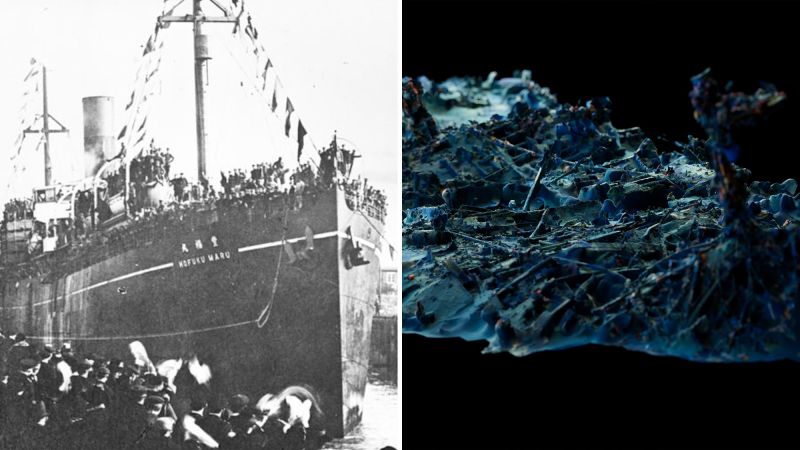
Sunken wreck of WWII hell ship – A long-lost WWII hell ship wreck, believed to be the Hōfuku Maru, has been located after nearly eight decades of mystery. The discovery, made in June 2026, marks a significant milestone in uncovering the fate of thousands of Allied prisoners of war transported aboard the vessel. This ship, part of Japan’s fleet of 56 unmarked “hell ships,” was among the many victims of a devastating aerial attack in 1944. The precise location of the wreckage had eluded historians for over 80 years, but recent advancements in technology and collaborative efforts have finally brought this poignant chapter of history to light.
The Tragedy of the Hōfuku Maru
On September 21, 1944, the Hōfuku Maru was part of a convoy navigating the South China Sea. Its cargo hold was filled with prisoners of war, including British and Dutch soldiers, who were already weakened by the harsh realities of captivity. A US aerial strike, mistaking the civilian vessel for a military target, delivered four torpedoes that tore the ship apart. Within moments, the Hōfuku Maru plunged into the depths, claiming the lives of most of its passengers. Only around 200 survivors were left to recount the horrors of the journey.
Survivors described the conditions on board as unbearable, with cramped quarters, scarce food, and sweltering heat creating a suffocating environment. The ship’s lack of sanitation and limited ventilation exacerbated the suffering of the prisoners, many of whom had been held for months in brutal conditions. As historian Tim Beckensall, director of the Hellships Memorial Foundation, noted, the experience was “the worst you could imagine,” blending the agony of war with the despair of captivity.
The Search for the Wreck’s Location
Following the war, efforts to locate the Hōfuku Maru’s wreckage began in earnest, driven by a desire to honor the lives lost. Researchers examined military records and historical accounts, but inconsistencies in the data delayed progress for years. A breakthrough came in June 2025 when Beckensall’s colleague, John Duresky, uncovered a digitized Japanese report from officers on the lead ship of the convoy. This document provided key details about the attack’s timeline and a map of the fleet’s movements, narrowing the search area significantly.
Combining historical evidence with modern imaging techniques, the team identified a site off the western coast of Luzon, near Zambales province in the Philippines. The wreck, resting at approximately 164 feet (50 meters) below the surface, was confirmed through cross-referencing with an aircraft action report from the USS Bunker Hill. The report detailed the sinking of an AK-class auxiliary cargo ship, which matched the Hōfuku Maru’s position in the convoy. This alignment of records finally secured the ship’s location, ending a decades-long search.
Collaborative Efforts and Technological Innovation
The discovery was made possible by a multidisciplinary team of experts, including maritime archaeologists and historians. The Cultural Heritage Agency of the Netherlands, the Hellships Memorial Foundation, and the Discovery Channel collaborated to conduct sonar surveys and deep-sea dives. These efforts yielded hundreds of images and detailed scans of the wreck, revealing its structure and confirming its identity. The use of advanced underwater equipment allowed researchers to navigate the volcanic sediment that had partially obscured the ship since its sinking.
Volcanic ash from the 1991 Mount Pinatubo eruption has contributed to the wreck’s concealment, forming a layer of sediment that complicates identification. Despite this, the team leveraged historical maps and modern imaging to piece together the ship’s resting place. The process required meticulous analysis and patience, as the wreck was gradually hidden by natural forces. This breakthrough not only brings closure to the victims’ families but also deepens our understanding of the WWII hell ship’s role in the Pacific Theater.
The Legacy of the Hell Ships
Josh Gates, host of the “Expedition Unknown” series, emphasized the historical significance of the find in a two-part season premiere airing in June 2026. “The most surprising part of this investigation is actually the story itself,” he wrote. “The legacy of the hell ships remains a powerful reminder of the brutality and sacrifice endured by prisoners of war during World War II.” The Hōfuku Maru’s discovery adds a new dimension to the study of these vessels, which were notorious for their role in transporting POWs under dire conditions.
The sunken wreck of the hell ship stands as a testament to the suffering of those who perished during the war. With over 1,200 British and Dutch prisoners aboard, the loss was profound. Today, the site serves as a symbol of historical resilience and the importance of preserving wartime memory. As researchers continue to document the wreck, they hope it will inspire further exploration of other sunken hell ships, shedding light on one of the darkest chapters of World War II.