Supreme Court to decide if migrants detained for months must receive bond hearings

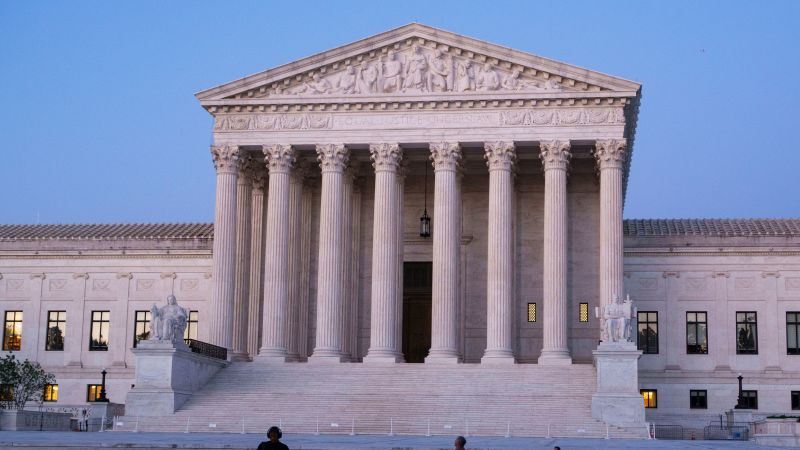
Supreme Court to Decide Migrants’ Bond Hearings
Supreme Court to decide if migrants – The U.S. Supreme Court is set to determine whether individuals detained for extended periods must be granted bond hearings. This pivotal case involves two noncitizens who were held in custody without such opportunities, raising concerns about due process and immigration enforcement practices. Legal experts and advocacy groups argue that the decision could significantly impact how the government handles detainee rights, especially under the Trump administration’s policies. The court’s ruling may establish whether indefinite detention without a bond hearing violates constitutional safeguards, altering the trajectory of immigration law in the process.
Case Overview and Legal Conflict
The dispute centers on two men convicted of serious offenses and facing deportation to the Dominican Republic and Jamaica. One was detained for seven months, the other for nearly two years, without attending a bond hearing. Immigration officials maintained that their removal cases were ongoing, but the detainees’ attorneys contended that the lack of a formal hearing left them without a chance to prove their eligibility for release. This situation has led to a legal challenge questioning whether the Constitution mandates a bond hearing after prolonged detention.
The case was previously decided by a New York federal appeals court in 2024, which ruled that the due process clause requires bond hearings for noncitizens held for extended periods. The court emphasized that such hearings are vital to ensure fairness and prevent unjust prolonged custody. However, the Trump administration contested this decision, arguing that it would slow down immigration enforcement and complicate removal processes. The Supreme Court’s review now aims to resolve this disagreement.
Policy Context and Constitutional Debates
A key legal provision at the center of this case allows for the detention of noncitizens convicted of specific crimes without bond hearings. This policy, used extensively during the Trump era, has expanded to include a broader range of offenses, enabling indefinite detention. Critics, including the American Civil Liberties Union (ACLU), argue that this approach has created a system where detention becomes the default, bypassing constitutional protections. The current case tests the limits of this provision and its alignment with due process rights.
The ACLU’s argument hinges on the experiences of the two detainees, who were released without being re-detained. Their attorneys claim that the government’s reliance on indefinite detention is unnecessary, as the men could have been released and still met their removal obligations. This highlights the potential for the Supreme Court to either uphold or redefine the legal standards governing bond hearings, with implications for future immigration cases.
“The absence of bond hearings leaves individuals in prolonged custody without a chance to demonstrate their eligibility for release,” said a legal analyst. “This case is crucial in determining whether the Constitution mandates such protections for all detained noncitizens.”
Historical Precedents and Judicial Perspectives
This issue has been previously addressed by the Supreme Court, notably in United States v. Texas in 2016. There, the court ruled that federal law did not require bond hearings for detained noncitizens, but the decision was split, leaving room for further debate. Justice Samuel Alito’s majority opinion focused on statutory interpretation, while Justice Stephen Breyer’s dissent argued that the law might be unconstitutional under broader constitutional principles.
The current case builds on that earlier ruling, seeking to clarify whether the Constitution itself necessitates bond hearings after lengthy detentions. Legal scholars suggest that the decision could either reinforce the Trump administration’s approach or signal a shift toward greater due process protections. The Supreme Court’s interpretation will influence future cases and shape the balance between immigration enforcement efficiency and individual rights.
Impact on Immigration Enforcement
If the Supreme Court rules that bond hearings are required, it could force the government to adjust its detention practices. The decision might lead to