A submersible ride revealed a vast whale graveyard. And it holds more than just bones

A Submersible’s Journey Unveils a Deep-Sea Whale Cemetery. And It Holds More Than Just Bones
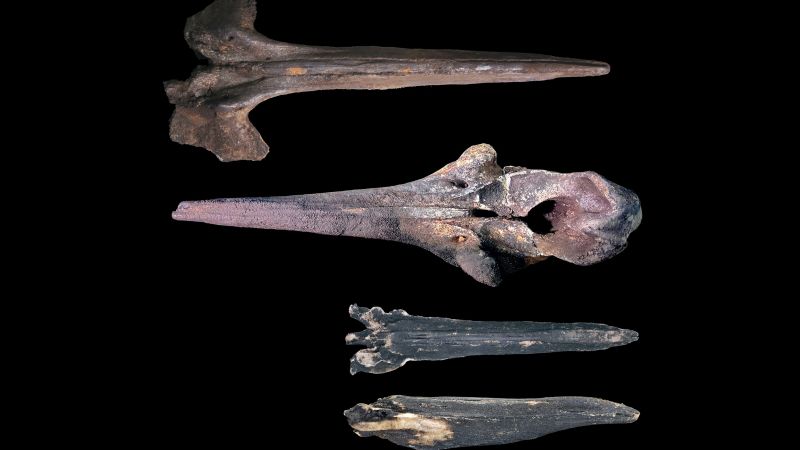
A submersible ride revealed a vast – In a groundbreaking expedition to the southeastern Indian Ocean, scientists have uncovered one of the most expansive and ancient whale graveyards ever documented. This remote site, located in the Diamantina Fracture Zone, spans approximately 746 miles (1,200 kilometers) in length and is home to hundreds of fossilized remains, including those of a previously unknown species. The discovery, reported in the journal Nature, reveals a continuous history of whale deposition stretching back at least 5 million years, offering a unique window into deep-sea ecosystems over millennia.
Whale Falls: Sustaining Deep-Sea Life
While the graveyard is dominated by ancient bones, its significance extends beyond fossils. Modern whale carcasses, known as whale falls, lie among the older remains, indicating that the site remains an active hub for deep-sea life. These carcasses, which can persist for decades, serve as critical food sources for a range of organisms, from bone-eating worms to chemosynthesis-dependent bivalves. The presence of scavengers on some of the more recent remains suggests that this area continues to support complex ecological networks.
“Until now, whale falls were mostly based on large cetacean carcasses, mostly baleen whales,” said Olivier Lambert, a vertebrate paleontologist at the Royal Belgian Institute of Natural Sciences in Brussels. “Here the authors show that beaked whale carcasses can play a similar role in some specific deep oceanic regions.”
Beaked whales, the primary species found at this site, are known for their deep-diving behavior and elusive nature. Their skulls, which narrow into slender snouts like those of dolphins, make them difficult to spot near the surface. This characteristic, combined with their preference for deep waters, has contributed to the limited understanding of their life cycles. The graveyard’s location in a deep-sea trench, however, provides an ideal environment for their remains to accumulate over time.
The Expedition and Its Challenges
The team’s exploration of the Diamantina Zone was part of the Global Hadal Trench Exploration Program, an international initiative aimed at studying Earth’s least-known oceanic regions. Using the research vehicle Tan Suo Yi Hao, the scientists deployed a submersible named Fendouzhe, which previously reached the Challenger Deep in the Mariana Trench — the deepest point on the planet — in 2020. The submersible’s robotic arm was instrumental in collecting 43 fossils and scavengers from the site, while a specialized device called a slurp sampler helped gather biological samples.
“Although this is a truly massive whale graveyard, reaching it is extremely difficult due to the great depth,” said Peng Zhou, a co-lead author of the study and researcher at the Institute of Deep-Sea Science and Engineering (IDSSE) in Beijing. The team conducted 32 dives between February and March 2023, uncovering not only fossil deposits but also five modern whale falls. The density of remains in some areas reached up to 760 per square kilometer — a figure far higher than anything previously recorded in similar environments. Zhou estimated that over 10 million whale remains lie on the ocean floor, with even more potentially buried beneath sediment layers.
Revealing a Forgotten History
The Diamantina Fracture Zone, situated southwest of Australia, was formed around 30 to 40 million years ago during the tectonic separation of the Australian and Antarctic continents. This geological history has created a unique environment where whale remains have accumulated for millions of years. The site’s remoteness and depth have made it a hidden archive, preserving the skeletal remains of species that have long since vanished.
Researchers noted that the graveyard’s composition includes both ancient and contemporary fossils, highlighting its role as a living and fossil record. The presence of beaked whale remains, in particular, challenges previous assumptions about their ecological impact. While baleen whales were once the focus of whale fall studies, this discovery underscores the importance of beaked whales in sustaining deep-sea biodiversity. Lambert, who was not involved in the expedition, called the findings “still really spectacular,” emphasizing the site’s scientific value.
A Legacy of Discovery
The graveyard’s discovery has sparked renewed interest in the study of deep-sea ecosystems. Its vast scale and the continuous deposition of remains over millions of years suggest that it may hold key insights into the evolution of marine life and the interactions between whales and the organisms that depend on their carcasses. The site’s proximity to regions where beaked whale fossils have been snagged by trawlers or fishing vessels in the Iberian Peninsula, South Africa, and the Kerguelen Islands further connects its geological and ecological history to broader patterns of oceanic biodiversity.
“When we first observed this site, it came as a complete surprise to everyone,” Zhou added in an email to CNN. The team’s ability to capture images of the necropolis and collect samples from its depths marks a significant step in deep-ocean research. The expedition’s findings could lead to a better understanding of how whale falls contribute to nutrient cycling in the abyss, potentially revealing new species and ecological dynamics. As the researchers continue to analyze the collected data, the Diamantina Zone may yet hold more secrets about life in the darkest corners of the ocean.
For scientists, the graveyard represents more than a repository of bones; it is a testament to the resilience of life in extreme environments. The continuous settlement of whale remains, from the first fossils to the most recent carcasses, paints a picture of an ecosystem that has adapted to the challenges of the deep. This discovery not only expands the known distribution of whale falls but also raises questions about the long-term stability of deep-sea habitats and the role of whales in their preservation.
The Diamantina Zone’s significance extends to its potential for future exploration. With depths ranging from 15,000 to 23,000 feet (5,000 to 7,000 meters), it remains one of the most inaccessible regions on Earth. However, the success of this expedition demonstrates that advanced technology and international collaboration can unlock the mysteries of the deep. As more missions venture into these uncharted waters, the graveyard may become a model for studying the interconnectedness of marine life and the geological processes that shape it.
A Future of Unveiling
The study’s implications reach beyond the immediate discovery. By analyzing the age and distribution of the fossils, researchers can trace the evolution of whale species and their migratory patterns. The presence of modern remains also suggests that the site continues to function as a natural lab, where deep-sea organisms adapt to the resources provided by whale falls. This dual role of the graveyard — as both a historical archive and an active ecosystem — underscores its importance in the field of marine science.
As the team delves deeper into the data, the Diamantina Zone may yield further surprises. The sheer volume of remains and the diversity of life forms found there highlight the vast, untapped knowledge that lies beneath the ocean’s surface. For now, the graveyard stands as a reminder of the deep sea’s hidden complexity and the enduring legacy of whales in shaping its environment. With each new expedition, the boundaries of our understanding expand, revealing the intricate tapestry of life that thrives in the world’s most remote corners.