What an airline passenger encounters when they try to storm a cockpit

What an Airline Passenger Encounters When They Attempt to Storm a Cockpit
A Passenger’s Attempt to Penetrate the Cockpit
What an airline passenger encounters when – Last month, a Frontier Airlines flight en route from Puerto Rico to Chicago became the scene of a chaotic incident as a passenger tried to breach the cockpit. The 51-year-old individual, Juan Gabriel Reyes, initially forced an exit door open, causing the plane to divert to Miami International Airport. Once aboard, Reyes escalated the situation by shoving his shoulder against the pilot’s door and later choking an off-duty flight attendant before being subdued by crew members. The disruption led to a temporary halt in the flight’s original course, with Reyes subsequently arrested by the Miami-Dade Sheriff’s Office and charged in federal court.
FAA Reports Highlight Unruly Passenger Trends
The incident occurred amid a surge in reports of disruptive passengers. The Federal Aviation Administration (FAA) has logged 687 such cases this year, coinciding with the height of summer travel season. While no one has managed to storm a cockpit in the U.S. since the 9/11 attacks, the frequency of these disturbances has raised concerns about the effectiveness of current safety measures. Airlines have implemented multiple protocols to prevent unauthorized access, yet the threat persists. The FAA’s recent rule mandating secondary barriers for new aircraft, set to apply starting in 2025, was delayed until August 2026, giving airlines additional time to meet the requirement.
Cockpit Door Security Evolution
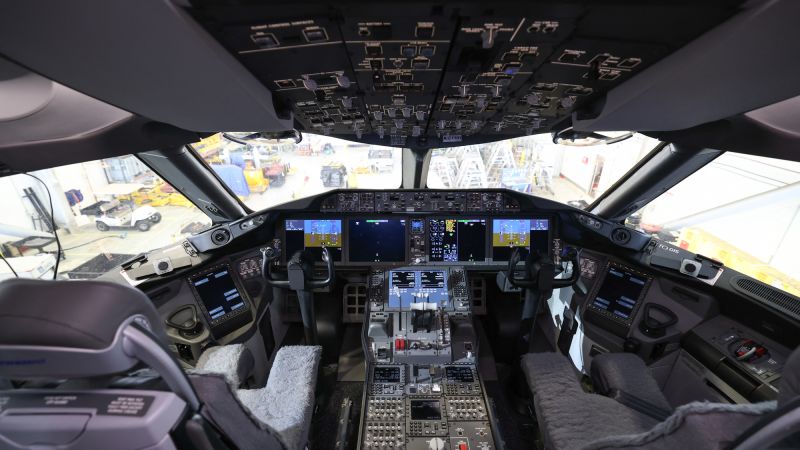
Following the 9/11 attacks, the FAA mandated that all cockpit doors be permanently reinforced. This included the installation of bulletproof materials, composite panels, and strengthened locks. The goal was to ensure that even if a passenger attempted to force entry, the door would remain intact. However, the reinforced design creates a vulnerability: during long flights, pilots must occasionally open the door to access the lavatory or exchange shifts with a relief pilot. This opens a window of opportunity for someone to seize control of the situation.
Secondary Barriers and Their Delayed Implementation
A new FAA regulation introduced in 2023 requires commercial aircraft to include a secondary barrier in front of the cockpit door. These barriers, designed to resemble gates rather than solid doors, allow pilots to exit the cockpit safely while preventing passengers from reaching the area. The rule was intended to apply to aircraft built starting in the summer of 2025, but the FAA granted a temporary extension, pushing the deadline to August 2026. This delay was attributed to the need for airlines to complete certification, installation, and training processes.
The FAA spokesperson, Ian Gregor, explained the decision, stating that most exemptions would expire by July 31, 2026. Some exceptions may be extended for planes with unique interior layouts, as the agency reviews requests for additional time. Despite the delay, industry experts remain divided on the necessity of the barriers. John Pistole, former Transportation Security Administration administrator, noted that while the barriers are a clear improvement, their cost might impact airline budgets. “If there’s been a 0% success rate for a bad person to reach the cockpit in the U.S. since 9/11… is it necessary? Would it be nice? Would it be good? Well, sure,” Pistole remarked. “But if the airlines do it, then presumably ticket prices will go up for the passenger.”
Union Opposition to Delayed Safety Measures
Aviation labor unions have criticized the delay, arguing that secondary barriers are a critical enhancement. Capt. Dennis Tajer, representing the Allied Pilots Association, described the barriers as an “easy, clear security upgrade” that should have been implemented sooner. “A quarter of a century, and we are still fighting to get a second layer of security on that flight deck door,” Tajer said. “This is unacceptable, unpatriotic, and just downright disrespectful to aviation security.”
The incident on the Frontier flight is not an isolated occurrence. Just days earlier, a United Airlines flight from Chicago to Minneapolis had to divert to Madison, Wisconsin, after a passenger made repeated attempts to enter the cockpit. Air traffic control recordings reviewed by CNN confirmed the passenger’s efforts to breach the area. These events highlight the ongoing challenge of balancing passenger convenience with security. While cockpit doors are now heavily fortified, their temporary opening during routine tasks leaves a gap that could be exploited.
Reyes’ actions underscore the potential for individuals to disrupt operations even with reinforced doors. His initial attempt to open an exit door caused an immediate response from the crew, leading to a rapid escalation. The situation could have been more severe if the door had not been locked and reinforced. Yet, the fact that it was possible to reach the cockpit, even briefly, raises questions about the adequacy of current measures.
Security Gaps and Future Measures
Experts have long warned about the security risks associated with cockpit door design. Before 9/11, the FAA required doors to be easily kickable open in case the crew became trapped. This design was practical for shorter flights but less so for long-haul journeys. The shift to reinforced doors was a significant improvement, but it also introduced a new dilemma: how to maintain security while allowing necessary access for pilots.
Flight attendants now play a key role in mitigating these risks. During cockpit breaches, they often block the aisle with drink carts or other objects to create a physical barrier. However, these measures are reactive rather than proactive. The introduction of secondary barriers aims to address this by providing a permanent solution. Despite the delay, the FAA maintains that the updated standards will eventually be enforced, ensuring that pilots can move freely without compromising safety.
As the summer travel season intensifies, the FAA’s decisions will have broader implications. The agency’s temporary relief for airlines may provide short-term benefits but could also delay the implementation of stronger safeguards. With 687 unruly passenger reports already this year, the need for improved security measures is more pressing than ever. Whether the secondary barriers will be enough to prevent future incidents remains to be seen, but the debate over their necessity continues to shape the conversation in the aviation industry.
The Reyes incident serves as a reminder of the evolving nature of air travel safety. While the reinforced doors have significantly reduced the risk of a full-scale cockpit storm, the temporary vulnerabilities still exist. As airlines navigate the balance between efficiency and security, the FAA’s regulatory decisions will determine how effectively these challenges are addressed. For now, the focus remains on ensuring that passengers like Reyes are prevented from accessing the cockpit, even if only for a moment.