The road test: Inside Alexandria Ocasio-Cortez’s strategy ahead of a potential 2028 campaign

The Road Test: Inside Alexandria Ocasio-Cortez’s Strategy for a Potential 2028 Run
The road test – Alexandria Ocasio-Cortez, the Democratic congresswoman from New York, has recently found herself engaged in the art of knitting. This pastime, which has become a recurring focus, serves as a subtle metaphor for her broader political strategy. She’s been crafting a series of knitted accessories, using them as a tool to engage her team in strategic discussions. These sessions involve examining the nuances of campaigns she might support, analyzing how to collaborate with House colleagues on legislative priorities, and exploring innovative ways to convey their messages to the public. Some of these creations are worn by her, while others are distributed as gifts to allies and constituents. This activity reflects a shift from her earlier, more impulsive style of political engagement—such as her famous sit-in at Nancy Pelosi’s office in support of the Green New Deal—to a calculated, deliberate approach that underscores her growing ambitions.
A Strategic Shift in Focus
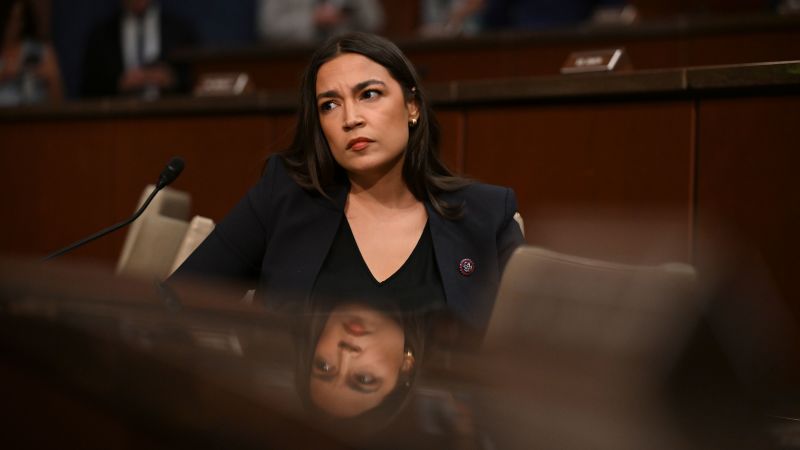
Ocasio-Cortez, now 36, is positioning herself to broaden her appeal beyond the most loyal segments of the Democratic base. While she remains a passionate advocate for progressive causes, she’s also working to build bridges with independent voters and even some Republicans. This effort is evident in her recent interactions with the House Energy and Commerce Committee, where her rigorous questioning of Environmental Protection Agency administrator Lee Zeldin during an April hearing sparked a viral moment. Her approach in that session highlighted her ability to challenge authority and articulate policy positions with clarity, a skill she aims to refine as she prepares for a potential presidential bid.
Despite her current uncertainty about running in 2028, Ocasio-Cortez has been methodically preparing for all scenarios. Whether she decides to challenge Sen. Chuck Schumer for the New York Senate seat or run for president, her team is focused on ensuring she remains a formidable candidate. She’s emphasized the need to secure victories, not just in elections but also in legislative battles and campaign support. “We’re seeing an opening, definitely among swingy independents, but also among Republicans: They don’t agree with everything she says, but they believe she is honest and that she’s going to work for people,” said a source close to her. This sentiment captures the evolving perception of Ocasio-Cortez as a candidate who balances ideological conviction with pragmatic outreach.
Testing Her Appeal Nationally
In the fall, Ocasio-Cortez’s aides are orchestrating a tour designed to evaluate her national appeal. The itinerary includes stops in key states, where she will engage with a wider audience than her core supporters. This tour is intended to gauge how well her message resonates with voters outside her traditional base, particularly those who may not be deeply aligned with the Democratic Socialists of America or Bernie Sanders’ political movement. The goal is to demonstrate that she can effectively communicate with diverse groups, from grassroots activists to centrist voters, without compromising her progressive values.
Her recent support for candidates in various races has been a critical component of this strategy. For instance, she endorsed Chris Rabb, a Pennsylvania state legislator, in his mid-May primary for a House seat in Philadelphia. Her backing came at a pivotal moment, as Rabb had already faced intense competition. The endorsement was unexpected, prompting Rabb to invite her to campaign alongside him just days before the election. “It really broke open the doors for anti-establishment progressives of color,” Rabb told CNN. This anecdote illustrates how Ocasio-Cortez’s influence can mobilize voters in unexpected ways.
Meanwhile, her collaboration with other political figures has also been a part of this broader outreach. While she maintains close ties with Sanders and the Democratic Socialists of America, she’s also cultivated relationships with former President Joe Biden and other centrist Democrats. This multi-pronged approach reflects her desire to position herself as a unifying figure rather than a polarizing one. Her ability to connect with a range of political actors is seen as a key strength, though it also raises questions about how she will navigate the complexities of a national campaign.
Challenges and Caution
However, Ocasio-Cortez is not without her challenges. She has taken a cautious stance in some races, notably withholding support for Graham Platner in Maine’s Senate race. Despite the fact that both Bernie Sanders and Elizabeth Warren hosted rallies for Platner, Ocasio-Cortez opted for a more neutral position. This decision underscores her willingness to assess candidates based on their own merits rather than aligning solely with established progressive figures.
Similarly, she has distanced herself from Saikat Chakrabarti, a former chief of staff who ran in Pelosi’s San Francisco district. Chakrabarti’s campaign frequently referenced Ocasio-Cortez, yet she chose not to endorse him. This move highlights her strategic awareness of how her image can be leveraged in different contexts. She’s also maintained a firm stance against former Rep. Marjorie Taylor Greene and a Texas Democratic candidate who made controversial remarks about “a prison for American Zionists.” Even as she faced backlash from some left-leaning social media figures, she remained steadfast in her criticism, reinforcing her commitment to core principles.
One notable instance of her strategic influence was her role in the California gubernatorial race. When Tom Steyer’s campaign released an attack ad targeting Xavier Becerra’s handling of immigrant children, it inadvertently included Ocasio-Cortez without prior notice. Her team quickly intervened, ensuring the ad was revised to remove her from the visuals. This proactive effort to protect her brand demonstrates her growing understanding of how her public image can be shaped and controlled. Such actions are part of her broader strategy to maintain credibility and avoid being used as a pawn by other campaigns.
The Path Ahead
As Ocasio-Cortez continues to refine her strategy, the question remains whether she possesses the national appeal and organizational capacity to succeed in a presidential race. While her grassroots support is strong, her ability to translate that into a broader electoral victory will be tested in the coming months. The key challenge lies in balancing her progressive ideals with the need to resonate with voters who may have different priorities. Her upcoming actions, including the fall tour and her continued involvement in legislative debates, will provide critical insights into her readiness for the national stage.
Her team is optimistic but realistic. They acknowledge that her name recognition and ideological consistency are significant assets, but they also recognize the need to develop a more nuanced approach to appeal to a wider electorate. “The real test is whether Democratic candidates in tight races can see her as a net positive for their campaign,” said the source. This assessment captures the dual nature of her influence: she can energize her base, but her ability to strengthen other candidates’ chances will determine how far her reach extends. As she moves forward, the next phase of her journey will likely define her legacy as a political leader.