Southern Poverty Law Center chair put on defensive during heated congressional hearing: ‘We don’t fund hate groups’

SPLC Chair Defends Funding Practices in Congressional Hearing
Heated Congressional Hearing Over SPLC’s Alleged Funding of Hate Groups
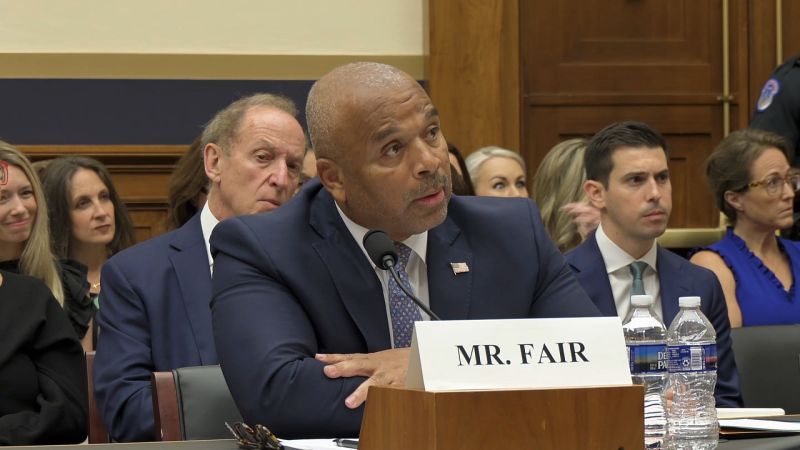
Southern Poverty Law Center chair put – During a congressional hearing on Tuesday, Bryan Fair, the interim president and CEO of the Southern Poverty Law Center (SPLC), faced intense questioning from Republican lawmakers regarding the organization’s financial ties to extremist groups. Fair emphasized that the SPLC does not fund hate groups, asserting that its work focuses on exposing and combating racist organizations through investigative methods. The hearing centered on allegations that the group used undercover agents embedded in extremist groups, such as the Ku Klux Klan and the National Socialist Movement, to gather intelligence. Critics argue these efforts amounted to financial support, though Fair maintained the SPLC’s actions were transparent and aimed at preventing racial violence.
Rep. Harriet Hageman challenged Fair’s assertions, citing an indictment that claims the SPLC distributed $4.1 million to groups like the Aryan Nations and the KKK between 2010 and 2023. “Except the $4.1 million that you gave to the KKK, the National Socialist Movement, and the Aryan Nations,” Hageman noted, highlighting the contradiction between the SPLC’s claims and the legal accusations. Fair, however, reiterated that the SPLC does not fund hate groups, emphasizing that its focus remains on monitoring and reporting extremist activities rather than providing financial backing.
“We’ve already asserted in our filings that we did not lie to our donors, that we did not fund any hate groups,” Fair told lawmakers Tuesday.
Legal Allegations and Charges Against SPLC
The SPLC is currently facing criminal charges of wire fraud, false statements, and money laundering in an Alabama federal court. Prosecutors allege that the organization concealed its undercover program from donors and funneled funds through shell companies to support extremist operatives. This has led to accusations that the SPLC’s financial practices were deceptive, with the indictment detailing how $4.1 million was allegedly redirected to pay informants within racist groups. One key point of contention is the alleged romantic relationship between an SPLC employee and an informant, who shared living expenses funded by the program, raising concerns about potential conflicts of interest.
Fair argued that the upcoming criminal case will clarify the SPLC’s actions, asserting that the organization has always been open with its donors. He noted that the SPLC previously pleaded not guilty to the charges, stating that its financial practices were transparent and its focus was on reducing racial violence. Despite this, the Justice Department maintains that the SPLC misled donors by downplaying its role in funding individuals associated with racist groups, a claim Fair and his team deny.
Republican Criticisms and SPLC’s Response
Republican lawmakers, including Rep. Jim Jordan, questioned the SPLC’s rationale for dismantling its informant program. Fair explained that the shift was due to the migration of hate and extremism into online spaces and government institutions. “We stopped the program because we believed hate and extremism has migrated significantly online and into government agencies,” he said, framing the change as a strategic response to evolving threats. Jordan, however, found this reasoning questionable, remarking, “Wow, that’s big. That makes no sense.”
The SPLC has long been recognized for its efforts in combating violent extremist groups. Yet, critics argue that its focus on right-wing organizations has sometimes overshadowed its work on other forms of discrimination. During the hearing, Fair defended the program’s value, stating that law enforcement agencies benefited from the intelligence it provided. “We shared information that we learned through our confidential informant program with local, state and federal law enforcement,” he added, aiming to showcase the SPLC’s collaborative approach to addressing extremism.
Democrats’ Defense of SPLC Amid Political Allegations
Democrats, such as Rep. Deborah Ross, countered the Republican criticisms by suggesting the case was politically motivated. Ross accused the acting Attorney General, Todd Blanche, of using the SPLC’s actions as a tool to align with former President Donald Trump’s agenda. “We know why this indictment was brought,” she stated, “It’s just one of the many weaponized moves that Todd Blanche and the DOJ have taken at the president’s behest to silence dissent.” She argued that the focus on the SPLC’s funding practices was more about proving loyalty to Trump than upholding legal integrity.