A total solar eclipse will occur this summer. Everything you need to know

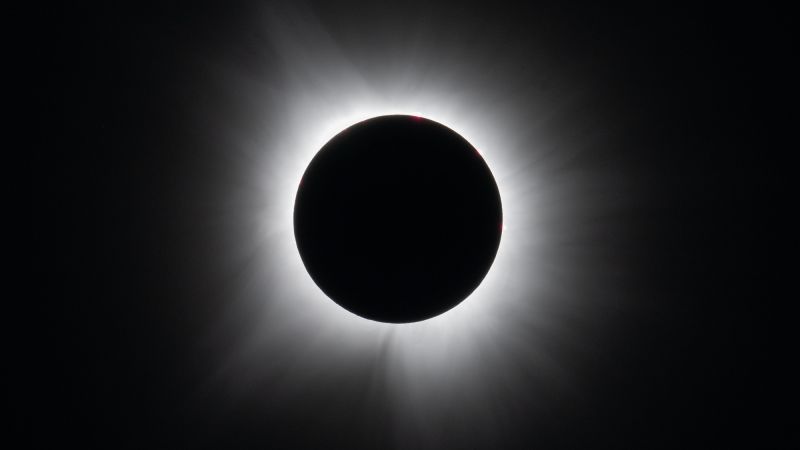
A Total Solar Eclipse to Light Up the Sky in August
A total solar eclipse will occur – For the first time in over two years, a total solar eclipse will grace the skies on August 12, 2026. This celestial event, a rare phenomenon where the moon fully obscures the sun’s light, will be visible to observers in select regions, creating a moment of awe and scientific intrigue. NASA explains that during a total eclipse, the moon’s shadow sweeps across Earth, plunging parts of the globe into darkness for a brief period. This year’s eclipse marks a significant moment for several countries, offering a chance to witness the sun’s disappearance in ways not seen in decades.
The Path of the Eclipse and Its Global Reach
The path of totality, a narrow corridor where the sun is entirely blocked, will stretch over 5,157 miles (8,300 kilometers) and begin its journey over the Arctic coastline at approximately 1 p.m. ET. As the eclipse progresses, it will pass near the North Pole and traverse through Greenland, Iceland, Portugal, and northern Spain before concluding its route. According to EarthSky, the duration of totality will vary across these locations, with Greenland observers experiencing over two minutes of darkness and those in northern Spain seeing only about 20 seconds of the event—depending on weather conditions.
Historical Context and Future Projections
While this eclipse will be the first total event visible from Spain’s mainland since 1905, it is also the first of three eclipses the country will host in the coming years, as noted by the European Space Agency (ESA). The last total solar eclipse observable from mainland Europe occurred in 2006, making this a long-awaited spectacle for many. The ESA’s Carole Mundell emphasized the collective impact of such events, stating,
“A total solar eclipse is one of those rare moments when millions of people can look up together and feel both wonder and curiosity. It is a shared moment that connects us to the Universe and reminds us that the desire to explore and understand is one of humanity’s greatest strengths.”
This eclipse also sets the stage for future celestial events, with NASA forecasting another total eclipse to cross southern Spain, North Africa, Saudi Arabia, and Yemen on August 2, 2027. The next major eclipse for the United States will occur on March 30, 2033, but it will only be visible in Alaska. A total eclipse across the contiguous U.S. is expected to happen on August 22, 2044, with the shadow arc passing over North Dakota and Montana.
Viewing the Eclipse: Tips and Precautions
For those outside the path of totality, a partial eclipse will still be visible across parts of Europe, Africa, and North America. However, observers must take care to protect their eyes from the sun’s harmful rays. According to NASA, direct sunlight is only safe to view during totality when the moon completely blocks the sun. Even a moment of sunlight peeking through the edge of the moon can cause severe eye damage if viewed without proper equipment.
Recommended tools include certified eclipse glasses, handheld solar viewers, or optical devices like telescopes, binoculars, and cameras equipped with specialized solar filters. These filters are designed to block the sun’s intense light, preventing damage to the eyes. Sunglasses, though useful for general sun protection, are insufficient for eclipse viewing, as they lack the necessary darkness to shield against the sun’s radiation. It is crucial to avoid using torn, scratched, or damaged eclipse glasses, as they may compromise safety. Additionally, optical devices should not be used simultaneously with eclipse glasses unless they are properly filtered.
The Science Behind Solar Eclipses: A Unique Opportunity
When the sun is fully obscured, scientists gain a rare chance to study its corona, the outer atmosphere that is usually invisible to the naked eye. This phenomenon allows researchers to observe solar activity, such as solar flares and coronal mass ejections, under conditions that are otherwise difficult to achieve. The public is also invited to participate as citizen scientists, using simple equipment to contribute data and insights. Such events not only advance scientific understanding but also inspire a deeper connection between humans and the cosmos.
Moreover, the timing of the eclipse can have subtle effects on the environment. For instance, the sudden drop in light during totality can influence animal behavior, with birds often reacting as if night has fallen. This natural response underscores the profound impact of solar eclipses on both the physical world and human perception. The Spanish Scientific and Advisory Committee for the Trio of Eclipses highlighted that the August 12 event will pass over Galicia and the Balearic Islands as sunset approaches, accelerating the transition from day to night in these regions.
Planning Your Eclipse Experience
For those eager to see the eclipse, it is essential to track its path and timing in your area. Time and Date’s website offers detailed information on when and how the event will appear from any given location. In areas where the eclipse is not visible, the ESA will provide a livestream of the totality from the Astrophysical Observatory of Javalambre in Teruel, Spain. This ensures that even if the weather hinders direct observation, millions can still experience the event in real time.
As the eclipse approaches, communities along its path may prepare for a surge in visitors and public interest. Local authorities often coordinate efforts to ensure safe viewing practices, especially in regions where the path of totality is narrow. The combination of scientific curiosity and public fascination with such events highlights their cultural and educational value. Whether through personal observation or remote viewing, the August 12 eclipse promises to be a memorable experience for those who witness it.
With the next total eclipse set for August 12, 2026, and future events scheduled for 2027 and 2044, the world will have multiple opportunities to marvel at the alignment of celestial bodies. Each eclipse, though brief, offers a unique glimpse into the dynamics of the sun and moon, reminding us of the intricate dance that shapes our skies. As Carole Mundell noted, these moments are more than just visual spectacles—they are catalysts for collective wonder and a bridge between humanity and the universe.