
‘Their new nuclear option’: Why Iran’s influence over the Strait of Hormuz is here to stay
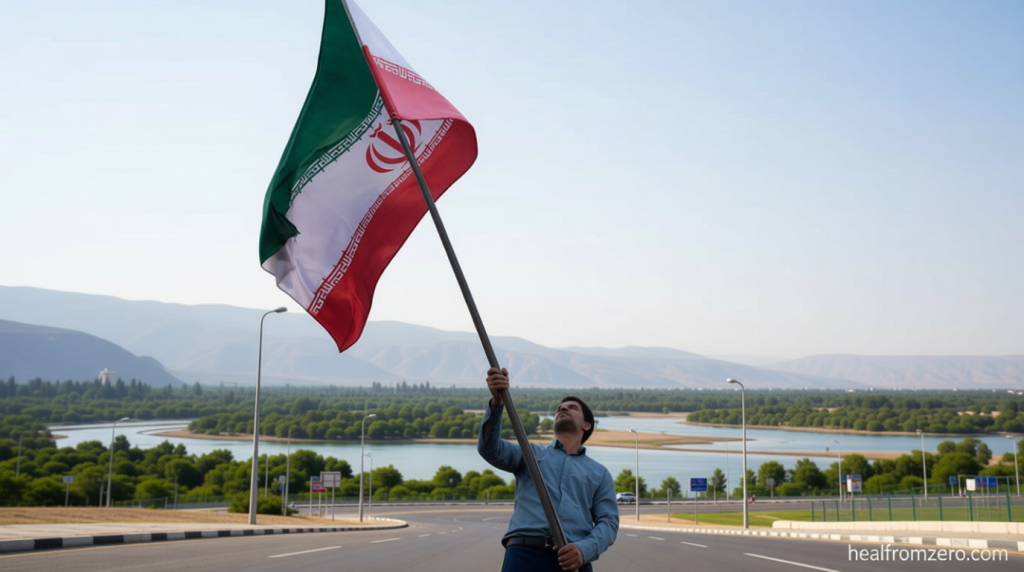
A New Strategic Weapon: Iran’s Grip on the Strait of Hormuz
Their new nuclear option – The Strait of Hormuz, a narrow waterway linking the Persian Gulf to the open ocean, has long been a critical artery for global energy trade. Now, Iran has cemented its dominance over this lifeline, leveraging it as a tool to exert pressure on the world economy. Analysts warn that this newfound control, achieved through a combination of military strikes and strategic institutional moves, will persist even after the current tensions subside. The recent clashes between Iran and the United States underscore a broader reality: Tehran has transformed the strait into a geopolitical asset that cannot be easily relinquished.
Iran’s Military Demonstrations and Economic Leverage
Iran’s ability to disrupt the strait has been tested in recent weeks. With a limited arsenal of missiles and drones, it has shown remarkable effectiveness in threatening the flow of oil. This capability, once seen as a theoretical concern, has now become a tangible reality. The U.S. and its allies, including Israel, have responded with airstrikes, but these efforts have not deterred Iran from maintaining its position. As one expert noted, “The strait is no longer just a strategic chokepoint—it’s a symbol of Iran’s defiance.” Multiple analysts emphasized that Iran’s influence over the waterway will endure, regardless of diplomatic outcomes.
“Uncertainty around the strait’s security has already begun to ripple through global markets,” said Gregory Brew, a senior analyst at Eurasia Group. “Even if a deal is reached, Iran’s control will remain a constant factor.”
Their actions have forced the international community to reassess the risks associated with energy dependence. Before the conflict, about 20% of the world’s oil and liquefied natural gas (LNG) imports passed through the strait. That figure has now shifted, with Iran’s strikes creating a shadow over global supply chains. While efforts to diversify energy sources are underway, the strait’s centrality means any disruption carries disproportionate consequences.
Iran’s Institutional Moves and U.S. Pushback
Iran has not only relied on military force but has also sought to institutionalize its control. Last month, it announced the creation of the Persian Gulf Strait Authority (PGSA), a body tasked with overseeing transit protocols. This includes the right to vet ships and impose fees, which could serve as a revenue stream while reinforcing Iran’s authority. The U.S., however, has moved to counter these efforts by sanctioning the PGSA and banning shipping firms from negotiating safe passage agreements with Tehran. Secondary sanctions threaten companies that pay fees, aiming to cut off Iran’s financial access to the strait’s traffic.
Despite these measures, some traders and logistics firms have quietly engaged with Iran to ensure oil flows continue. “We’re not waiting for perfect conditions,” said Alan Gelder, a senior vice president at Wood Mackenzie. “The priority is to stabilize markets, even if it means accepting a temporary toll.” This pragmatic approach highlights the precarious balance between geopolitical tensions and economic necessity. While the U.S. seeks to undermine Iran’s influence, global demand for oil remains high, and disruptions could have severe repercussions.
The Economic Fallout of a Closed Strait
If the strait remains closed for an extended period, the global economy could face unprecedented challenges. Brent crude, the benchmark for international oil prices, might surge to $200 per barrel by year’s end, according to Peter Martin, Wood Mackenzie’s head of economics. Such a spike would not only deepen the current energy crisis but could also trigger broader financial instability. “We’re talking about a full-blown economic crisis,” Martin warned, emphasizing that the strait’s closure could affect more than just oil.
Other goods, including fertilizers, jet fuel, and even industrial materials like aluminum and helium, rely on the same maritime routes. A prolonged blockade could disrupt supply chains for these items, compounding the economic strain. Alan Gelder, meanwhile, pointed out that a return to pre-war transit levels—around 140 tankers daily—would ease the pressure. He estimated that a $2 million fee per tanker, as charged by Iran, would add only about $1 to the price of a barrel of oil. “The key is to restore flow,” Gelder said, though he questioned how Iran would manage the logistical complexities of handling such volumes.
“We are convinced that Iran will maintain leverage over the strait,” said Jorge Leon, head of geopolitical analysis at Rystad Energy. “A $1-2 per barrel premium might seem modest, but the geopolitical risk premium is actually much higher—$10 to $20 per barrel.”
Leon’s assessment aligns with broader concerns about the strait’s long-term security. Even if Iran shares control with Oman, as proposed by Kpler, a trade intelligence firm, the potential for unilateral decisions by Tehran remains. “The idea that Iran could impose tolls or restrictions is now part of the global conversation,” Leon noted. This shift reflects the normalization of Iran’s role as a key player in energy geopolitics.
Implications for the Future of Global Markets
Analysts agree that the strait’s future is uncertain, but the impact of Iran’s actions is clear. The energy shock caused by the blockade has already strained markets, and the risk of further disruptions looms. “We’re not returning to $60 a barrel prices, not even by 2027,” Leon said, underscoring the permanence of Iran’s influence. The strait’s closure, whether temporary or sustained, has forced nations to reconsider their reliance on Middle Eastern oil and to explore alternative supply routes.
While diversification efforts are underway, they are not without cost. Countries must invest in infrastructure, logistics, and alternative energy sources to mitigate the strait’s risks. This could lead to a shift in global energy dynamics, with greater emphasis on regional alliances and multilateral agreements. However, the threat of Iran’s continued control ensures that the strait remains a focal point for international negotiations.
In the end, the Strait of Hormuz has become more than just a shipping lane. It is a symbol of Iran’s strategic ambition and a tool for economic leverage. As the world grapples with the consequences of its closure, the question is no longer whether Iran will retain its grip, but how long it will take for the global economy to adapt. The next chapter of this saga will likely define the balance between energy security and geopolitical stability for years to come.