
‘Unparalleled discovery’: Gold Roman ring unearthed by amateur metal detectorist
Gold Roman Ring Unearthed by Amateur Detectorist
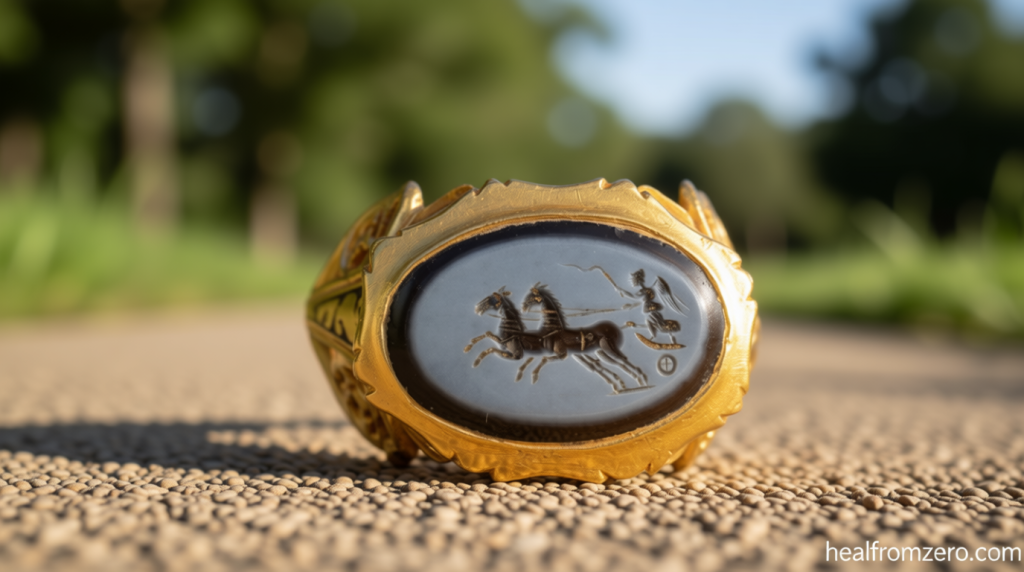
Unparalleled discovery – In a remarkable turn of events, a 68-year-old trucker and former soldier, Kevin Minto, has made a groundbreaking discovery in Somerset, a county in south-west England. While exploring a field near Ilminster, Minto stumbled upon a Roman-era gold ring that has been hailed as an “extraordinary” find. This artifact, which weighs 48 grams (1.7 ounces), is now in the possession of the South West Heritage Trust, with plans to exhibit it at The Museum of Somerset. The ring’s unique design, featuring a gemstone engraved with the image of the goddess Victory atop a two-horse chariot, has captured the attention of historians and archaeologists alike.
A Journey Through Time
Minto’s discovery is not the first significant find in the region. A year prior, he had unearthed a hoard of Roman coins, which led to repeated visits to the field as part of a group of military veterans engaged in metal detecting. The process of uncovering these treasures involves a meticulous blend of patience, skill, and a bit of luck. Minto described the thrill of finding something unexpected, noting how the heart races when the soil is turned to reveal a hidden object. His initial find of coins, however, was just the beginning of a larger narrative.
The ring, which has been acquired by the South West Heritage Trust, is considered a “unique” artifact in British history. A press release from the trust emphasized its importance, stating that it represents an “extraordinary” and “unparalleled discovery.” To secure the ring, the trust raised £78,010 (approximately $105,000), demonstrating the value placed on such historical items. This acquisition highlights the collaborative efforts between local communities and museums to preserve and showcase ancient treasures.
Under British law, any detected “treasure” must be reported to the local finds liaison officer. This process often leads to an inquest by a coroner to determine the artifact’s significance. Once verified, the proceeds from the discovery are typically divided between the finder and the landowner. In Minto’s case, he shared his half of the reward with a fellow treasure hunter, yet the total amount he received—just over £19,500 ($26,200)—was enough to pay off his mortgage. “It’s a bit unbelievable,” he remarked, reflecting on the surreal experience of turning over soil to reveal a piece of history.
Historical Context and Significance
Amal Khreisheh, a senior curator at the South West Heritage Trust, highlighted the ring’s potential to illuminate the lives of Roman inhabitants in South Somerset. She explained that the artifact may have been buried shortly after 297 AD, during a period marked by political instability from 286 to 296 AD. “This find sheds light on how South Somerset’s Roman population navigated a time of unrest,” Khreisheh said in a press release. The combination of the ring, coins, and lead-lined coffin found in the same area suggests a deliberate act of preservation, possibly by a wealthy individual or someone in a position of local authority.
The region’s historical importance is further underscored by the presence of the Fosse Way, a major Roman road that traversed South Somerset. This thoroughfare facilitated trade and communication, making the area a hub of economic activity. Khreisheh speculated that the ring’s owner could have been part of the local administration or someone managing a farming estate. “South Somerset was a wealthy area during this period,” she noted. “The abundance of villas and garden estates indicates a thriving community, supported by trade routes like the Fosse Way.”
“It wasn’t until I went to the British Museum and saw it all laid out there with the coins that it really sunk in,” Minto said. “It’s every detectorist’s dream to find a hoard.”
Minto’s findings, including the gold ring and the earlier coin hoard, have not only enriched the museum’s collection but also sparked public interest. The South West Heritage Trust is now working to display these artifacts to a broader audience, including local school children. A recent community engagement program allowed primary school students to interact with the ring and examine the coins up close. “The children really enjoyed being able to hold the ring and study the coins in detail,” Khreisheh said. “They’ve been speculating about who wore it and why it was buried, which has been a delightful experience.”
The process of acquiring the ring involved more than just financial contributions. The trust’s efforts to secure the artifact reflect a broader commitment to preserving historical heritage for future generations. This collaborative approach ensures that the public has access to these discoveries, fostering a deeper connection between communities and their past. The ring’s journey from the field to the museum underscores the role of amateur historians in uncovering significant pieces of history, often through their dedication and persistence.
While the ring’s design and craftsmanship are impressive, its historical context adds to its intrigue. The image of Victory on a chariot suggests a connection to Roman symbolism, possibly indicating the artifact’s use as a status symbol. Such items were often owned by individuals of influence, whether through military service, economic power, or political standing. The fact that the ring was buried alongside coins and other objects hints at a period of uncertainty, where valuable items were stored to protect them from potential threats.
Minto’s story serves as a testament to the unexpected nature of archaeological discoveries. As he explained, the allure of metal detecting lies in the element of surprise, where each turn of the soil could reveal a piece of history. His continued exploration of the field, motivated by a desire to uncover more, has led to a series of significant finds. These discoveries not only enrich the historical record but also highlight the importance of community involvement in preserving the past.
As the South West Heritage Trust prepares to display the ring at The Museum of Somerset, the artifact stands as a symbol of the region’s Roman heritage. Its acquisition and exhibition are part of a larger effort to educate the public about the area’s history and the role of everyday citizens in uncovering it. Minto’s experience underscores the value of these discoveries, both in terms of their historical significance and their personal impact. The ring, with its intricate design and profound meaning, is a reminder of the rich tapestry of human history that continues to be revealed through the efforts of dedicated individuals like Minto.