California blues: Races for governor, Los Angeles mayor feature weak Democratic frontrunners and insurgent Republicans

California blues: Races for governor, Los Angeles mayor feature weak Democratic frontrunners and insurgent Republicans
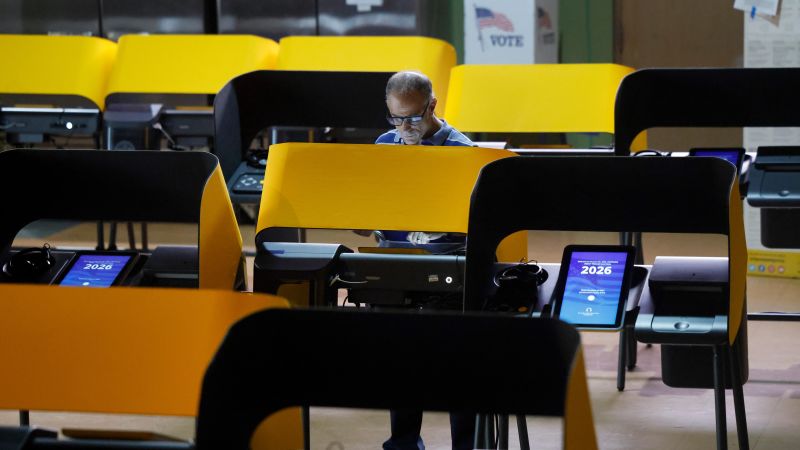
California blues – Tuesday’s primaries in California are testing the Democratic administration in a state often considered a stronghold of the party. Voters are casting their ballots in a tightly contested race for governor and a nonpartisan mayoral contest in Los Angeles, both of which are marked by a lack of clear Democratic leaders and the emergence of Republican challengers. While President Donald Trump has seen his approval ratings dip to historic lows, the Democratic Party faces its own internal struggles, with polls indicating widespread dissatisfaction among voters. These frustrations have fueled debates over the party’s direction, as recent controversies like a flawed DNC report and a Jill Biden book tour have overshadowed efforts to secure majorities in November’s midterms.
Los Angeles mayoral race: A test of Democratic dominance
The race for Los Angeles mayor has become a microcosm of the broader political challenges facing the Democratic Party in California. Karen Bass, the incumbent mayor, is seeking a second term in a city where Democratic registration far outnumbers Republican affiliation, but her campaign is grappling with a crowded field that includes both progressive and conservative contenders. Among the most vocal challengers is Spencer Pratt, a former reality TV star and registered Republican, who has positioned himself as a reformist voice against the establishment. Pratt’s campaign has drawn attention for its focus on issues like homelessness, crime, and the city’s handling of the Palisades fire, which destroyed his home last year.
“The people in charge — they’re the ones letting this happen,” Pratt said on CNN. “I’m the one who’s saying, ‘Enough of these corrupt politicians taking our tax money and then increasing homelessness and death on our streets.’”
Pratt’s candidacy has sparked a debate about the role of party labels in a city where the mayor’s race is officially nonpartisan. While he has tried to present himself as a common-sense candidate, his Republican affiliation has been leveraged by Democrats to link him with the broader Trump-era political movement. They argue that his critique of the city’s leadership echoes themes seen in the national GOP’s campaign against Democratic governance. Despite the numerical advantage of Democrats, the mayoral race has become a battleground where the party’s internal divisions are on full display.
Governor’s race: A battle of experience and change
The contest to replace outgoing Governor Gavin Newsom is equally fraught, with Democrats struggling to find a unifying figure. Xavier Becerra, the current Attorney General and a long-time political operator, has been the top contender for the Democratic nomination, but his dominance is being challenged by a range of voices, including billionaire activist Tom Steyer and former U.S. Representative Katie Porter. Meanwhile, the Republican field includes Steve Hilton, a former Assemblyman backed by a mix of business and grassroots support, and Chad Bianco, the Riverside County Sheriff whose law enforcement credentials have drawn interest from voters.
Recent polls highlight the uncertainty in the governor’s race. A PPIC survey conducted May 14-18 showed Becerra leading at 23%, Hilton at 20%, and Steyer at 15%, with Porter and Bianco trailing closely. However, a new Berkeley IGS poll released Friday suggested a shift in momentum, with Becerra maintaining a slight edge at 25%, Hilton dropping to 21%, and Steyer rising to 19%. The results underscore the volatility of the race, as candidates vie for the top two spots to advance to the November general election.
Shared challenges and contrasting strategies
Both races are shaped by overlapping concerns: housing affordability, rising crime rates, and the impact of the entertainment industry’s economic shifts on local jobs. Republican candidates argue that the current Democratic leadership has failed to address these issues effectively, while their opponents accuse them of using fearmongering tactics to sway voters. In the mayor’s race, Pratt’s claim that Bass’s administration mishandled the Palisades fire has resonated with critics who feel the city has neglected its responsibilities to residents. Similarly, in the governor’s race, the narrative of Democratic mismanagement has gained traction, particularly in the wake of Trump’s endorsement of Hilton, which could bolster his campaign in the final stretch.
The influence of the jungle primary system cannot be overlooked. Unlike traditional partisan primaries, California’s format allows all candidates to compete on a single ballot, regardless of party affiliation. This has created a dynamic where even moderate Democrats and Republicans can gain traction, complicating the traditional power structures. For instance, Matt Mahan, the San Jose Mayor and a centrist Democrat, has been a key player in the governor’s race, drawing significant financial backing from Silicon Valley interests. His presence adds complexity to the Democratic primary, as it introduces a split between progressive and establishment-backed candidates.
Polls and the path to November
The latest polling data reveals a closely contested landscape in both races. A UC Berkeley-LA Times survey from late May found Karen Bass at 26%, Nithya Raman at 25%, and Spencer Pratt at 22% in the mayoral race, with all three candidates within striking distance of each other. Notably, Bass’s unfavorability rating stood at 57%, matching Pratt’s, which suggests that voters are equally critical of the current administration and its perceived failures. This parity in negative sentiment has emboldened challengers to frame their campaigns as necessary overhauls of the status quo.
In the gubernatorial race, the field has been further narrowed by the exit of Eric Swalwell, the former U.S. Representative who withdrew in April due to sexual misconduct allegations. The remaining candidates, including Becerra and Steyer, face a critical juncture as their strategies take shape. While Becerra’s campaign emphasizes his experience in state government, Steyer’s wealth and influence have made him a formidable opponent, particularly in the early voting districts of the Bay Area. The potential for Steyer to close the gap with Hilton, as suggested by the Berkeley IGS poll, highlights the unpredictability of the race and the challenges Democrats face in uniting their base.
A tale of two states
California’s primary races reflect a broader trend of political fatigue among voters, even in traditionally blue states. While the Democratic Party holds control of both the state and city governments, its ability to maintain this dominance is being questioned. The mayoral and gubernatorial contests serve as a barometer of whether the party can retain power in the face of growing public discontent. For Democrats, the challenge is not just to win but to reframe their narrative in a way that addresses the specific concerns of voters who feel their needs are being ignored.
Meanwhile, the Republican candidates are leveraging the party’s perceived strengths in areas like law enforcement and fiscal responsibility. Steve Hilton, for example, has positioned himself as a pragmatic alternative to Newsom, while Chad Bianco has capitalized on his reputation as a tough on-crime leader. These strategies align with a broader national narrative that frames Democratic governance as overly liberal and disconnected from everyday struggles. In a state where the economy is both a blessing and a curse, the ability to articulate a clear vision for improvement could determine the outcome of these races.
As the polls close on Tuesday, the focus will be on whether the Democratic establishment can rally behind its candidates or if the growing presence of insurgent figures like Spencer Pratt and Steve Hilton will reshape the political landscape. The results will have implications beyond California, influencing the national discourse on party control and the viability of Democratic candidates in a shifting political climate. For now, the state’s voters are in the midst of a pivotal decision, one that could redefine the trajectory of both local and national politics in the coming months.