A violent volcanic eruption may have revealed a new weapon to tackle a potent planet-heating gas

A Violent Volcanic Eruption May Have Unveiled a New Weapon to Tackle a Potent Planet-Heating Gas
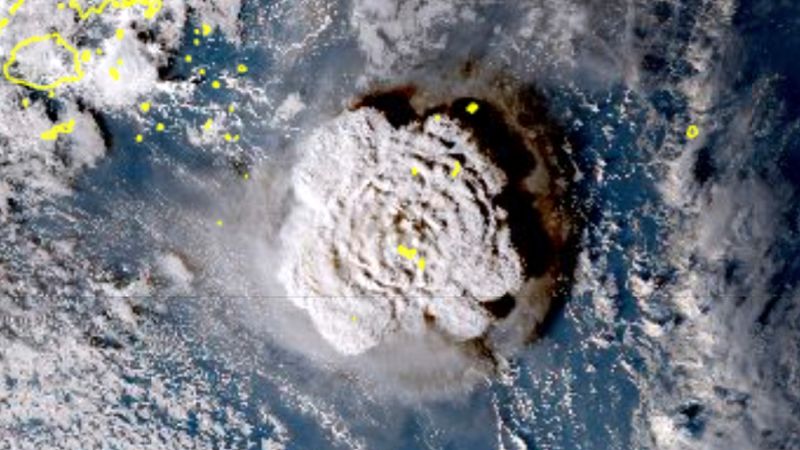
A violent volcanic eruption may have – In January 2022, a powerful underwater volcanic event in the South Pacific released a towering plume of ash, steam, and gas that reached nearly 40 miles into the Earth’s atmosphere. This eruption, from the Hunga Tonga-Hunga Ha’apai volcano, was among the most explosive in modern history, generating a tsunami and a sonic boom that circumnavigated the globe twice. Beyond its immediate geological impact, the event may have inadvertently showcased a novel method for combating one of the most potent contributors to planetary warming: methane. New research suggests the eruption initiated a previously undocumented process that could help neutralize this harmful gas.
The study, published in *Nature Communications*, reveals an unexpected chemical reaction triggered by the volcanic plume. Scientists analyzing advanced satellite data observed a massive cloud of formaldehyde—an unusual byproduct—forming in the stratosphere. This discovery hints at a self-cleansing mechanism within the volcanic emissions. “We detected a significant cloud of formaldehyde that shouldn’t normally be present,” said Maarten van Herpen, a physicist and executive director at Acacia Impact Innovation, a Dutch consultancy. Formaldehyde typically emerges when methane is oxidized in the atmosphere, but its presence here indicates a unique interaction between volcanic byproducts and solar radiation.
The researchers hypothesize that the eruption’s plume created conditions akin to those seen over the Atlantic Ocean, where Saharan dust mixes with sea spray to form iron-based particles. These particles, when exposed to sunlight, generate chlorine atoms that accelerate the breakdown of methane. Van Herpen noted that the Hunga Tonga-Hunga Ha’apai event produced enough salty water vapor to fill approximately 58,000 Olympic-sized swimming pools in the stratosphere, alongside volcanic ash. “When sunlight interacted with this mixture, it likely initiated the same chlorine-driven process observed in the Atlantic,” he explained. This could have led to the destruction of methane emitted during the eruption, a finding that challenges conventional understanding of volcanic impacts on climate.
Tracking the formaldehyde cloud for 10 days, the team observed its persistence despite the gas’s usual short atmospheric lifespan. “Formaldehyde typically dissipates within hours, so the continuous presence of this cloud suggests methane was being actively removed for over a week,” van Herpen added. The study estimates the eruption released about 330,000 tons of methane, with roughly 900 tons being eliminated daily through the reaction. This self-regulating process, if replicated, could offer a critical tool in mitigating methane’s climate impact.
Matthew Johnson, a chemistry professor at the University of Copenhagen and co-author of the study, emphasized the surprising nature of the discovery. “It’s remarkable that the same mechanism identified in the Atlantic has now been observed in a volcanic plume at such high altitudes,” he stated. Methane, known for its 80-fold greater heat-trapping capacity than carbon dioxide over 20 years, accounts for roughly a third of current global warming. Its atmospheric concentrations have doubled in the last two centuries, making it a prime target for reduction strategies.
While cutting carbon emissions remains essential for long-term climate stability, methane is considered a more immediate opportunity for intervention due to its shorter lifespan. The study’s implications extend beyond the immediate aftermath of the eruption, suggesting potential applications in geoengineering. Van Herpen proposed that iron-based particles could be deliberately injected into the atmosphere to mimic the natural process seen in the volcanic plume. “This could allow us to target methane emissions at their source,” he said. Such methods might help reduce global temperatures by accelerating the breakdown of this potent greenhouse gas.
However, not all scientists are convinced. Pete Edwards, an atmospheric chemist at the University of York who wasn’t involved in the research, praised the findings but cautioned about their verification. “Using formaldehyde observations alone to infer the mechanism is innovative, but it leaves room for uncertainty in our current atmospheric chemistry models,” he told CNN. He pointed out that the study’s focus on the stratosphere might not directly translate to the troposphere, where most methane removal strategies would operate. “The effects in the lower atmosphere could be harder to predict, with possible unforeseen consequences on weather patterns, air quality, and ecosystem health,” Edwards warned.
Emily Dowd, a climate scientist at the University of Leeds, echoed Edwards’ concerns. While acknowledging the study’s potential, she highlighted the need for further research to confirm the mechanism’s validity. “It’s a fascinating concept, but we must ensure it’s grounded in solid evidence before considering large-scale implementation,” she said. The volcanic eruption’s role in creating this process is a rare natural experiment, offering insights into how human activities might be engineered to achieve similar results.
The findings underscore the complex interplay between natural phenomena and atmospheric chemistry. Volcanic eruptions, often viewed as disruptive forces, might also act as unexpected allies in the fight against climate change. By releasing particles that interact with sunlight, they could initiate chemical reactions that dismantle methane emissions. This dual effect—both contributing to and mitigating greenhouse gases—highlights the Earth’s dynamic systems and the potential for harnessing them.
As the scientific community debates the significance of these results, the study opens new avenues for research. If the process can be consistently replicated, it could lead to targeted strategies for reducing methane levels. For instance, iron-rich aerosols dispersed over oceans might mimic the conditions that occurred after the Hunga Tonga-Hunga Ha’apai eruption. Such techniques, while promising, would require careful calibration to avoid unintended side effects. “The key is understanding how these reactions scale and how they interact with other atmospheric processes,” van Herpen noted. The study’s authors hope their work will inspire further exploration of this natural phenomenon.
Despite the challenges in verifying the process, the discovery raises intriguing questions about the Earth’s capacity to self-regulate. Methane, often seen as a man-made threat, might also be influenced by natural events. This insight could shift the focus of climate mitigation efforts, encouraging scientists to look beyond human interventions and consider the role of natural systems. “The eruption demonstrated that even in extreme conditions, the atmosphere can adapt in ways we’ve only begun to understand,” Johnson remarked. For now, the findings remain a provocative addition to the growing body of climate science, offering hope and a call for more investigation into Earth’s hidden mechanisms.
Implications for Climate Mitigation Strategies
Van Herpen and his team believe their discovery could revolutionize methane reduction efforts. By replicating the conditions that led to the formation of chlorine atoms in the volcanic plume, scientists might develop methods to neutralize methane emissions more effectively. This could be particularly valuable in regions with high methane output, such as tropical wetlands or agricultural zones. However, the process’s success in the stratosphere doesn’t guarantee it will work in the troposphere, where most methane is present. Edwards emphasized that while the study is groundbreaking, its application in real-world scenarios requires more testing.
The potential for geoengineering strategies is significant. Injecting iron-based particles into the atmosphere could mimic the volcanic plume’s natural process, creating a pathway to reduce methane levels. This approach, if proven effective, could complement existing efforts to cut emissions. Yet, the complexity of atmospheric chemistry means such interventions must be carefully evaluated. “Even small changes in particle composition or distribution could alter the balance of reactions,” Edwards cautioned. The study’s authors agree, noting that further research is needed to refine the process and address uncertainties.
As the world seeks solutions to combat climate change, the Hunga Tonga-Hunga Ha’apai eruption serves as a reminder of nature’s role in shaping environmental outcomes. The discovery challenges the notion that volcanic activity is solely destructive, revealing a potential ally in the fight against global warming. This duality—where natural events both emit and remove greenhouse gases—could lead to innovative approaches in climate science. “The event was a rare opportunity to observe this process in action,” van Herpen said. “It shows how volcanic eruptions might be harnessed to address some of the key challenges in reducing methane emissions.”
The research also highlights the importance of satellite technology in uncovering atmospheric phenomena. Without advanced monitoring tools, the formation of formaldehyde and its link to methane breakdown might have gone unnoticed. This underscores the value of continuous observation in climate science, as even dramatic events can reveal subtle yet critical processes. “Satellite data allowed us to track the cloud’s movement and persistence, which was essential for understanding the mechanism,” Johnson explained. As technology improves, such insights could become more frequent, guiding future strategies for climate intervention.
In the broader context of climate change, the study contributes to a growing understanding of how natural and human-driven factors interact. While methane is a major player in global warming, its removal through natural processes like the one observed in the eruption offers a unique angle. “The eruption demonstrated that even in extreme conditions, the atmosphere can adapt in ways we’ve only begun to understand,” Johnson remarked. For now, the findings remain a provocative addition to the growing body of climate science, offering hope and a call for more investigation into Earth’s hidden mechanisms.