Supreme Court allows Brian Flores to sue NFL for discriminating against Black coaches

Supreme Court allows Brian Flores to sue NFL for discriminating against Black coaches
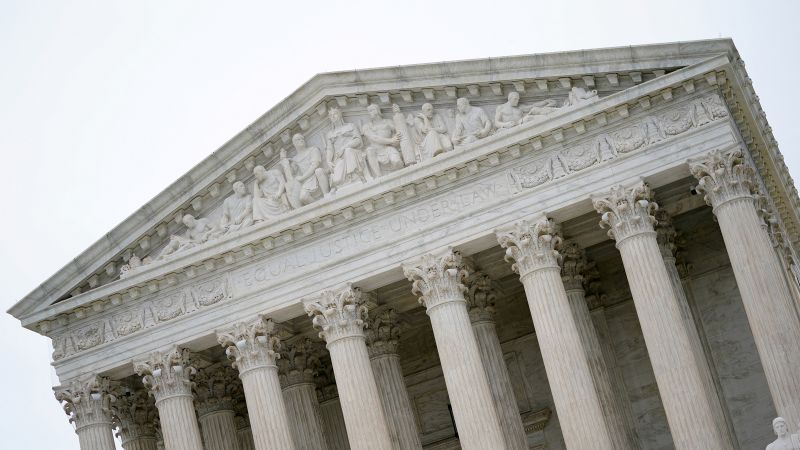
Supreme Court allows Brian Flores to sue – The U.S. Supreme Court has decided not to intervene in the legal case brought by Brian Flores, a former NFL coach, against the league for alleged racial discrimination. This ruling on Tuesday means that the lower court’s decision remains valid, allowing the lawsuit to proceed to trial. The case, which involves multiple Black coaches, centers on claims of systematic bias in hiring and advancement within the NFL. The court’s choice to avoid taking up the appeal has significant implications for how employment discrimination cases are handled in the future.
The Legal Battle Unfolds
Brian Flores, currently serving as the defensive coordinator for the Minnesota Vikings, was previously associated with the New England Patriots, the Miami Dolphins, and the Pittsburgh Steelers. In 2022, he initiated a class-action lawsuit, asserting that the NFL had engaged in systematic racism by limiting opportunities for Black coaches. The league contested the case, seeking to have Flores and two other coaches subjected to arbitration, a process typically used to resolve disputes without going to trial. However, the Second U.S. Circuit Court of Appeals in New York rejected this effort in February, paving the way for the case to continue in federal court.
The NFL argued that its arbitration process was fair and efficient, but the 2nd Circuit found it lacking. The court highlighted that the league’s approach to arbitration, which designates Roger Goodell, the NFL commissioner, as the sole arbitrator, effectively removes the possibility of independent review. This structure, according to the appeals court, creates a situation where the NFL holds the power to resolve its own disputes, potentially favoring its interests over those of the employees it claims to represent.
“It contractually provides for no independent arbitral forum, no bilateral dispute resolution, and no procedure,” wrote U.S. Circuit Judge Jose Cabranes, who was nominated by President Bill Clinton. “It offends basic presumptions of our arbitration jurisprudence.”
Cabranes’ statement underscores the core issue of the case: the NFL’s arbitration mechanism does not meet the traditional standards required for fair dispute resolution. The judge emphasized that the process fails to align with the principles of arbitration, which typically involve an impartial third party. By assigning the league’s own top executive as the arbiter, the system allows for a one-sided outcome, raising concerns about the fairness of the process.
The NFL’s Argument and the Court’s Response
In its appeal, the NFL contended that the 2nd Circuit’s decision would grant judges broad discretion to invalidate arbitration agreements based on subjective interpretations of fairness. The league argued that this could undermine the predictability and consistency of arbitration under federal law, which is designed to streamline dispute resolution. “This ruling gives judges free-floating discretion to strike down arbitration requirements solely based on their subjective determinations that some procedures are unfair,” the NFL stated in its filing.
However, Flores’ legal team countered that the NFL’s approach to arbitration is inherently biased. They argued that by submitting claims to the league’s own chief executive, the process denies employees the right to an impartial arbiter. “An employer – whether a professional sports league, restaurant, retail store or otherwise – cannot force employees to arbitrate statutory employment discrimination claims before the employer’s own chief executive,” the attorneys asserted.
The Supreme Court’s decision to not take up the case reflects a broader trend in recent years where the conservative majority has reinforced the power of corporations to enforce arbitration agreements. This shift has allowed companies to limit the avenues available to employees seeking redress for discrimination or other grievances. The court’s reluctance to hear the appeal suggests that it may be more inclined to support the NFL’s position, though the existing ruling by the 2nd Circuit has already set a precedent.
Implications for Employment Discrimination
Flores’ case has become a focal point for discussions about racial equity in the NFL and other professional organizations. The lawsuit highlights how systemic racism can persist in industries that claim to be merit-based, particularly in roles where leadership and opportunity are concentrated within a small group. The league’s arbitration process, which is central to the case, is seen by critics as a tool to minimize the burden of proving discrimination, especially when the evidence is anecdotal or based on patterns of behavior.
The outcome of this case could influence future litigation involving employment discrimination. If the 2nd Circuit’s ruling stands, it may compel the NFL to revise its arbitration procedures to ensure they meet the standards of fairness. Conversely, if the Supreme Court ultimately sides with the NFL, it could embolden employers to maintain similar systems, reducing the number of discrimination cases that reach trial.
Despite the Supreme Court’s decision, the case remains a critical example of how legal challenges can expose biases within large institutions. The NFL’s response to the appeals court’s ruling indicates its determination to defend the status quo, but the presence of a valid legal argument has kept the case alive. The fight over arbitration highlights a fundamental tension between the interests of employees and employers in the context of employment law.
Flores’ attorneys have pointed to the NFL’s structure as a key factor in the case’s progression. By designating Roger Goodell as the sole arbitrator, the league effectively eliminates the possibility of a fair and impartial evaluation of its claims. This has led to accusations that the process is designed to favor the NFL over its employees, particularly in cases involving racial discrimination. The 2nd Circuit’s decision, which allows the lawsuit to continue, represents a significant victory for Flores and the other coaches involved.
The case also brings attention to the broader implications of arbitration in employment law. While arbitration is often praised for its efficiency and cost-effectiveness, critics argue that it can be manipulated to serve the interests of the employer. The 2nd Circuit’s ruling suggests that such manipulations may be challenged successfully when they clearly undermine the rights of employees to seek justice in court. This decision could serve as a precedent for future cases, potentially reshaping how arbitration is used in the fight against discrimination.