In a city of high-rises, ‘cardboard grannies’ collect waste for cash

In a city of high-rises, ‘cardboard grannies’ collect waste for cash
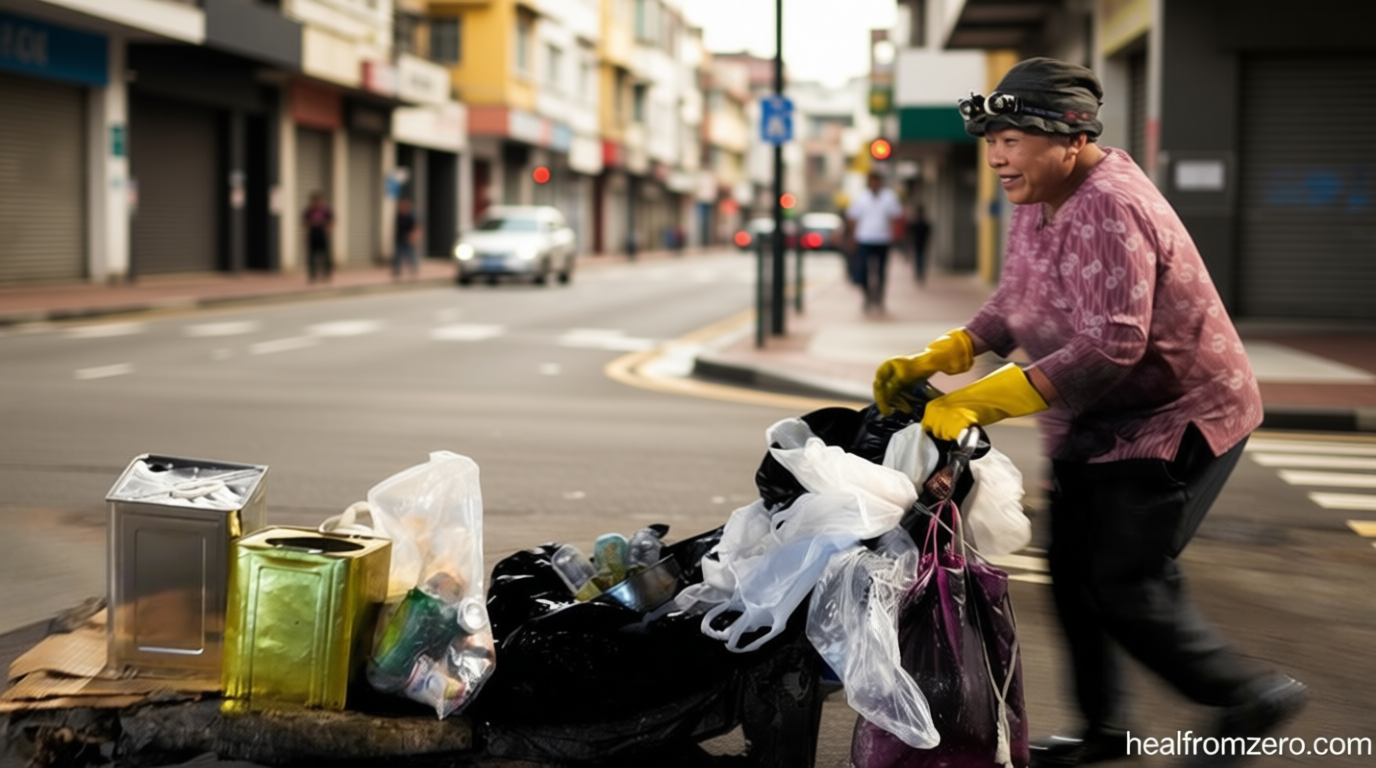
In a city of high rises – Amid the towering skyscrapers and neon-lit thoroughfares of Hong Kong, a small but persistent group of elderly women has carved out a daily existence by gathering discarded cardboard. Known colloquially as “cardboard grannies,” these individuals navigate the city’s busy streets with trolleys brimming with flattened boxes, often disappearing into the shadows of high-rises to retrieve materials that others overlook. Their work, though modest, is a testament to the resilience of those who rely on it to survive in one of Asia’s most expensive metropolises.
A Relentless Routine
For many of these women, the early hours of the morning mark the start of their labor. Wu Sau-jing, 71, begins her collection at 2 a.m., braving the city’s steep hills and narrow alleyways. Her trolley, a mobile warehouse of sorts, is filled with cardboard sheets discarded by businesses and restaurants that operate late into the night. Sorting the materials into categories, she prepares them for resale to a local recycling firm, a process that can take hours. By the time she returns home, often around 11 a.m., she has completed a grueling day’s work.
“I maintain a livelihood and it’s also my hobby. If you don’t like it, it can be quite exhausting,” Wu tells CNN. Her words highlight the dual nature of the job—both a necessity and a passion that has become an addiction.
Despite the physical demands, the rewards are minimal. Lai, another worker in her 70s, earns about HK$100 ($12) daily, a sum that barely covers her meals. “It’s not enough, but it’s all I can do,” she says, underscoring the struggle of elderly residents to afford basic living expenses. The government provides a small monthly allowance, but for many, it is insufficient. Some choose to supplement their income by collecting waste, a decision driven by both economic necessity and personal determination.
Waning Returns and Uncertain Futures
In recent months, the financial viability of this work has come under strain. Lai notes that recycling companies now pay only HK$0.3 ($0.038) per kilogram, a sharp decline from the HK$0.6 ($0.078) recommended by the government. This drop has made it harder for her to make ends meet, particularly as the cost of living continues to rise. “Sometimes, I get nothing when people throw away my collected items, thinking they’re just regular garbage,” she explains. This misclassification not only reduces her income but also risks the loss of her hard-earned hauls.
The broader issue of elderly poverty in Hong Kong is stark. A 2024 report by Oxfam Hong Kong revealed that 580,000 older adults live in poverty, a figure that reflects the city’s economic pressures. For these individuals, the decision to work is often a last resort, yet it is one that keeps them afloat in a city where even basic necessities are costly. Wu, who has been collecting cardboard for three decades, describes her routine as an unending cycle: “It’s like smoking and gambling,” she says. “It’s a hobby you can’t get rid of. I’ll do it until the day I can’t do it anymore.”
The Struggle of a Single Day
Not every day is a success for the cardboard grannies. Chan Ngai-kan, 95, recounts a particularly difficult afternoon when the recycling outpost she relied on stopped accepting cardboard. “I had to take my haul to a rubbish station nearby,” she says, her voice tinged with frustration. “I walked away without any money.” Such setbacks are common, and for someone with no family in Hong Kong, the impact can be devastating. “My children are in Canada and I have no money,” Chan tells CNN, highlighting the isolation and financial insecurity that many elderly workers face.
While most of the workers are women, a few men, like Cheung, 80, also participate in this activity. Unlike the women, Cheung does not follow a strict schedule. Instead, he wanders the city, picking up whatever cardboard he finds, whether it’s discarded in parks, on sidewalks, or in residential areas. Once his trolley is full, he pushes it for a 30-minute journey to the nearest recycling center, navigating the same steep roads that challenge his fellow workers. “It’s not about timing, it’s about finding what’s available,” Cheung says, a sentiment that reflects the adaptability required for this line of work.
A City’s Waste Problem
Hong Kong’s waste management challenges are evident in its high per capita waste generation. The city produces approximately 1.51 kg of waste daily per person, surpassing the rates of its Asian neighbors like Tokyo (0.88 kg), Seoul (0.95 kg), and Taipei (1.139 kg). Despite this, only 30%-40% of waste is recycled, according to official data. In contrast, Taiwan and South Korea recycle over half of their waste, suggesting room for improvement in Hong Kong’s recycling infrastructure.
For the cardboard grannies, this inefficiency is both a problem and a reality. Their work is essential to the city’s waste cycle, yet it often feels undervalued. The economic disparity between the city’s wealth and the struggles of its elderly residents is a central theme. While Hong Kong’s economy thrives, many older people are left to scrape by on meager earnings. This phenomenon is part of a larger trend, where the cost of living outpaces income for those on fixed allowances.
The cardboard grannies’ story is a microcosm of Hong Kong’s economic landscape. Their efforts to collect and sell cardboard not only reflect the city’s waste issues but also its social inequality. As the cost of living continues to climb, these individuals are forced to adapt, often working long hours for little reward. Their presence on the streets is a reminder of the resilience required to survive in a city that values efficiency but overlooks the contributions of its most vulnerable citizens.
For the elderly, this work is more than just a job—it’s a lifeline. Whether it’s the daily grind of sorting cardboard or the emotional toll of relying on strangers for scraps, their experiences are shaped by the city’s structure and pace. As Hong Kong moves forward, the question remains: how can a society so rich in resources support its aging population? The answer, for many, lies in the quiet determination of those who collect cardboard, day after day, in search of a better tomorrow.