
Should you worry about the Ebola outbreak? Here’s what the numbers tell us
Ebola Outbreak in DRC and Uganda: Assessing the Risk and Spread
Should you worry about the Ebola – The World Health Organization (WHO) has raised alarms about a rapidly spreading Ebola outbreak in the Democratic Republic of Congo (DRC) and Uganda, highlighting its potential to escalate into a regional crisis. While global risks are deemed low, the situation remains critical at the national level, with concerns intensifying over the strain responsible for the outbreak and the challenges it poses to containment efforts.
A Rare Strain and Lacking Treatments
Tests have confirmed that the outbreak is linked to the Bundibugyo strain, a less common variant of the Ebola virus that lacks a specific treatment or vaccine. Dr. Tedros Adhanom Ghebreyesus, the WHO’s director-general, emphasized this as a major factor in the urgency of the response. The strain’s presence in both the DRC and Uganda raises questions about its transmission dynamics and the potential for it to spread further than previously anticipated.
WHO officials have classified the outbreak as a “public health emergency of international concern,” a designation that underscores the need for coordinated global action. This classification does not imply an imminent global pandemic but signals that the virus could threaten multiple countries if not controlled swiftly. The organization’s assessment hinges on several key factors, including the delayed detection of the outbreak and the high-risk environment it now inhabits.
Global Containment Efforts and International Cases
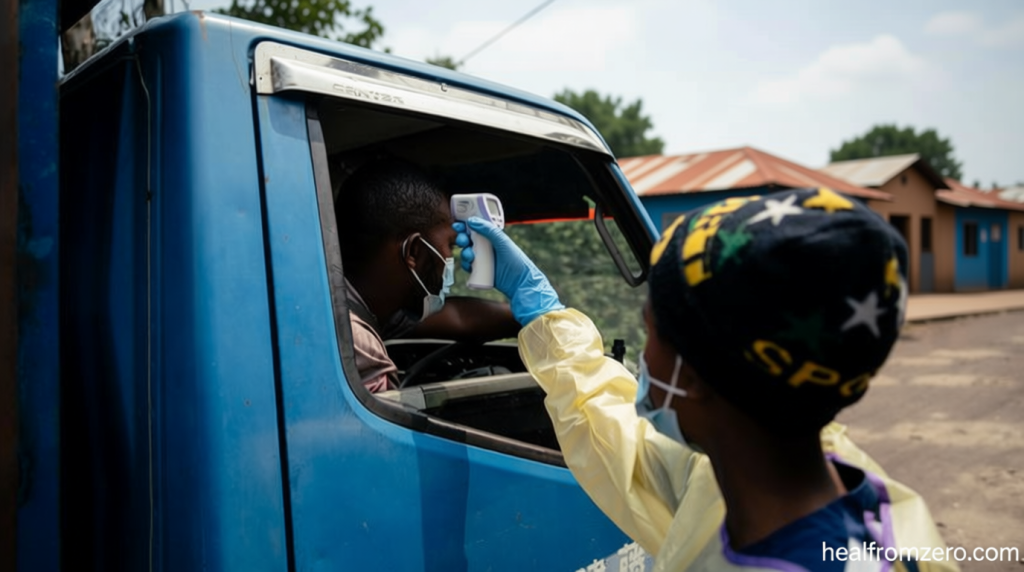
Despite the regional threat, many countries have taken proactive measures to curb the spread. These include implementing travel restrictions from the affected areas, conducting health screenings at borders, and deploying resources to support outbreak response. The United States has also played a role, with the Centers for Disease Control and Prevention (CDC) reporting that an American citizen working in the DRC has tested positive for Ebola.
The symptomatic American, identified as Dr. Peter Stafford, a general surgeon specializing in burn care, arrived in Berlin on Wednesday. He is currently receiving treatment at Charité University Hospital, according to German authorities. The CDC has announced plans to relocate six high-risk contacts of the infected individual to Europe for observation. Five of these contacts will be sent to Germany, while one will be monitored in the Czech Republic. This step aims to isolate potential carriers and prevent further transmission within the region.
Additional concerns have emerged regarding the involvement of healthcare workers in the outbreak. Dr. Rebekah Stafford, Dr. Peter Stafford’s wife, and Dr. Patrick LaRochelle—both medical professionals—may have been exposed to the virus. While they remain asymptomatic, they are following strict quarantine protocols to monitor their health. The presence of healthcare workers among the infected underscores the vulnerability of frontline personnel and the need for enhanced protective measures.
Regional Dynamics and Spread Timeline
In Uganda, two confirmed cases have been reported, both linked to the DRC. The first patient, treated at a Ugandan facility, succumbed to the illness after a short period. The second case is also considered imported, indicating that the virus is not confined to a single country. Ugandan health authorities have activated outbreak control protocols, including heightened surveillance and readiness plans to address the situation effectively.
WHO officials noted that the outbreak’s timeline reveals a critical gap in early detection. An alert was raised on May 5, following reports of a mysterious illness in Mongbwalu, a town in the DRC’s Ituri province. This illness, which resulted in the deaths of four healthcare workers within four days, prompted the organization to intervene. However, the outbreak was identified only weeks after the first known patient fell ill in April, leaving a four-week window during which the virus could have spread undetected.
“The delay in recognizing the outbreak has allowed it to gain momentum,” said Dr. Anne Ancia, WHO’s representative in the DRC. She highlighted that this uncertainty complicates efforts to track the virus’s reach and assess its full impact. The detection gap, combined with the strain’s lack of a specific treatment, has intensified fears about the outbreak’s potential to worsen.
How Ebola Spreads and Its Incubation Period
Understanding the virus’s transmission patterns is crucial for containment. Ebola spreads through direct contact with bodily fluids such as blood, saliva, vomit, or feces from an infected person. It can also be transmitted via contaminated objects or surfaces, particularly in environments with limited hygiene practices. However, individuals are not contagious until they exhibit symptoms, which typically appear between two and 21 days after exposure.
Dr. Tedros has described the outbreak’s scale and speed as deeply concerning. While official confirmed cases in the DRC are currently at 51, the WHO estimates at least 139 deaths and nearly 600 suspected cases. This discrepancy between confirmed and suspected cases illustrates the challenges in accurately tracking the virus’s spread. “Significant uncertainty surrounds the total number of infections and how far the virus has reached,” Dr. Ancia stated, underscoring the need for continued vigilance and research.
The situation in the DRC highlights the complexities of managing outbreaks in regions with limited healthcare infrastructure. Local authorities, in collaboration with WHO, dispatched an investigation team on May 12 after receiving reports of the illness. The team collected samples to confirm the virus’s presence, marking the start of a more targeted response. Despite these efforts, the virus has already established a foothold in densely populated areas, complicating containment.
What the Numbers Mean for Public Health
While the numbers are alarming, they also provide a framework for understanding the outbreak’s trajectory. The WHO’s declaration of a public health emergency reflects the organization’s belief that the outbreak could evolve into a larger crisis if not managed properly. However, the global risk remains low, as the virus is not yet spreading widely beyond the DRC and Uganda.
Dr. Tedros emphasized the importance of addressing the outbreak’s root causes, such as delayed identification and the strain’s characteristics. “The fact that this strain has no specific treatment or vaccine makes the situation even more precarious,” he noted. The WHO is now working to determine the exact origin of the outbreak and the factors that contributed to its rapid spread. These insights will be vital for developing strategies to prevent future occurrences.
Public health officials continue to monitor the outbreak closely, with particular attention to the movement of people within affected areas. Such mobility increases the likelihood of the virus reaching new regions, especially in areas with weak healthcare systems. While the situation is dire, the combined efforts of local governments and international organizations offer hope that the outbreak can be contained before it escalates further.
The international community is now watching the DRC and Uganda to see how the outbreak develops. With the American case already in Europe and the WHO conducting a thorough investigation, the focus remains on mitigating risks and ensuring timely responses. As the virus continues to spread, the need for accurate data and effective containment measures has never been more pressing.