
The cost of living in the US weighs on Latino voters as economic discontent grows
The cost of living in the US weighs on Latino voters as economic discontent grows
The cost of living in the US – Esmeralda Roustand, a 60-year-old Dominican grandmother, faces a growing challenge as she navigates the daily realities of rising expenses in New York City. Leaving a Latino supermarket, she holds a small bag containing only two orange juices and a modest chicken meal with green bananas, shaking her head in exasperation. “There’s almost $20 in here and basically nothing,” she remarked, reflecting on the strain of grocery bills. “Food is expensive, and housing? It’s a nightmare. You can’t afford an apartment because they’re sky-high.” Roustand, who works as a home health aide, sends part of her paycheck back to her family in the Dominican Republic. Yet, with inflation climbing and transportation costs mounting, she feels the burden of supporting both her loved ones and herself has become unsustainable. “No matter how hard you try to stretch your money, it’s just not enough anymore,” she said, highlighting the growing financial strain on Latino households.
Latino voices echo economic distress across the country
Stories like Roustand’s are increasingly common among Latino communities in the United States, even as some economic metrics suggest resilience. A new CNN survey reveals that the cost of living and inflation remain central concerns for many Americans, particularly as midterm elections approach. The findings indicate that 70% of respondents disapprove of President Donald Trump’s economic policies, while over 70% express dissatisfaction with his approach to inflation and gas prices. Despite these broader trends, the personal toll on Latino families is palpable. For them, the economic pressures are not abstract numbers but tangible hardships that shape everyday life.
“Every month, I have to check whether I can afford to eat out or whether I have enough to pay rent,” said Juan Galván, a young college student in New York. “I’ve had to adjust when I can go out with friends and basically stay inside to justify the money spent on my apartment.”
Galván’s experience mirrors that of countless others in the Latino community, where the cost of living often outpaces income growth. The latest Consumer Price Index shows annual inflation hit 3.8% in April, marking the highest level in nearly three years. Meanwhile, the national average for gasoline prices has surpassed $4.50, adding to the financial strain. These figures are not just statistics; they are the backdrop against which Latino families struggle to meet basic needs. As Michael Negrón, a senior fellow at the Center for American Progress and former White House economic adviser under President Joe Biden, notes, inflation disproportionately affects communities where a significant portion of income is spent on essentials like food, energy, and transportation.
Why inflation hits Latino communities harder
According to Negrón, Latino households tend to allocate a larger share of their budgets to food and energy, far exceeding the national average. “Hispanics spend nearly 15% of their income on food, compared to the average of around 10% for all Americans,” he explained. “Energy costs also take up about 8% of their budget, which is higher than the national figure.” This pattern is exacerbated by the fact that many Latinos rely on cars for commuting, often traveling longer distances than other groups. When gas prices surge by 40% or 50%, the impact is immediate and severe. “It affects everyone, but Latinos feel it more,” Negrón emphasized. “Basic necessities like food, electricity, and gasoline are rising the fastest, and for families already stretched thin, this is a major blow.”
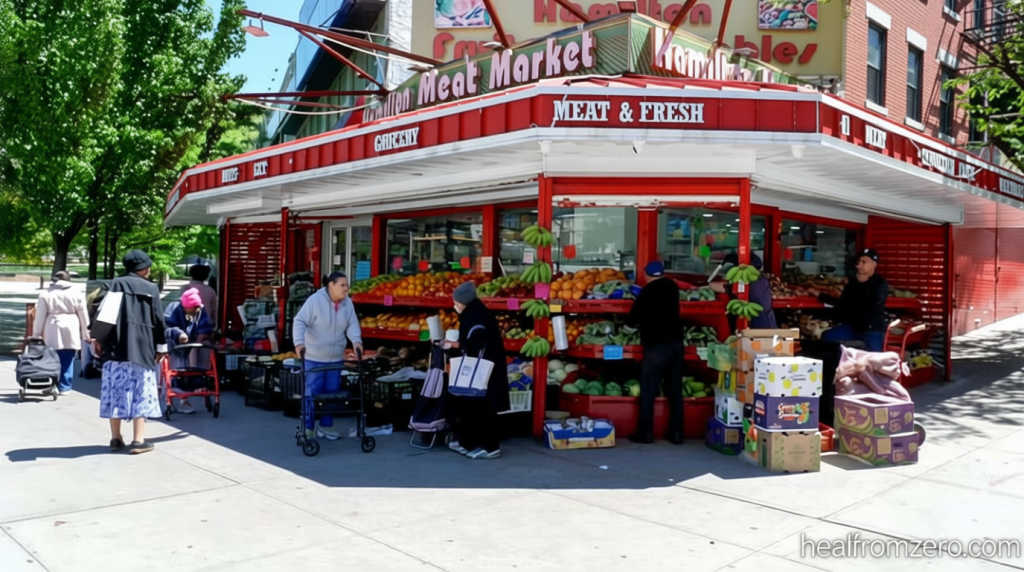
The ripple effects of these costs extend beyond the grocery store and into the fabric of community life. For example, José Rosario, a seven-year veteran of Hamilton Meat Market in Upper Manhattan, described how his customers’ shopping habits have changed over time. “Before, $100 could fill a shopping cart, but now you carry just a few items in your hand,” he said. “A year ago, papaya was 99 cents a pound. Now it’s $1.99. Some people even ask for it cut into pieces to save money.” Rosario’s observations underscore the shift from abundance to scarcity, as families are forced to make difficult choices about what to buy and when to spend. Similar challenges are evident in the way small purchases now carry a greater burden. “Lemons used to be five for a dollar. Now it’s two for a dollar,” he added, illustrating how inflation has transformed everyday decisions into economic battles.
Family traditions and personal sacrifices
For María Sofía González, an Ecuadorian mother, the cost of living has reshaped family routines and even small, once-normal moments. “We’ve had to give up certain little pleasures,” she said, citing the decline in social outings. “Going out used to be a regular thing, but now it’s a luxury we can’t afford.” González, who manages a household with her own children, explained how the high cost of essentials has forced her to prioritize survival over tradition. “We used to have family dinners together, but now we’re planning around whether we can afford groceries or gas,” she said. Her story highlights the emotional and cultural costs of economic hardship, as families adapt to a reality where basic needs often take precedence over shared experiences.
These individual struggles reflect a broader trend among Latino voters, who are increasingly vocal about their economic frustrations. The CNN poll reveals that the cost of living is a top concern for this demographic, with many feeling the weight of inflation in ways that are not captured by traditional economic indicators. While national inflation rates may be steady, the localized impact on Latino communities is stark. For instance, the rising cost of housing in New York has pushed some families into overcrowded conditions or to rely on extended family support to make ends meet. “It’s not just about money—it’s about dignity,” said one participant in the survey. “You feel like you’re constantly making sacrifices just to keep up.”
Implications for political engagement
As economic discontent deepens, the implications for political engagement are significant. Latino voters, who have historically been pivotal in shaping election outcomes, are now more likely to voice dissatisfaction with policies that fail to address their specific challenges. The rising costs of living have not only strained personal finances but also shifted the priorities of this community, with many focusing on issues like affordable housing, grocery prices, and transportation. “The pressure is real, and it’s affecting how we see the economy,” said Negrón. “Latino households are at the front lines of inflation, and their concerns need to be central in the political discourse.”
With the midterm elections approaching, the economic sentiment among Latino voters could play a critical role in shaping the political landscape. While the nation’s overall economic indicators may show resilience, the lived experiences of individuals like Roustand, Galván, Rosario, and González paint a different picture. Their stories are not just about personal hardship but about the systemic pressures that keep them in a cycle of financial strain. As the cost of living continues to rise, the question remains: how will these challenges influence the voting behavior of a community that has long been a key demographic in American politics?
For many, the answer lies in the simple phrase “Every day you spend more for less.” This sentiment captures the essence of inflation’s impact on Latino families, who are often forced to make tough trade-offs. Whether it’s choosing between a meal out and paying rent or deciding which essentials to buy, the choices are no longer simple. Instead, they reflect a growing sense of urgency and frustration. As the cost of living becomes an ever-present concern, the voices of Latino voters will carry increasing weight in shaping the nation’s economic future.