
Drug counselor who delivered ‘Friends’ star Matthew Perry ketamine that killed him gets 2 years
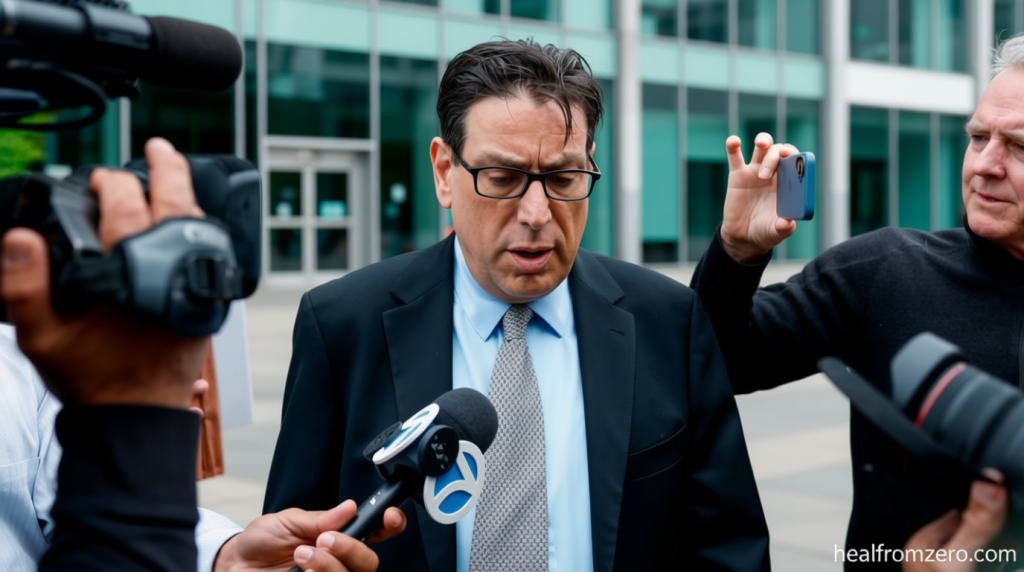
Drug Counselor Erik Fleming Gets 2-Year Sentence for Ketamine Linked to Matthew Perry’s Death
Drug counselor who delivered Friends star – On Wednesday, Erik Fleming, a licensed drug addiction counselor, received a two-year prison sentence for his role in the fatal ketamine overdose that killed Matthew Perry, the beloved actor known for his iconic role on “Friends.” The sentencing took place at a federal courthouse in Los Angeles, where Judge Sherilyn Peace Garnett addressed the 56-year-old defendant. Fleming’s actions, which included supplying the actor with ketamine, have now led to his incarceration, marking the fourth defendant to face trial in the ongoing case surrounding Perry’s 2023 death.
Fleming’s Testimony and Sentencing
Fleming, who had been released on bond, spoke before the court, expressing deep regret over his involvement. “It’s truly a nightmare I can’t wake up from,” he said in a somber tone, as he stood at the podium. “I’m haunted by the mistakes I made.” The judge noted that while Fleming’s cooperation had expedited the investigation, his decision to turn over evidence came under pressure. “He didn’t come forward in the months following the incident,” the judge remarked, highlighting the lack of proactive action in the early stages of the case.
“Mr. Fleming didn’t cooperate because he had a benevolent motive, or because he wanted justice for Mr. Perry,” said Assistant US Attorney Ian Yanniello. “He wanted to save himself.”
Fleming was also given three years of probation, which will be served concurrently with his prison term. His attorney, Robert Dugdale, emphasized the defendant’s efforts to aid the investigation, describing his act of surrendering Jasveen Sangha, the “Ketamine Queen” convicted in the case, as a critical contribution. “They didn’t have a clue who she was before that day,” Dugdale explained, adding that Fleming’s cooperation likely reduced his sentence by a significant margin.
The Connection to the Ketamine Queen
Fleming’s role in Perry’s death began when he connected the actor to Sangha, a drug dealer who supplied the ketamine. The defense argued that Fleming’s job as a drug counselor made him a key figure in the case, but the prosecution insisted on his moral responsibility for selling the drug to someone with a documented struggle against addiction. Fleming admitted that he delivered the substance to Perry’s home, where he sold it to Kenneth Iwamasa, the actor’s personal assistant. Four days before Perry’s death, he provided 25 vials for $6,000, which Iwamasa later used to inject Perry.
The actor’s death on October 28, 2023, was a tragic culmination of his ongoing battle with depression and substance abuse. According to the medical examiner’s report, Perry’s life was lost due to the acute effects of ketamine, a drug typically used as a surgical anesthetic. Drowning was listed as a contributing factor, though the primary cause remained the overdose. The prosecution stressed that Fleming’s cooperation, while valuable, was not voluntary, and his information might have been uncovered through other means, such as the seizure of his phone.
Defense Arguments and Rehabilitation Efforts
Fleming’s legal team underscored his lack of prior criminal history, presenting him as a person who had been striving for recovery. “He only spent 11 days dealing drugs and had a single customer,” the defense stated, emphasizing that his actions were driven by desperation. The attorney also highlighted Fleming’s commitment to rehabilitation, noting that he had remained sober for 20 months and helped establish a sober living facility. “His remorse is profound,” the defense said, “but it can’t compare to the agony he caused.”
“My chest and heart hurt every day for the pain I caused not only his family but the millions of people who adore him,” Fleming said outside the courthouse after his sentencing.
Despite his efforts, Fleming’s role in Perry’s death remains a central point of contention. Prosecutors argued that his profession as a drug counselor amplified his culpability, as he had the knowledge and opportunity to guide Perry toward treatment rather than toward a lethal dose. The case against Fleming has been part of a larger probe into the actor’s demise, which has already seen three other defendants sentenced. The final defendant, Iwamasa, is expected to face his own trial in the coming weeks, completing the 2.5-year investigation into Perry’s fatal incident.
The Ketamine Queen’s Role
Jasveen Sangha, whom authorities labeled as the “Ketamine Queen,” was sentenced to 15 years in prison last month. Fleming’s testimony had been instrumental in linking Sangha to Perry, as he had provided drugs from her residence to the actor. However, the defense contended that Fleming’s cooperation was a last-minute decision, made after being confronted by investigators. “He handed over the Ketamine Queen on a silver platter,” Dugdale said, pointing out that authorities had already been searching for Sangha when they located Fleming at his sister’s home.
Perry’s death sparked a nationwide conversation about the misuse of prescription drugs and the intersection of addiction and mental health. The actor, who had been receiving ketamine treatments for depression, had sought more of the drug than his doctors could supply. A friend introduced him to Fleming, a former film producer whose career had been derailed by his own addiction. Fleming, facing a relapse triggered by personal struggles, relied on Sangha’s supply to meet Perry’s demand. The drug’s role in Perry’s death underscores the dangers of its off-label use, which has become increasingly common in treating conditions like anxiety and depression.
Legacy and Impact
As the case nears its conclusion, the focus remains on the tragic sequence of events that led to Perry’s death. His passing at the age of 54 has left a lasting mark on fans and colleagues, who remember him as a charismatic performer with a complex personal life. Fleming’s sentence, while a step toward accountability, has not fully resolved the emotional toll of his actions. “I’m still haunted by the mistakes I made,” he repeated, acknowledging the gravity of his role in the actor’s demise.
The trial also shed light on the broader issue of how drug counselors can inadvertently contribute to the cycle of addiction. Fleming’s case demonstrates the tension between professional duty and personal compulsion, as he used his position to access and distribute the drug. The prosecution’s argument that he should have acted as a guide rather than a supplier has resonated with many, highlighting the moral complexities of his actions. Even as he serves his time, Fleming’s story continues to fuel discussions about responsibility, redemption, and the far-reaching consequences of substance abuse in the entertainment industry.
The sentencing of Erik Fleming marks a pivotal moment in the legal proceedings surrounding Matthew Perry’s death. While the actor’s family and millions of admirers mourn his passing, the case has also become a symbol of the interconnected challenges of mental health, addiction, and the legal system’s response to drug-related fatalities. As the investigation concludes, the hope is that it will serve as a reminder of the importance of accountability and the need for continued support in the fight against substance abuse.