
They were on the trip of a lifetime. Now they’re quarantined as health officials work to contain a hantavirus outbreak
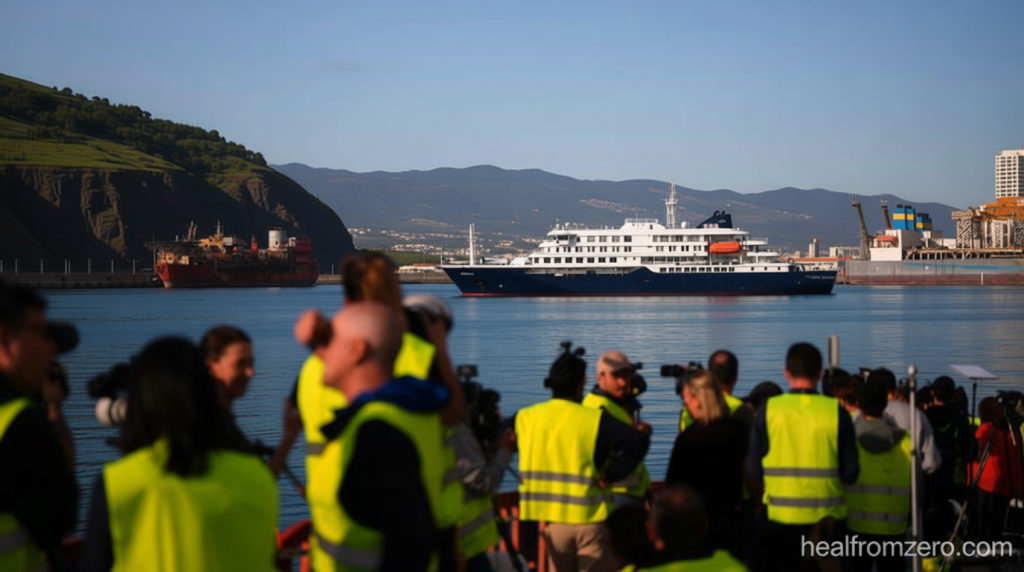
A Once-in-a-Lifetime Voyage Turned Quarantine: Hantavirus Outbreak on the MV Hondius
They were on the trip – When passengers embarked on a cruise in Argentina last month, they were en route to an extraordinary Atlantic crossing, seeking to witness unique wildlife and explore remote islands. Six weeks into the journey, the majority of American travelers aboard the MV Hondius now reside in basic accommodations at the National Quarantine Unit in Omaha, Nebraska, undergoing isolation that could span several weeks. Jake Rosmarin, a passenger, shared a brief update on social media, stating, “Hopping back on for a second to let everyone know I’m okay and feeling well,” accompanied by a photo of himself in the quarantine facility.
As of Tuesday morning, a total of 122 individuals—87 passengers and 35 crew members—had been evacuated from the vessel, with most already on their way home. Five Australians and a New Zealander remain in the Netherlands, awaiting repatriation later this week. The remaining 27 people, including 25 crew members and two medical professionals, are expected to reach Rotterdam on Sunday evening, where the ship will undergo thorough disinfection. This effort, part of a global response, aims to mitigate the spread of the virus and ensure safety for those still on board.
The World Health Organization (WHO) confirmed the outbreak of the rare hantavirus on the MV Hondius, operated by Oceanwide Expeditions. Three passengers have succumbed to the illness since April 11, while several others have been diagnosed with confirmed or probable cases. Despite the severity, WHO officials emphasized that the risk to the general public remains low. Dr. Tedros Adhanom Ghebreyesus, the WHO Director-General, reported 11 cases, including the three fatalities, all originating from individuals on the ship. Nine of these cases were identified as the Andes strain, a specific variant of hantavirus, while the other two are classified as “probable” cases.
Monitoring and Medical Assessments in the United States
Within the U.S., 17 Americans and one British dual-national are being closely observed in medical facilities. These individuals range in age from their late 20s to early 80s, with older passengers and those having preexisting health conditions facing a higher likelihood of severe outcomes. At the University of Nebraska Medical Center, 16 of these individuals are currently under surveillance, with one placed in a biocontainment unit after testing positive for the virus. The Centers for Disease Control and Prevention (CDC) is awaiting confirmatory results, as per an official from the U.S. Department of Health and Human Services (HHS).
Meanwhile, two additional patients were relocated to Emory University in Atlanta, where they are housed in a biocontainment unit due to capacity constraints at the University of Nebraska Medical Center (UNMC). One of these patients, described as “mildly symptomatic,” has tested negative for the Andes strain, according to HHS. The decision to move them underscores the need for specialized care in managing the outbreak’s spread.
Authorities are conducting in-depth evaluations of all affected individuals to determine the appropriate length of their monitoring period. Some passengers will continue their isolation in medical facilities, while others may be allowed to return home for further observation. The WHO’s Dr. Tedros noted that those whose last exposure occurred on May 10 will be required to quarantine or monitor their health until at least June 21.
Risk Factors and Public Health Measures
Public health officials have identified key risk factors, particularly for older adults and those with underlying health conditions. These demographics are more vulnerable to the virus’s complications, which have been observed in the confirmed cases. The National Quarantine Unit in Omaha is playing a central role in tracking symptoms and ensuring compliance with isolation protocols. Nebraska Medicine confirmed that the unit is working closely with federal partners to assess passengers regularly, a critical step in controlling the outbreak.
Dr. Mara Jana Broadhurst, clinical laboratory director at the emerging pathogens and biocontainment unit at the University of Nebraska Medical Center, highlighted the ongoing dialogue between health professionals and affected individuals. “Decisions around how best to strike a balance between monitoring in these facilities and monitoring at home are an ongoing conversation,” she stated during a briefing with the College of American Pathologists. This approach reflects the complexity of managing the outbreak while considering logistical and medical constraints.
The Andes strain, responsible for the majority of cases, is known for its potential to cause severe illness, particularly in individuals with compromised immune systems. While the virus is rare, its transmission on the MV Hondius has raised concerns about its spread in enclosed environments. The cruise ship’s journey across the Atlantic, which initially seemed like an idyllic adventure, has now become a focal point for public health efforts. The WHO’s monitoring of the situation, along with local agencies, ensures that any new cases are promptly addressed.
As the situation unfolds, passengers and crew continue to navigate the challenges of isolation and uncertainty. The initial excitement of the expedition has given way to the realities of quarantine, with many individuals relying on social media to share updates about their health and experiences. Jake Rosmarin’s recent post, for instance, offered a glimpse into the daily life of those in the Omaha facility, where they are confined to small rooms equipped with minimal amenities.
Despite the disruptions, the repatriation process remains steady, with international cooperation playing a vital role in moving affected individuals back to their home countries. The five Australians and one New Zealander currently in the Netherlands are part of a broader effort to ensure that each person receives the necessary care and monitoring in their respective regions. This coordinated response has been essential in containing the outbreak and preventing further spread.
Looking ahead, the focus will remain on tracking the progress of all 11 confirmed cases and evaluating the effectiveness of the quarantine measures. The next few weeks will be critical in determining whether the virus is under control or if additional precautions are needed. Public health officials are also working to understand how the Andes strain was transmitted on the ship, as this information could inform future prevention strategies.
The MV Hondius incident serves as a reminder of the unpredictable nature of viral outbreaks, even in seemingly isolated settings. While the cruise was intended to be a unique travel experience, it has become a case study in managing health crises across international borders. The efforts of the National Quarantine Unit, the CDC, and other agencies highlight the resilience and adaptability of public health systems in responding to such challenges.