
Virginia Democrats ask US Supreme Court to let them use new congressional map
Virginia Democrats Seek Supreme Court Review of Congressional Map
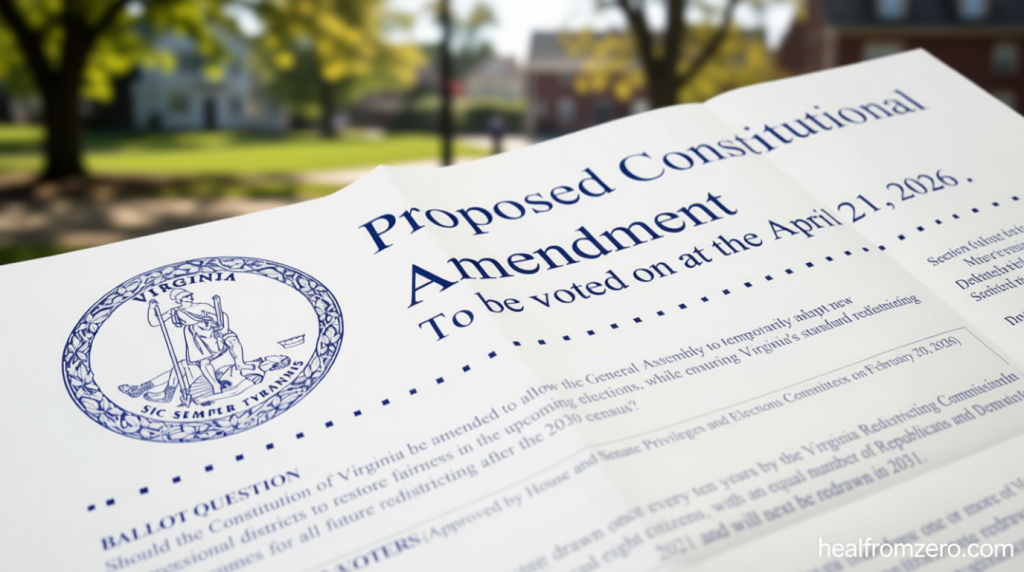
Virginia Democrats ask US Supreme Court – On Monday, Virginia’s Democratic officials filed an emergency appeal with the U.S. Supreme Court, requesting the reinstatement of a congressional map designed to benefit their party during this year’s midterm elections. This marks the latest in a series of redistricting disputes reaching the nation’s highest court as states across the country race to reshape electoral boundaries ahead of the fall vote. The appeal aims to pause the state Supreme Court’s recent ruling that invalidated the Democrats’ attempt to redraw the state’s U.S. House districts through a referendum in April, which could have granted them up to four additional seats.
A Collision of Legal Interpretations
The state Supreme Court’s decision last week sparked the emergency appeal, as it ruled that the process used to create the referendum violated the state constitution. Democratic lawmakers and Virginia’s attorney general, Jay Jones, argued that the state court misinterpreted the term “election” to include early voting, which they claim undermined the constitutional amendment process. The ruling forced Virginia to use a different map than the one approved by the General Assembly, potentially altering the political landscape of the midterm races.
“The Supreme Court of Virginia’s decision is deeply mistaken and has profound practical importance for the nation,” the Democrats stated in their filing.
“By compelling the commonwealth to conduct its congressional elections with districts not ratified by the people, the state court has deprived voters, candidates, and the state of their right to the lawfully enacted map.”
This argument highlights the urgency of the case, as the new map could have shifted the balance of power in the state’s congressional delegation.
Redistricting as a Strategic Play
Virginia’s redistricting effort is part of a larger trend of states leveraging the U.S. Supreme Court’s recent rulings to adjust electoral boundaries. A landmark decision in late April significantly weakened the Voting Rights Act of 1965, prompting several southern states to pursue map changes that favor their parties. For Virginia Democrats, the proposed map was a calculated move to counter the Republican advantage gained from that ruling. The state’s political strategy relied on the assumption that the referendum process, which required only a single vote, would allow them to secure more seats in the House of Representatives.
However, the state Supreme Court ruled that the process was flawed, as it did not meet the constitutional requirement of two separate votes. Under the state constitution, the General Assembly must approve a constitutional amendment twice before presenting it to voters, with a general election occurring between the two votes. Republicans contended that the first vote in late October 2025 was invalid because early voting had already begun, which they argue disrupted the intended timeline.
A Broader Judicial Landscape
As the U.S. Supreme Court tackles multiple redistricting cases, the implications of its decisions have intensified. The Virginia case will initially be handled by Chief Justice John Roberts, who oversees emergency appeals from the 4th U.S. Circuit Court of Appeals. Roberts set a deadline for responses by Thursday evening, adding pressure to the legal battle. The court’s involvement extends beyond Virginia, as it also weighs a similar request from Alabama to adopt a congressional map that limits opportunities for Black voters to elect their preferred candidates.
Meanwhile, the justices are engaged in heated debates over the court’s role in shaping election outcomes. After the Voting Rights Act decision, liberal Justice Ketanji Brown Jackson criticized the court for prioritizing political influence over legal principles, suggesting it had accelerated the redrawing of Louisiana’s map to sway the November elections. Conservative Justice Samuel Alito countered, calling Jackson’s dissent “insulting” and labeling her arguments as “trivial” and “baseless.” These exchanges underscore the growing divide among justices over the extent of the court’s impact on the midterm race.
Legal Theories and Strategic Implications
In their appeal, Virginia Democrats have relied on a legal theory that the justices are examining in another case involving mail ballots sent after Election Day. This approach reflects a broader attempt to align their argument with the federal interpretation of voting procedures, which could be pivotal in persuading the Supreme Court to intervene. The Democrats emphasize that the state court’s ruling created an immediate and irreparable harm, as the new map would have given them a chance to win up to four additional seats, reducing the GOP’s representation in the state to just one district.
Virginia’s case also highlights the tension between state and federal legal standards. While the state Supreme Court focused on constitutional provisions specific to Virginia, the Democrats argue that the federal framework should take precedence, particularly in light of the Voting Rights Act’s weakened protections. This strategy aims to frame the dispute as a national issue, potentially drawing the Supreme Court into a larger debate about the fairness of redistricting processes.
The Road Ahead for the Supreme Court
The U.S. Supreme Court is expected to issue a decision on the Virginia case later this week or early next. With multiple redistricting appeals pending, the justices are under scrutiny for their potential influence on the midterm elections. The outcome of these cases could determine whether states are allowed to use maps that maximize their partisan gains, further complicating the electoral landscape.
As the court deliberates, the stakes have never been higher. For Virginia Democrats, the reversal of the state Supreme Court’s ruling would mean a return to the original map, which they believe is critical for their chances in November. For Republicans, it would reinforce their position that state courts are overstepping their authority and that redistricting should be guided by federal law. The case also serves as a test of the justices’ commitment to upholding the Voting Rights Act, which remains a central issue in the broader political climate.
With the midterm elections approaching, the Supreme Court’s decisions on redistricting are shaping the political narrative. The Virginia case, along with similar appeals from Alabama and other states, illustrates the strategic importance of map drawing in modern elections. As the justices weigh these arguments, the outcome could have far-reaching consequences for the balance of power in Congress and the future of voting rights legislation.
The legal battle over Virginia’s congressional map is not just about district boundaries—it’s a reflection of the nation’s polarized political environment. By challenging the state Supreme Court’s ruling, Democrats are seeking to assert that their efforts should be judged under federal standards, ensuring that the map they ratified through a constitutional amendment is used as intended. This appeal underscores the high-stakes nature of redistricting, where every decision can reshape the trajectory of the midterm elections and the power dynamics in the U.S. House of Representatives.