
Five of Queen Elizabeth II’s most iconic outfits – from new royal exhibit
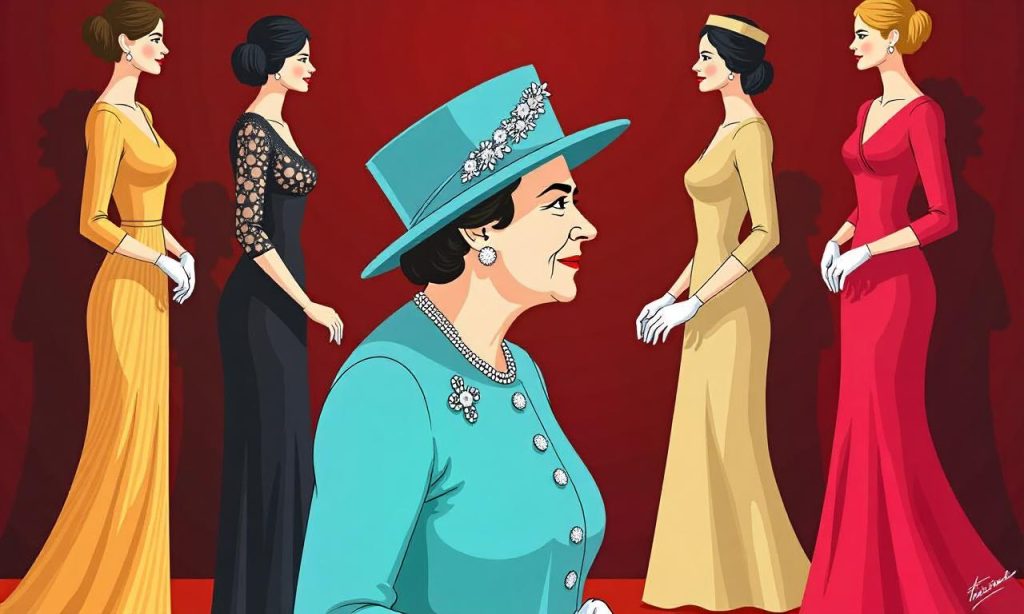
Five of Queen Elizabeth II’s Most Iconic Outfits – From New Royal Exhibit
Queen Elizabeth II stood as one of the most globally recognized figures of the 20th century, her style a blend of restraint and elegance. Though often seen as traditional, her fashion choices became instantly familiar, whether through the striking hats and vibrant coats she wore in public or the simpler tweeds, tartans, and headscarves that defined her off-duty aesthetic. Her outfits were crafted with precision, balancing utility and symbolism to reflect the nation’s values and her own authority.
British Craftsmanship and National Identity
A recent display at The King’s Gallery in Buckingham Palace explores her legacy, highlighting items from across her 100-year life span and celebrating the centenary of her birth on 10 April. Featuring over 200 pieces—ranging from garments to accessories—the exhibition traces how the UK evolved under her reign. Among the standout items is a Harris tweed jacket paired with a Balmoral Tartan skirt, first worn by the Queen in the 1950s. This ensemble became a hallmark of her casual appearance, embodying both practicality and quiet sophistication.
“The fabrics used were intended to ‘promote British fashion, excellence and production,’” notes royal fashion commentator Marian Kwei. “Weaved into the outfit’s feminine cut and low-key tones are connotations of ‘stability, dependence, soft power’.”
Despite its understated design, Kwei argues the look conveyed a powerful message: “It’s ‘I’m in charge’, without being too loud about it.” The traditional aesthetic, she adds, helped reinforce a sense of continuity during a period of rapid change. Its influence extends beyond history, as seen in contemporary fashion, including Miu Miu’s 2024 Balmoral collection, which reinterpreted the tartan skirts she popularized.
Coronation Symbolism and Global Unity
Another key piece is her 1953 Coronation dress, created by Norman Hartnell. Made from Kent silk and adorned with gold bugle beads, diamantés, and pearls, the garment showcased the pinnacle of British craftsmanship. Kwei highlights its deeper significance: “The gown was pretty much a nod to Britain and the Commonwealth.”
“It features the floral emblems of the four nations of the UK,” explains Kwei. “And after accepting Hartnell’s eighth design for the dress, the Queen also requested the emblems of other Commonwealth countries be included.”
Among the symbols were the Canadian maple leaf, India’s lotus flower, and the emblems of Wales, Scotland, and Ireland. Holmes, a royal fashion writer, emphasizes how these choices underscored her role as a unifying figure: “Her sartorial choice was really an indication of the kind of Queen we had and how she reigned.”
Transatlantic Diplomacy and Controversial Beauty
In 1957, the Queen donned an elaborate sleeveless green gown during a state banquet for US President Dwight Eisenhower at the British Embassy in Washington DC. Designed by Hartnell, the dress was both a celebration of British design and a subtle gesture toward diplomacy. While de Guitaut praises its elegance, she acknowledges its divisive nature.
“It’s absolutely beautiful,” says de Guitaut. “But I can’t quite see an overt reference in it to be honest.”
Kwei offers an alternative interpretation, linking the “apple crisp green” hue to American culture. “From New York being known as ‘The Big Apple’ to the iconic ‘American Pie,’ apples have become synonymous with all things classically American,” she remarks. The dress, she suggests, served as a bridge: “It says, ‘I’m Britain’s sovereign, this is us, but I’m also nodding to you.’”
Throughout her 70-year reign, the Queen’s clothing choices consistently reflected her dual role as a symbol of national identity and a figurehead of global unity. Whether through the simplicity of her tweed suits or the intricate symbolism of her formal wear, her style remained a quiet but enduring force in shaping perceptions of power and tradition.