
Iranian footballer changes mind on asylum in Australia
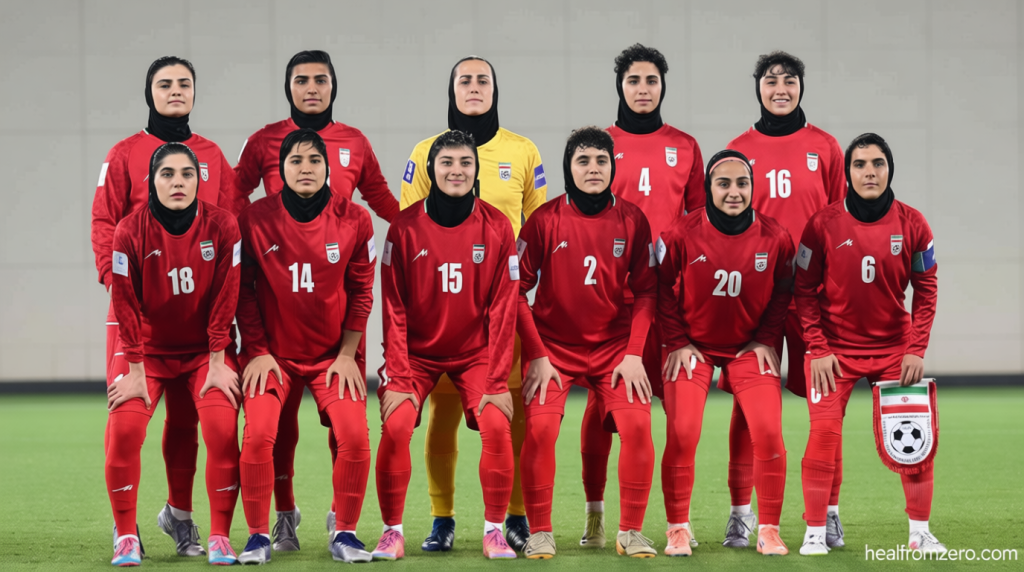
Iranian Footballer Changes Mind on Asylum in Australia
An Iranian women’s footballer has reversed her decision to seek asylum in Australia, reducing the number of players fleeing to six as fears of danger mounted following their refusal to sing Iran’s national anthem before a match. The team had been in the country for the Asian Cup when the Iran conflict began just over a week ago.
Two additional women—another player and a team staffer—had joined five teammates who received humanitarian visas the previous day, leaving six members of the squad in Australia. However, one individual opted to return to Iran on Wednesday, bringing the asylum seeker total from seven to six.
This shift underscores the challenging choices the players faced after the Asian Cup in Queensland. Australia’s home affairs minister, Tony Burke, explained that security assessments led to varying visa approvals. He noted, “Some individuals weren’t offered immediate residency due to security concerns. I’m relieved those who left are now out of the country,” though he provided no further specifics.
The remaining six team members have been granted 12-month humanitarian visas, allowing them to apply for permanent residency. Prime Minister Anthony Albanese stated, “Australians have been deeply affected by the women’s courage. They are secure here and should feel welcome.”
The Australian government faced pressure to shield the players after their elimination from the tournament. Iranian media criticized them, with a commentator calling their silence during the anthem “the highest act of dishonor” following U.S.-Israel airstrikes on March 2. Presenter Mohammad Reza Shahbazi added, “Those who betray during conflict must face harsher penalties,” according to Reuters.
Supporters chanted “let them go” and “save our girls” as the team’s bus left the Gold Coast stadium after Sunday’s match. They claimed to see at least three players signaling for help, per CNN. Prior to the squad’s departure, Iranian Australians organized protests at the team’s hotel and airport, trying to stop their exit and highlighting fears of their safety in Iran.
President Trump shared on Truth Social that some players felt compelled to return “due to fears for their family’s safety, including threats against relatives if they stayed in Australia.” Exiled Crown Prince Reza Pahlavi, based in the U.S., confirmed that Fatemeh Pasandideh, Zahra Ghanbari, Zahra Sarbali, Atefeh Ramazanzadeh, and Mona Hamoudi were now in a “safe location.” He previously warned that the team was under an “ongoing threat” because of their refusal to sing the anthem.
The Australian Iranian Council also pushed for the players’ protection, launching an online petition urging authorities to “prevent the women’s departure while safety concerns persist.”
Support and Concerns
Some viewed the team’s silence as resistance, while others saw it as mourning the initial U.S.-Israel attacks on Iran. The players sang and saluted before losing to Australia and the Philippines, but questions arose about whether these gestures were mandatory.
Public Reaction
Dozens of fans gathered at the team’s hotel and airport, protesting to keep the women in Australia amid fears of their safety in Iran. Their actions highlighted a growing divide in public opinion, with some advocating for their protection and others supporting their return.
Broader Implications
The incident has sparked debates about freedom of expression and national loyalty, with the team’s stance remaining unexplained. As the situation evolves, the Australian government continues to balance security concerns with the athletes’ rights.