
How escapist should fashion be?
How escapist should fashion be?
In a world teetering on chaos, the timeless refrain of blues artist Mose Allison echoes: “Stop this world, let me off.” It’s a plea that resonates deeply during times of war, inequality, and a pervasive sense of gloom. While Allison left the exact destination ambiguous, one might imagine Paris Fashion Week—where the latest collections exuded an almost whimsical charm—would serve as a welcome pause in the journey toward something more enduring.
Despite global crises escalating with alarming frequency, the biannual fashion showcases proceed as scheduled. Designers craft their collections months, if not weeks, ahead of the runway, often with little room to recalibrate to the world’s shifting realities. They navigate this with composure, offering a compelling diversion that feels like a mission accomplished. Their escapism, though designed to soothe, carries an unspoken duty to distract.
The Art of Pretty: Dior and Chanel
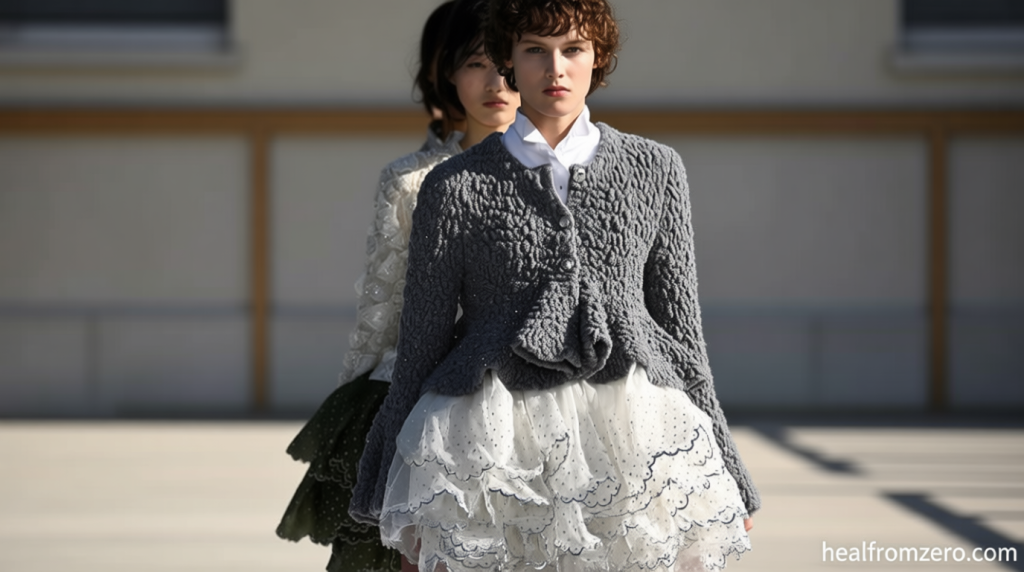
Take Dior’s second women’s ready-to-wear collection, helmed by new creative director Jonathan Anderson. The presentation unfolded outdoors on a platform suspended over a pool of artificial lily pads, showcasing a riot of scalloped textiles, soft bar jackets in vivid hues, and feathered gowns that seemed crafted for a candy store. This show uniquely bridged the gap between affluent buyers, digital critics, and the fashion elite, all vying for a glimpse of the curated moments.
Chanel, too, leaned into the trend, with its latest presentation sparking a frenzy on social media. Artistic director Matthieu Blazy’s debut pieces at Rue Cambon were already generating excitement, as shoppers eagerly unboxed their “hauls.” The collection reimagined the classic Chanel skirt suit, shedding its rigid formality in favor of pastel sequins, layered trucker jackets, and relaxed fits that swapped tweed for oversizes. Even the most traditional looks found new life through a balance of restraint and flair.
Beauty vs. Prettiness
“Pretty is almost foolproof in a time of uncertainty.”
While some designers elevate prettiness to an art form, others risk diluting it into cloying excess. Chemena Kamali’s Chloé show, for instance, leaned too heavily on 1970s-inspired plaid gowns and skirts, conjuring an impractical fantasy that felt less like escape and more like a gimmick. For many, rural life evokes images of domesticity rather than a whimsical retreat. Yet, in the hands of visionaries like Rei Kawakubo, the avant-garde pioneer, even the most straightforward aesthetic can become a profound statement.
Pretty, as the article clarifies, is distinct from beauty. For elegance and depth, look to Yohji Yamamoto’s haunting kimono-inspired coats or Hermès’ red-blooded leathers—ostrich skin bodysuits paired with thigh-high boots, and biker shorts complemented by stunning jackets. These pieces, though rooted in craftsmanship, still embody the allure of simplicity. In contrast, Dries Van Noten’s autumnal palette of candy apple green and deep reds appears effortless, but the work behind it demands discipline from Julian Klausner, who has only been with the brand for a year. His ability to adapt, focusing on garments that evoke joy rather than stagnation, sets him apart in an industry often preoccupied with reinvention.
Fashion’s role as escapism remains undimmed, even as the world grapples with complexity. Whether through whimsy, tradition, or technical mastery, the industry continues to offer a temporary reprieve—a mirror held up to the chaos, reflecting the human need to dream, even if briefly, of something more perfect.