
How to Create a Minimalist Lifestyle Without Feeling Deprived

Creating a minimalist lifestyle is often misunderstood as an act of extreme sacrifice. In reality, how to create a minimalist lifestyle is about removing excess so that daily life feels lighter, more intentional, and more satisfying. People search for minimalism not because they want less joy, but because they want fewer distractions competing for their time, energy, and money. A well-designed minimalist lifestyle should feel supportive, not restrictive.
Minimalism works best when it aligns with personal values rather than rigid rules. You do not need to own only 50 items or live in an empty space to benefit from it. The core idea is to keep what genuinely adds value and let go of what quietly drains you. When done correctly, minimalism creates clarity, not deprivation.
Understanding What Minimalism Really Means
Minimalism is not about having nothing; it is about having enough. The concept focuses on intentional ownership, where each possession, habit, and commitment serves a clear purpose. This mindset shifts attention away from accumulation and toward conscious choice. Minimalism becomes a tool for better decision-making, not an aesthetic contest.
A common mistake is copying minimalist standards from social media without context. What feels freeing for one person may feel limiting for another. Understanding how to create a minimalist lifestyle starts with defining what “enough” means for your own life. This personal definition is what prevents feelings of loss.
Minimalism also extends beyond physical belongings. It applies to schedules, relationships, digital spaces, and even thought patterns. By reducing unnecessary complexity, you make room for focus and satisfaction. The goal is simplicity that supports real life, not an idealized version of it.
Shifting the Mindset From Scarcity to Intention
Deprivation comes from a scarcity mindset, where removal feels like punishment. Minimalism replaces that mindset with intention, where removal is an upgrade. Instead of asking what you must give up, you ask what you gain by letting go. This shift is essential for long-term success.
When evaluating possessions or commitments, focus on utility, joy, and alignment with values. If something supports none of these, it becomes mental clutter. Letting it go is not loss; it is a strategic decision. This reframing reduces emotional resistance.
Intentional minimalism also allows room for enjoyment. You can value quality over quantity without guilt. Owning fewer but better items often increases appreciation and reduces decision fatigue. This balance prevents minimalism from becoming rigid or joyless.
Decluttering Without Emotional Burnout
Decluttering is often where people feel overwhelmed. The solution is not aggressive purging but gradual, structured reduction. Start with low-emotional items such as duplicates, expired products, or unused tools. Early success builds confidence and clarity.
Avoid decluttering by category all at once if it creates stress. Working room by room or function by function is more sustainable. The key is consistency, not speed. Minimalism grows through repeated small decisions, not one dramatic cleanout.
Emotional items require a different approach. Instead of keeping everything, preserve meaning selectively through photos, digital records, or curated memory boxes. This method respects emotional value without allowing it to dominate physical space. Decluttering should feel relieving, not regretful.
Designing a Minimalist Lifestyle Around Your Real Needs
Minimalism should adapt to your responsibilities, not ignore them. A parent, professional, or creative will have different needs than a single traveler. Learning how to create a minimalist lifestyle means designing systems that support your actual routines. Function always comes before appearance.
Focus on reducing friction in daily life. Store items where they are used, simplify workflows, and remove unnecessary steps. When your environment supports your habits, minimalism feels effortless. The less energy you spend managing things, the more energy you regain.
Minimalist living also includes saying no to unnecessary commitments. Overloaded schedules are a hidden form of clutter. By protecting time and attention, you reduce stress without sacrificing meaningful experiences. Minimalism is as much about boundaries as it is about belongings.
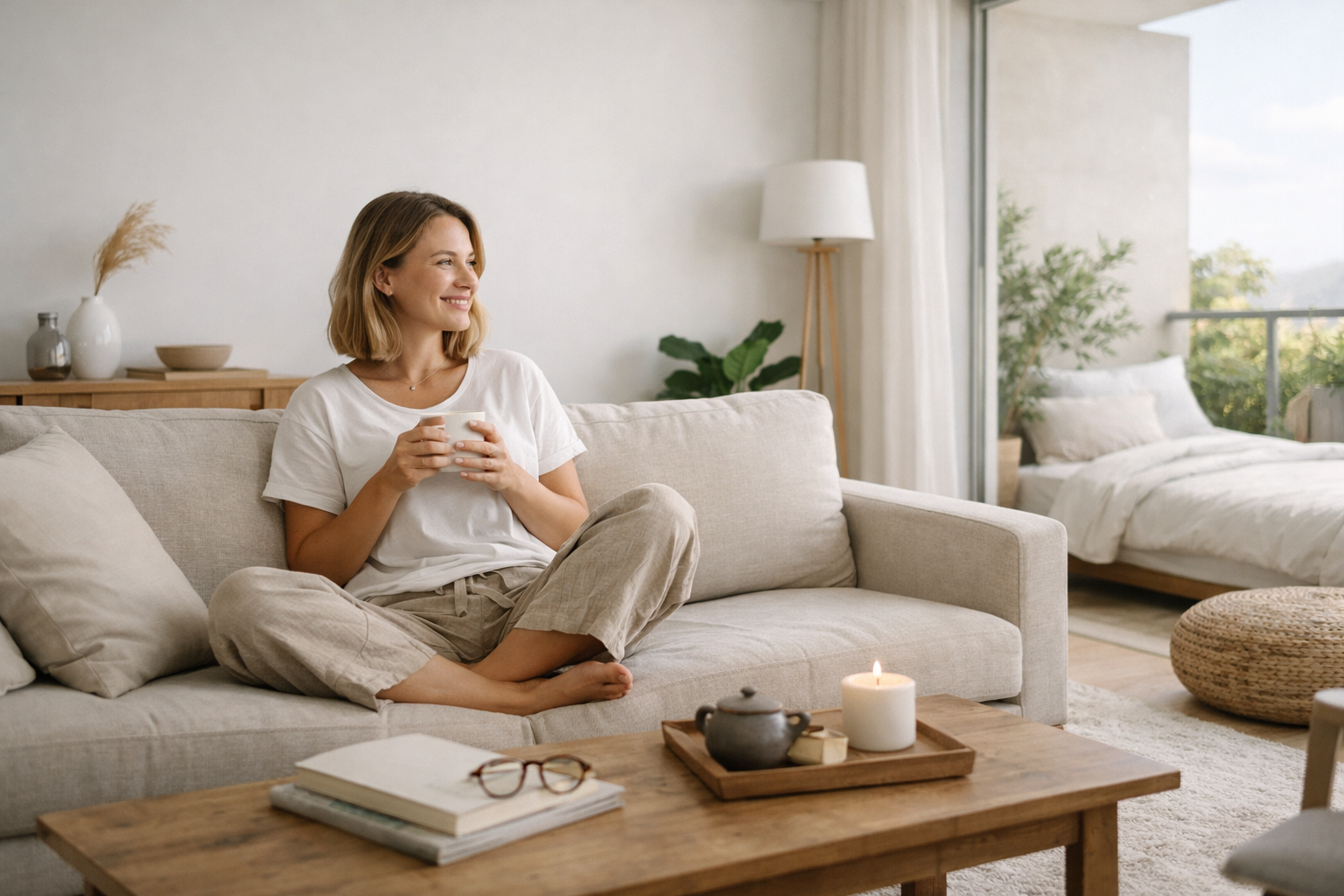
Minimalism in Spending, Digital Life, and Time
Financial minimalism prioritizes conscious spending over constant saving. The goal is not to avoid money, but to direct it intentionally. Spending aligned with values feels satisfying, while impulse purchases often lead to regret. This approach naturally reduces waste.
Digital clutter is another major source of overwhelm. Unread emails, unused apps, and constant notifications fragment attention. Simplifying digital spaces improves focus and reduces cognitive load. A minimalist digital environment supports deeper work and better rest.
Time minimalism is often the most impactful. Removing unnecessary obligations creates space for rest, creativity, and relationships. This form of minimalism directly improves quality of life. Time, once protected, becomes the most valuable asset you reclaim.
Maintaining Minimalism Without Feeling Restricted
Minimalism is not a one-time project; it is an ongoing practice. The key to sustainability is flexibility. Life changes, and your version of minimalism should evolve with it. Rigidity leads to burnout and eventual abandonment.
Allow room for intentional indulgence. Minimalism does not prohibit enjoyment; it filters it. When pleasures are chosen deliberately, they feel richer and more meaningful. This balance prevents the sense of constant self-denial.
Regular reflection helps maintain clarity. Periodically reassess what you own, how you spend time, and where energy goes. This keeps minimalism practical rather than ideological. The result is a lifestyle that feels supportive, not limiting.
Conclusion
Learning how to create a minimalist lifestyle without feeling deprived comes down to intention, personalization, and balance. Minimalism works when it removes friction and enhances what matters most. By focusing on value rather than volume, minimalism becomes a source of clarity and satisfaction. The goal is not less for its own sake, but enough for a better life.
FAQ
Q: How do I start a minimalist lifestyle without getting overwhelmed? A: Start with low-emotional items and make small, consistent changes instead of decluttering everything at once.
Q: Does minimalism mean I have to give up things I enjoy? A: No. Minimalism encourages intentional enjoyment, not elimination of pleasure.
Q: How long does it take to feel the benefits of minimalism? A: Many people notice reduced stress and clearer focus within weeks of intentional changes.
Q: Can minimalism work for families or busy professionals? A: Yes. Minimalism adapts to real needs by simplifying systems, not removing necessities.
Q: Is minimalism mainly about owning fewer things? A: No. It also applies to time, finances, digital spaces, and mental clutter.