Appeals court says Trump is unlawfully constructing White House ballroom

Daftar Isi
DC Circuit Court Blocks Trump’s White House Ballroom Construction, Setting Stage for Supreme Court Battle
Healfromzero.com – A federal appeals court has delivered a significant setback to President Donald Trump’s ambitious renovation of the White House, ruling that the president is proceeding unlawfully in building a massive new ballroom without proper congressional authorization. The decision, issued Friday by the DC Circuit Court of Appeals in a 2-1 vote, could fundamentally reshape how the executive branch manages historic federal properties.
The court’s opinion, written in an unsigned opinion spanning more than 100 pages, emphasized that the question of whether such a grand addition belongs at the White House rests with Congress, not with presidential discretion. “Whether or not a massive ballroom should be constructed is for Congress to decide and is not a matter for Executive self-help,” the court stated, siding with the National Trust for Historic Preservation, which initiated legal proceedings against the project last year.
Legal Reasoning and Judicial Composition
The majority opinion, authored by judges Patricia Millett and Brad Garcia, found that Congress had not surrendered its authority over White House modifications to the executive branch. “The National Trust has shown, compellingly, that Congress has not ceded unfettered authority to the Executive Branch to dramatically redesign, reshape, and reconstruct the White House – the People’s House – to fit a particular President’s desires,” the court explained.
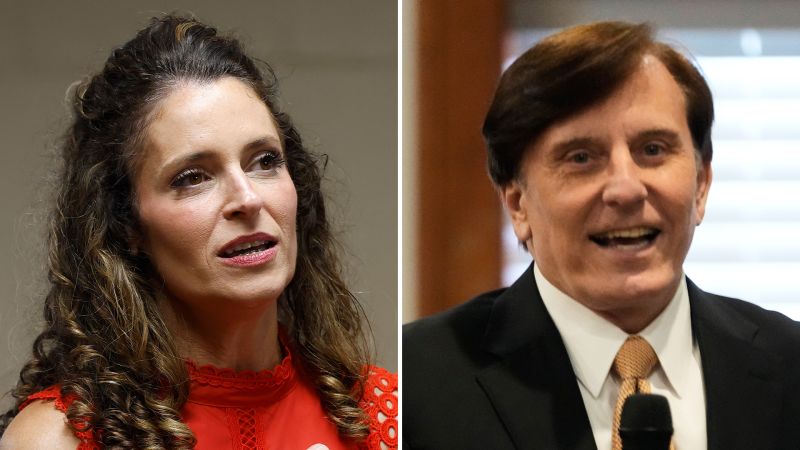
Judge Millett, appointed by former President Barack Obama, and Judge Garcia, selected by former President Joe Biden, formed the majority. Judge Neomi Rao, a Trump appointee, issued a vigorous dissent, arguing that the preservation group lacked proper legal standing to challenge the construction in the first place.
Rao criticized US District Judge Richard Leon, who initially blocked the project last spring, for prioritizing “the aesthetic displeasure” of the National Trust over the administration’s national security arguments. “The district court seized supervision of construction at the White House, and my colleagues affirm this judicial overreach,” Rao wrote in her dissenting opinion.
Trump’s Immediate Response and Appeal Plans
While the court paused implementation of its ruling for two weeks to allow time for an appeal, President Trump wasted no time announcing his intention to challenge the decision at the nation’s highest level. “We will be immediately appealing to the United States Supreme Court,” Trump declared on Truth Social, urging the justices to overturn the ruling “in its entirety.”
The president characterized the 2-1 decision as “horrendous, politically motivated, and unlawful,” suggesting it represented “a National Security threat to our Nation” that “severely jeopardizes the lives and welfare of the people who work, and will be working, at the White House.”
Construction Progress and Project Specifications
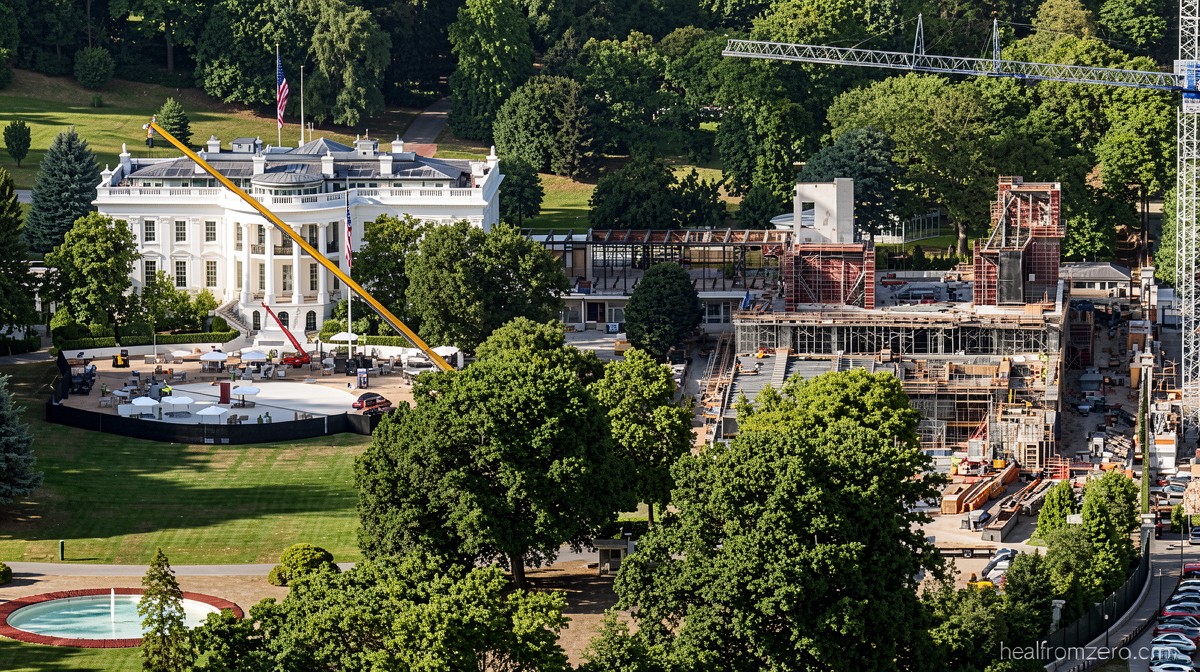
Above-grade construction on the ballroom commenced in the spring and has advanced substantially since then. Photographs shared by the president earlier this week display multiple tiers of concrete support columns and metal reinforcement bars surrounded by heavy construction machinery, including a prominent tower crane.
The sprawling addition measures approximately 89,000 square feet according to lead architect Shalom Baranes, considerably larger than the Executive Mansion’s 55,000 square feet. The president has maintained personal oversight of design elements ranging from floor plans to marble selections throughout the building process.
The ballroom sits atop a highly classified underground bunker complex designed to modernize aging subterranean infrastructure. The president described this underground facility on Friday as “being built for the” protection of presidential leadership during emergencies, though the full statement was cut off in the original report.
Broader Legal Challenges and Historical Context
This ballroom dispute represents one of several ongoing legal battles surrounding Trump’s various renovation initiatives across the District of Columbia. Additional lawsuits challenge his modifications to the Reflecting Pool, his proposal to construct an American version of Paris’ Arc de Triomphe, and his plans to convert a public golf course into exclusive private links.
In April, a federal judge in Washington, DC, had already ordered Trump to halt all above-ground ballroom construction pending congressional approval. The appeals court’s Friday decision effectively reverses that earlier permission, clarifying that the entire project requires legislative consent.
Brent Leggs, president and CEO of the National Trust, welcomed the ruling. “This is a great day for our country and for the American people’s right to voice their opinions about the historic places they cherish, including the White House,” Leggs stated in a formal declaration.
The administration maintains that the ballroom project operates outside standard oversight mechanisms and should proceed without significant judicial interference. Trump has committed to completing the construction by summer 2028, an accelerated schedule that would finish months before his current term concludes.
Related Reading
Frequently Asked Questions
What is Appeals court says Trump is unlawfully?
Appeals court says Trump is unlawfully is the main topic of this guide. The article explains the context, practical details, and next steps readers should understand.
Why does Appeals court says Trump is unlawfully matter?
Appeals court says Trump is unlawfully matters because readers are looking for a useful answer, not just a short summary. Good content should match search intent and help them decide what to do next.